

Some small firms deliberately choose not to grow – and bring in more money for the country – because of the complexities.
Articles on Informal workers
Displaying all articles
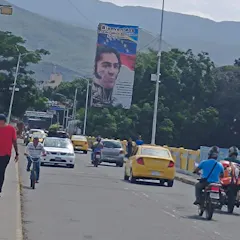
Many Venezuelan women risk their safety each day to find work for themselves and school for their children in Colombia.

Women in South Asia often work informally – meaning their economic contribution isn’t counted.
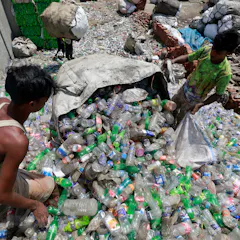
To be truly fair, a global treaty on plastic pollution must tackle the inequalities at the heart of current recycling and waste management systems.

Digitalising social protection overcomes several inefficiencies – but also creates barriers that prevent access for millions of people.
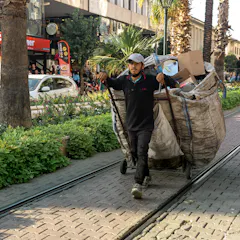
Waste management reforms in Turkey are excluding the country’s informal litter pickers from the sector.

Workers’ power is being recast as precarious workers in Africa experiment with new ways of organising in the digital age
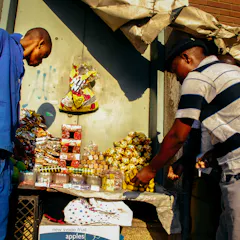
As much as 31% of grant beneficiaries engage in informal work to ‘grow’ their income.
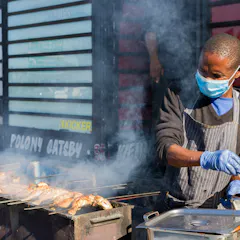
Vendors are continuously exposed to outdoor air pollution from traffic or automotive emissions and cooking fuels such as gas and open fires.
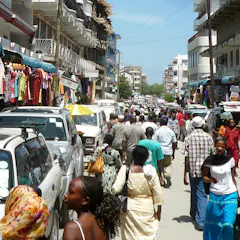
Informal workers are victims of the smart city drive in Africa.
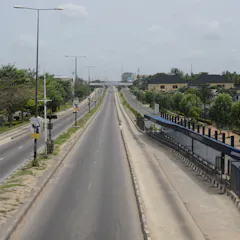
Lockdown and stay-at-home orders may not benefit societies dominated by informal economies.

Many formal sector jobs are increasingly precarious and poorly paid, meaning that formal work is not an avenue to greater social equality for many people.
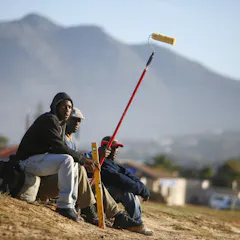
Recent developments in the organisation of production have led to the decline of wage employment across much of the world.
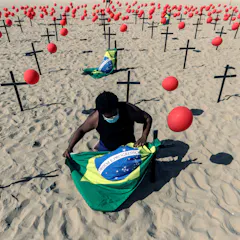
The historically high level of informal work in Latin America will make its recovery much more difficult than elsewhere.
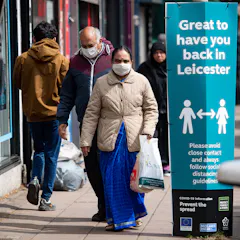
Cramped living conditions, a lack of social distancing and informal businesses staying open during lockdown may have come together to drive up the city’s infection rate.
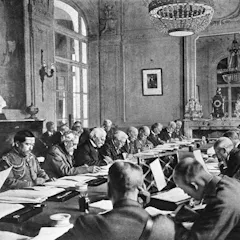
The International Labour Organization was founded in 1919 at the Treaty of Versailles after the ravages of pandemic and world war. Its model offers a way forward for us now.
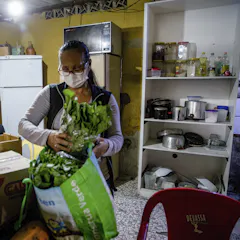
Maids were among Brazil’s earliest COVID-19 victims, infected by employers who had been to Italy. Now 39% of Brazilian ‘domésticas’ have been let go, most without severance or sick leave.
Top contributors
-

Professor of Management, University of Bristol
-
Public Health Specialist, South African Medical Research Council
-
PhD in public health, Tshwane University of Technology
-
Senior Lecturer, Department of Planning, Kwame Nkrumah University of Science and Technology (KNUST)
-
Lecturer in Work, Employment, Organisation & Public Policy, University of Bristol
-
Professor of Environmental Management & Sustainability, University of Nigeria
-
Principal Lecturer in Public Policy, Nottingham Trent University
-
Senior Lecturer, Political Science, University of Nigeria
-
Lecturer (Assistant Professor), King's College London
-
Lecturer, Sociology and Anthropology , University of Nigeria
-
Distinguished Reserach Professor, Southern Centre for Inequality Studies, University of the Witwatersrand
-
Associate Professor of Social and Political Philosophy, University of Nigeria
-
Senior Lecturer in Human Geography, Queen Mary University of London
-
Professor of Social Development Studies, University of Johannesburg
-
PhD student, Concordia University