

Employers are blaming underpaying employees on the the complexity of industrial awards. They should blame themselves.
Articles on Industrial relations
Displaying 81 - 100 of 203 articles
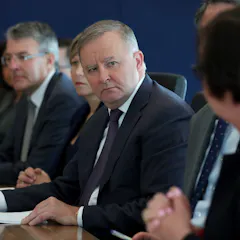
In this first of a series of “vision statements” Albanese has sought to send the messages that Labor under his leadership is focused on jobs, is looking to the future and is not afraid of change.
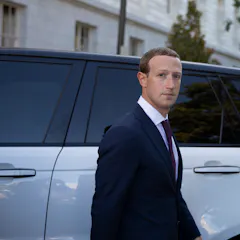
Mark Zuckerberg may try to minimise their concerns, but Facebook moderators and other online workers are beginning to organise for their own protection.

The Ensuring Integrity Bill would restrict the activities of the unions who represent teachers and nurses as well as the construction workers who are its real target.
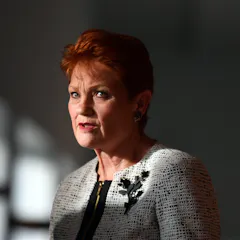
As the government starts its work on workplace change, it gave Pauline Hanson a win, for past and future favours, making her deputy chair of a joint parliamentary committee into the family law system.

We’ve tested the claim that overworkers have no choice, and found it wanting.
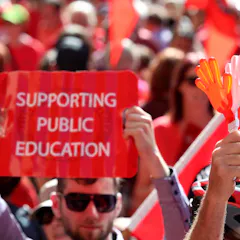
Teacher unions have a thing or two to teach the the union movement about how to succeed when strikes don’t work.
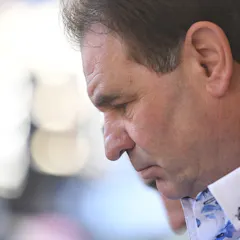
The government is relishing the difficulties the John Setka controversy has created for Labor leader Anthony Albanese, who remains opposed to tighter restrictions on unions.
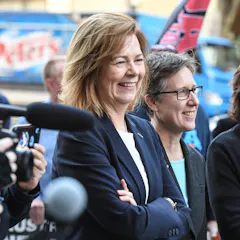
ACTU president Michele O'Neil on John Setka and the government’s anti-union legislation
CC BY33.4 MB (download)
ACTU President Michele O'Neil says that the decision over Setka's leadership lies with the union membership, and denounces the government's plans to bring back anti-union legislation.
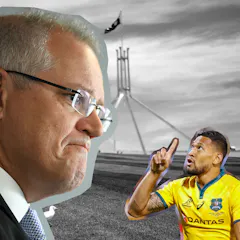
Scott Morrison won his ‘miracle’ election but what he does from now on will determine whether the Coalition can secure a fourth term.
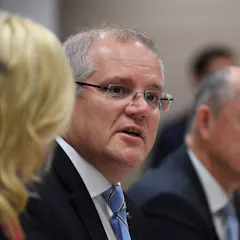
In his first major domestic speech since the election, Prime Minister Scott Morrison will lay out economic policies “to get Australians off the economic sidelines and on the field again”.

Dealing with the Coalition will more difficult than arguing than the rules are wrong.

Putting employee directors on Australian boards is seriously back on the agenda for the first time since the 1970s.
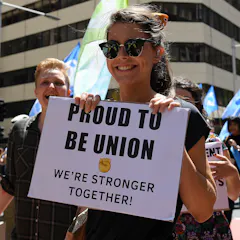
The global evidence from more than 300 studies on the economic impact of unionisation shows unions do not, overall, reduce productivity.
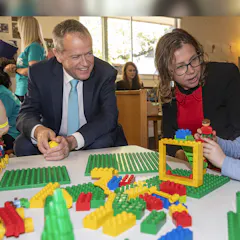
Paying wages directly would be an Australian first, and far from ideal.

Unions and Labor have a long history of working together, but if the ALP wins office, unions will have to compete with many other groups to get what they want.
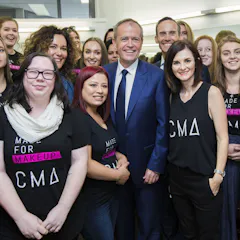
Overruling the Fair Work Commission will give Labor what it wants, at the cost of diminishing the commission.
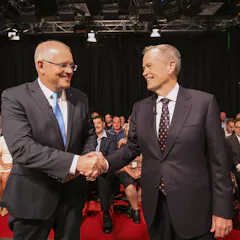
At this election there is a stark choice between the two major parties on industrial relations: the “small target” approach of the Coalition and the ALP’s more ambitious and detailed plan.
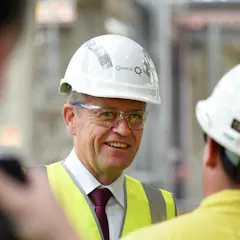
It ought to be possible to replace Australia’s minimum wage with a higher “living wage” without putting people our of work, but more will be needed.
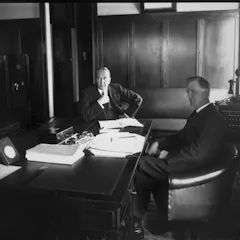
Only twice have Australian electors chosen to vote out a sitting prime minister. Both times, industrial relations was the key. What can we learn from that?
Top contributors
-

Professorial Fellow, University of Canberra
-
Distinguished Professor of Workplace Law, RMIT University
-
Laurie Carmichael Distinguished Research Fellow at the Centre for Future Work, Melbourne; and Professor Emeritus, Griffith Business School, Griffith University
-
Associate Professor UTS Centre for Business and Social Innovation, University of Technology Sydney
-
Professor of Management, Faculty of Business and Economics, The University of Melbourne
-
Professor of Labour Law, University of Sydney
-
Associate Tutor, University of Surrey
-
Associate Professor, Director of the Centre for Employment and Labour Relations Law, The University of Melbourne
-
Professor of Work and Regulation, Queensland University of Technology
-
Economist and Director, Centre for Future Work, Australia Institute; Honorary Professor of Political Economy, University of Sydney
-
Professorial Fellow, The University of Melbourne
-
ARC Future Fellow 2012-2016, School of Business, University of Sydney
-
Affiliate Researcher, Work and Organisational Studies, University of Sydney
-
Senior Lecturer, UTS Faculty of Law, University of Technology Sydney
-
Professor, Monash Business School, Department of Management, Monash University