

Over the years, WorkChoices has become shorthand for policy disaster. It forever changed the political landscape on industrial relations reform.
Articles on Workchoices
Displaying 1 - 20 of 23 articles
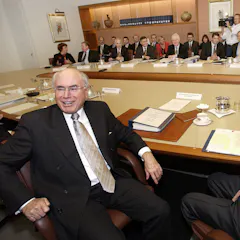
In 2005, the Howard government introduced its controversial WorkChoices legislation. It would be a key factor in the government’s defeat in the 2007 election.

PT Kereta Cepat Indonesia-China (KCIC) has not been seen to involve disability groups in the design, planning and development stages of the KCJB.

It’ll be harder for employers to underpay workers, but easier to offer them extra hours without penalty pay.

Dealing with the Coalition will more difficult than arguing than the rules are wrong.

Unions and Labor have a long history of working together, but if the ALP wins office, unions will have to compete with many other groups to get what they want.

Employment Minister Mathias Cormann has let the cat out of the bag. The government has been trying to supress wages.

Even with the most favourable laws, unions will still need to confront the reality of a dramatic transformation in the world of work.

The history of widespread advocacy campaigns shows that the ‘No’ campaign has many unfair advantages in the marriage equality debate.

Lobbying in Australia is a multi-billion dollar industry which employs a sophisticated strategy to win public opinion and political favours for its clients or members. Here’s how.
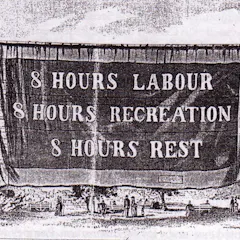
A diminishing membership base, changes to labour and industry and heightened political attention has left the once-powerful trade union movement flailing.

Echoes of WorkChoices? The Coalition is keen to avoid any whiff of the failed policy, but some of the Productivity Commission’s recommendations have a strong flavour of it.

Sunday penalty rates will go under Productivity Commission recommendations, but overall our workplace system was basically operating well, it found.

In just a year, the Abbott government has gone from a radical nation-changing budget to promising a ‘dull’ one. Are we to believe the ideological zeal is gone, or has the survival instinct kicked in?
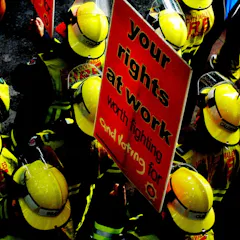
The release of the Productivity Commission’s five issues papers on Australia’s workplace relations framework has already fanned inevitable claims from the federal opposition and unions that it will pave…

The government is proposing amendments to the Fair Work Act, including to the operation of “individual flexibility arrangements” (IFAs). The amendments are attracting a lot of attention, including from…

If you were to choose one buzzword that, despite its vagueness, has dominated industrial relations debate over three decades, it would be “flexibility”. It has emerged again in rhetoric surrounding Toyota’s…

It is easy to see why media coverage of Paul Howes’ National Press Club address has focused on his claims that wage growth has been too high in some areas and that the adversarial industrial relations…
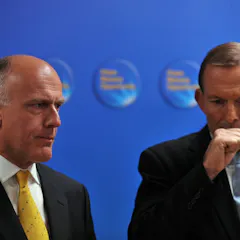
Tony Abbott’s industrial relations strategy has received a less than rapturous response from both business and trade unions. The Business Council of Australia and the Australian Industry Group have criticised…
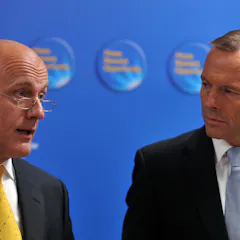
Industrial relations is the one area of public policy that traditionally marks a major fault line between the Coalition parties and Labor. It is also one area of policy where neither side finds it easy…
Top contributors
-

Laurie Carmichael Distinguished Research Fellow at the Centre for Future Work, Melbourne; and Professor Emeritus, Griffith Business School, Griffith University
-
Distinguished Professor of Workplace Law, RMIT University
-
Lecturer in Politics, The University of Melbourne
-
Research Fellow, Australian National University
-
Tutor, University of Wollongong
-
Professor of Management, Faculty of Business and Economics, The University of Melbourne
-
Winthrop Professor, Entrepreneurship, Innovation, Marketing and Strategy, The University of Western Australia
-
Professor in Working Life, Discipline of Business Information Systems, University of Sydney Business School, University of Sydney
-
Professor of Economics, The University of Melbourne
-
Professor, Department of Economics, The University of Melbourne
-
Director of China-Indonesia Desk, Center of Economic and Law Studies (CELIOS)
-
Professor Emerita, Law, University of Sydney
-
Professor, School of Economics, The University of Queensland
-
Associate Professor of History, UNSW
-
Associate Professor, Director of the Centre for Employment and Labour Relations Law, The University of Melbourne