

The Juno awards remind us that cultural institutions have the power to reinforce national pride, and also invite critical reflection, dissent and re-imagination.
Articles on Indigenous music
Displaying 1 - 20 of 22 articles

This year’s list will likley not just reflect what we consider “Aussie” music – but also challenge it. And that’s a good thing.
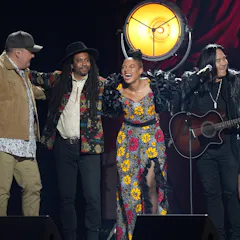
Paying tribute to departed and living musicians via memorial tributes and awards is a way of lifting up artists’ significant roles defining and shaping musical innovation and cultural identity.

Buffy Sainte-Marie has generated a multi-decade fruitful career that is hard to rival. Her motive as an activist is usually overlooked.
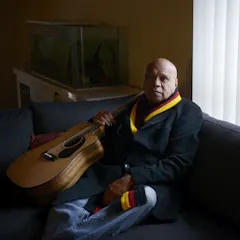
In Uncle Archie Roach, we find the most profound sense of an alternate masculinity. It is difficult to put words to this loss.
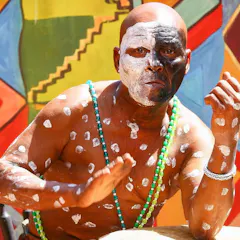
He did not so much play the drums, as become the drum. His influence was felt through his trailblazing percussive work and his many collaborations.

Artists Ian Wilkes and Poppy van Oorde-Grainger invite audiences to walk where the first contact between Noongar and white settlers at Lake Monger took place.

A new film canvasses Indigenous Australian accounts of, and responses to, Captain Cook’s arrival.
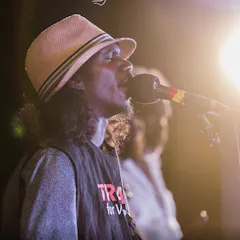
A series of four live-streamed concerts from Arnhem Land offers a welcome break from bad news and a way for Indigenous musicians to share their talents with the world.
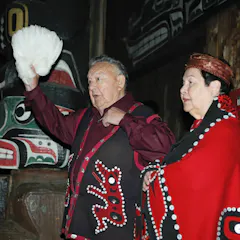
Ancestral Indigenous songs often encode territorial responsibilities and rights, such as in relationship with ‘lokiwey’ (coastal clam gardens) on the Pacific Northwest Coast.
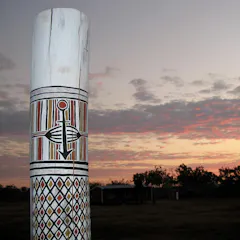
Yothu Yindi’s music introduced the world to the Yolŋu clan traditions of northeast Arnhem Land. But few listeners know these songs echo long histories of engagement with Southeast Asian visitors.
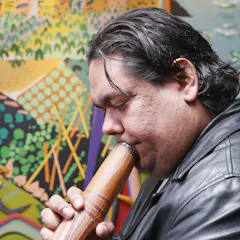
Australian composers have long referenced Indigenous music and culture in their works. A new platform paper suggests a more collaborative way forward.
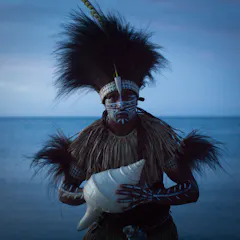
A new virtual reality film showing at the Australian Museum immerses viewers in remote Indigenous communities. Such films can be a path to reconciliation and understanding.
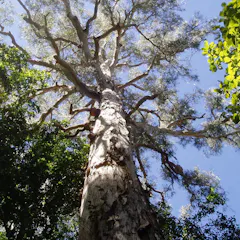
Dr Joe Gumbula was a master-singer of Manikay, the exquisite Yolŋu tradition of public ceremonial song. While the songs contain incredible knowledge, scholars have rarely treated them as an intellectual tradition.
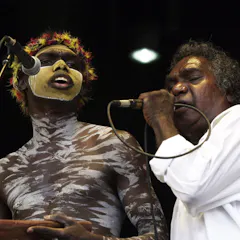
The songs of Tribal Voice offered hope and strength to generations of Yolŋu people and gave audiences elsewhere a rare insight into the resolve and aspirations of Indigenous Australia.
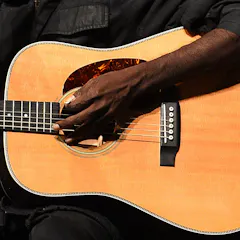
The music of Dr G. Yunupiŋu, who has died at just 46, draws strength and inspiration from Manikay, the sacred song tradition performed by the Yolŋu when conducting public ceremonies.
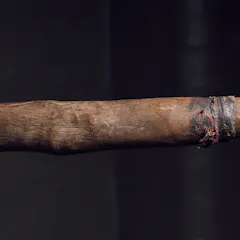
The yidaki, a musical instrument owned by the Yolngu people of North East Arnhem Land, is created by both termites and instrument makers, who tap trees to find hollow logs. A new exhibition tells its fascinating story.
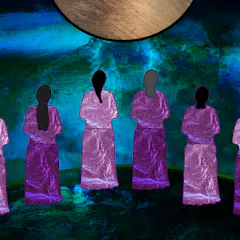
A strengthening movement of Indigenous designers and developers is working to show Indigenous cultures, teachings, languages and ways of knowing through video games.
After winning his Grammy in 1996, Pearl Jam’s Eddie Vedder said, ‘I don’t think this means anything.’ Was he right?
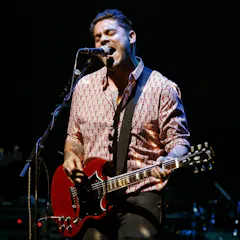
From My Island Home to Treaty, Indigenous musical luminaries gathered in Sydney on Tuesday to sing classic songs marking the fiftieth anniversary of the 1967 referendum.
Top contributors
-

Professor and Inaugural Director, Indigenous Knowledge Institute, The University of Melbourne
-
Sessional Academic, University of Sydney
-
Honorary Research Associate, University of Sydney
-
Morse Alumni Distinguished Teaching Professor of Music, University of Minnesota
-
PhD Candidate, Interactive Storytelling, UNSW
-
Associate professor in music studies, Griffith University
-
Assistant Professor of Media and Information and Writing, Rhetoric and American Cultures, Michigan State University
-
Honorary Senior Lecturer, Australian National University
-
Professor, Australian and Aboriginal History, Faculty of Arts, Design and Architecture, Convenor: Indigenous Land & Justice Research Group, UNSW
-
Senior Lecturer Composition, Australian National University
-
Research Fellow in Disaster Resilience, Monash University
-
Professor of music, School for Studies in Art and Culture, Carleton University
-
Associate Professor & Postgraduate Research Coordinator, Western Australian Academy of Performing Arts, Edith Cowan University
-
Professor of Music, Carleton University
-
Professor in Archaeology, Simon Fraser University