
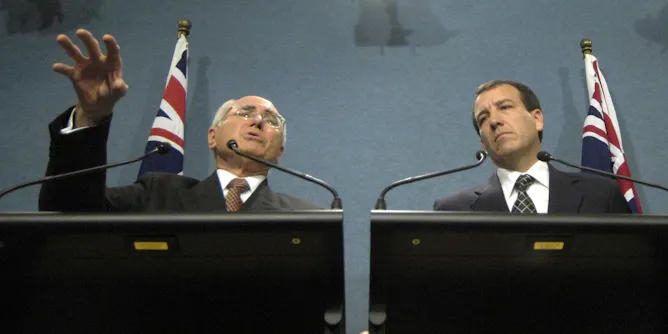
The Northern Territory Intervention implemented coercive measures that would have been unthinkable in other, non-Indigenous communities.
Articles on Indigenous Australia
Displaying 61 - 80 of 137 articles

‘Australian values’ have been mangled into meaninglessness by countless politicians. But there is an national character, shaped by the Australian land. New research investigates Outback values.
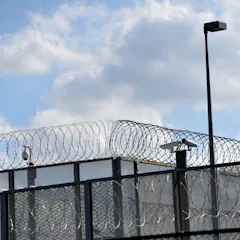
The largest increases in Australia’s prison numbers have been in remand, Indigenous and women prisoners.
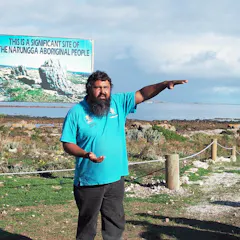
It is a problem in our efforts to build reconciliation that Australians appear not to be taking up the hospitality of their fellow Australians.
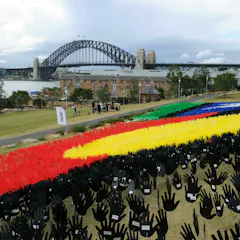
Treaties have to be the foundation for constitutional recognition, not the reverse.
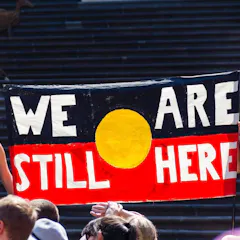
The result of the 1967 referendum may well have made Australia appear less racist, but it did not address the inherently racist nature of the Constitution.
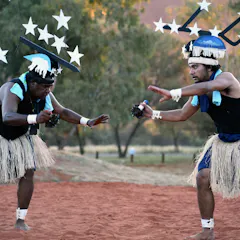
At the same time as it’s become clear that Indigenous people won’t accept a limited change, the right in Australian politics has become more determined to oppose any amendment.
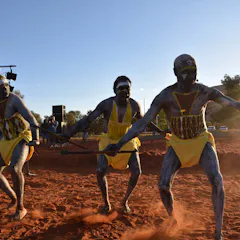
Indigenous Australians have issued a statement calling for constitutional reform that is substantive and meaningful.
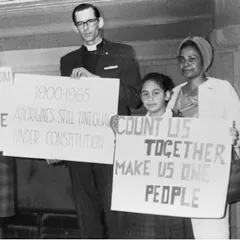
The 1967 referendum was the culmination of a long struggle for both Aboriginal rights and respect, for social esteem as well as equality before the law.
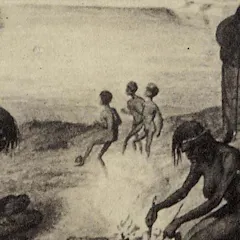
The revival of the idea of Indigenous influence on the origins of Australian rules football diverts attention from another, much more uncomfortable story about Indigenous relationships to football.

At Uluru, Indigenous representatives from across Australia will aim to reach consensus on what constitutional recognition means to them.

The 1967 referendum fell far short in giving people what they thought they were voting for, and in giving Aboriginal people what they wanted from it.
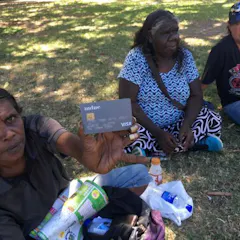
Critics of the Cashless Welfare Card trial overlook the fact it is curbing alcohol and gambling problems – and it’s what the communities want.

Today’s release of data from the 2016 Census allows us to identify some of Australians’ more common characteristics, how they vary across states and territories, and how they are changing over time.

In contrast to perceptions of other homeless people sleeping rough, Darwin’s “long-grassers” are applying a long cultural tradition to deal with the situation in which they find themselves.

No treaty between Indigenous and non-Indigenous Australians has ever been recognised, but developments at the state level suggest this may soon change.

The real threats to dugongs and turtles are not being addressed.
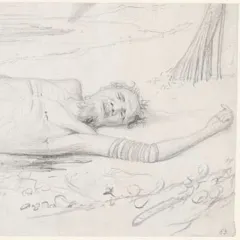
The English navigator had a habit of fair-mindedness. But did it affect the way he related to local Aboriginal people as he circumnavigated Australia?

Waves of policies from successive Coalition and Labor governments have followed a paternalistic lead. This has created further impediments to thousands of Indigenous peoples who are doing plenty.
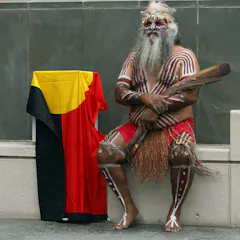
The question of repatriating objects is clearly more complex than returning human remains. It needs more debate, and more creative interventions to move beyond the current impasse.
Top contributors
-

Professor of Economics and Public Policy, ANU College of Arts and Social Sciences, Australian National University
-
ARC DECRA Fellow, Australian National University
-
Associate Professor, UNSW
-
Associate Professor, Faculty of Law & Justice, UNSW
-
Professorial Fellow, University of Canberra
-
Professor of Indigenous Health, Executive Director, Carumba Institute, Queensland University of Technology
-
Associate Professor of Public Policy, Crawford School of Public Policy, Australian National University
-
ANU Visiting Professor, Politics and International Relations, Australian National University
-
Professor of Conservation Biology, Charles Darwin University
-
Commissioner, Yoo-rrook Justice Commission, University of Tasmania
-
Professor in Human Rights and International Law, University of Newcastle
-
Adjunct Professor, RMIT University
-
Senior Lecturer in Social Research and Policy, UNSW
-
Professor of Linguistics, The University of Queensland
-
Professor of Law, University of Technology Sydney