

Americans recycle only about one-third of the solid waste we generate. A behavioral scientist argues that with the right motivators, we could do more.
Articles on Incentives
Displaying 21 - 40 of 47 articles
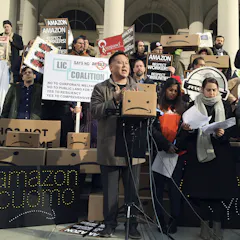
The gap between rich and poor is at record levels in the U.S., yet it varies widely among the states. A political scientist explains why.
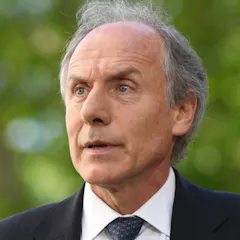
Australia’s top scientist Alan Finkel says too many poor quality research papers are being published in Australia, and the system may inadvertently encourage academics to behave badly.

Paying people to quit smoking seems unfair, but that doesn’t mean we shouldn’t do it.

Counterintuitively, vague incentives are often stronger than clear ones.

Americans are spending almost three and a half hours on their phones and tablets every day, twice the amount just five years ago. A behavioral scientist offers a few tips on how to take control.
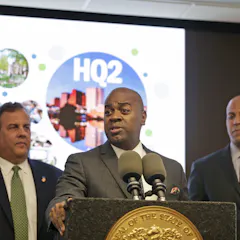
Some say the more than 230 cities that lost their bids for Amazon’s second headquarters were dupes in the retailer’s game. In fact, they were willing participants with their own aims.
The technology behind blockchain remains a mystery to many, but the it shares many common features with the popular online encyclopedia with which most web users are very familiar.

Dubbed the ‘female ghetto’, there’s a reason why women are significantly over-represented in call centres.

Research shows that cash bonuses are responsible for many recent financial scandals. The alternative isn’t that great either.

A promising new strategy for improving breastfeeding rates.

The choke factor is visible in tournament-style athletics competitions, and should teach managers about incentives.

A new workplace wellness program leverages masculine interests and targets blue-collar men - with success.
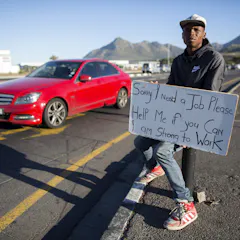
A deeper analysis of South Africa’s joblessness reveals a scarier picture of large sections of the population suffering, especially the country’s youth.
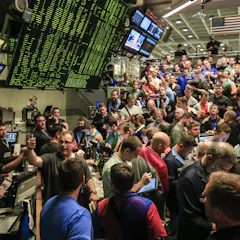
A new way of encouraging people to seek out unused information could improve collective decision making.

Employees in this study would forgo A$1 million for their employer, to gain as little as A$500 personally.
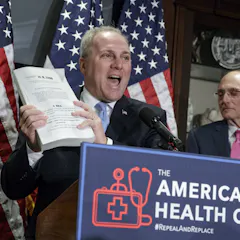
Republicans opposed Obamacare’s mandate as much as they decried any part of the bill. How would their replacement idea, pegged to incentives, work?
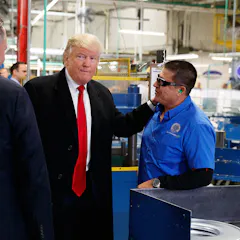
States have been using tax breaks and other incentives like the kind Trump dangled before Carrier for years. There’s little evidence they work, and in fact they may lead to widening inequality.
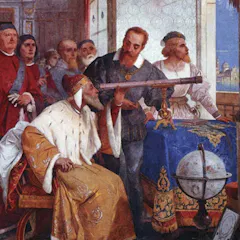
People have always known science would advance faster with various incentives and rewards. As modern experimental science took off, these took the form of gifts and favors to and from wealthy elites.

Financial incentives alone won’t increase research collaboration between universities and business. Academics say they need time, support and an environment encouraging of engagement.
Top contributors
-

Professorial Fellow (Professor of Economics), The University of Melbourne
-
Associate Professor of Political Science, Oklahoma State University
-
Professor of Health Economics and Director, Centre for Health Economics, Monash Business School, Monash University
-
Research Fellow, The University of Melbourne
-
Honorary Senior Fellow in Health Service Research, University of Birmingham
-
Research Coordinator in Health Promotion, University of British Columbia
-
Harvard University
-
Professor of Health Policy, University of York
-
Professor, University of British Columbia
-
Professor - Risk governance, culture, remuneration, Macquarie University
-
Professor of Mother and Infant Health, University of Dundee
-
Scientia Professor of Economics, UNSW
-
Assistant Professor of Public Policy and Education, Vanderbilt University
-
Senior Lecturer in Law, Cardiff University
-
Senior Lecturer in English Language and Applied Linguistics, The Open University