

Data from readily available sensors can be used to digitally trial new systems – all without risking resources.
Articles on HVAC
Displaying all articles

A German habit has been trending in recent weeks: ‘lüften,’ or airing out your home. It can help older, damp homes in the US – if circumstances are right.

Graduates of The Excel Center in Indiana got steadier jobs and saw a 40% increase in earnings.
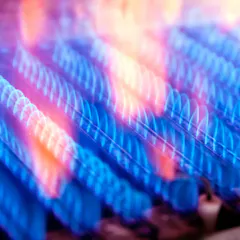
Underground thermal networks have the potential to revolutionize how Canadians heat their homes while helping to reduce carbon emissions.

You can’t bring your AC to space, unfortunately, but innovative flow boiling and condensation research might lead to lighter, more efficient heating and cooling on spacecraft.

Heat pumps are essential for the large-scale adoption of more carbon friendly heating systems and recent research suggests a way forward for reducing one of the technology’s biggest hurdles — frost.

People aren’t the only ones harmed by heat waves. The hotter it gets, the harder it is for machines to keep their cool.
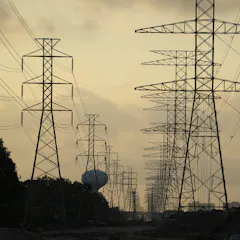
As the drive towards electrification advances, one fact seems clear: it is far easier to reuse waste heat for our homes and businesses than it is to generate it anew.

With many employers switching to remote work, two engineering experts explain the feasibility of converting office buildings to residential spaces.
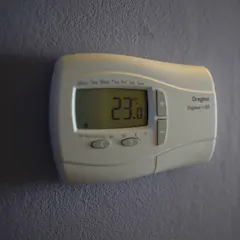
Policies that encourage the use of low-carbon technology like heat pumps can help motivate residents to decarbonize their homes.

Buildings are designed for people to live in, but what happens when no one is present or only half of the occupants are there?
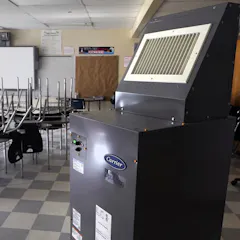
A lot of federal money is now available for making school buildings healthier. Two environmental health experts explain how school districts can best use it.
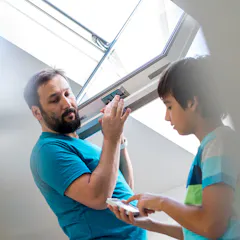
Cutting a home’s energy waste starts with stopping the leaks. Energy-efficient appliances and windows can make a difference, too.

Residents of group homes and long-term care are at high risk for COVID-19. But an important aspect has been left out of Public Health Ontario’s guidance for these facilities: indoor air quality.

Because COVID-19 is airborne, we can’t know if the shelter system is as safe as it should be without seeing metrics related to ventilation, filtration and occupancy.

Heat pumps are the technology of choice for heating and cooling buildings more efficiently and with fewer carbon emissions than furnaces and air conditioning.

As the coronavirus pandemic continues, and the colder weather approaches, new mathematical models are needed to study changing social behaviours and indoor spaces.
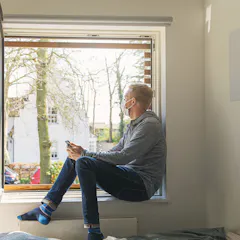
Good ventilation can reduce the risk of catching coronavirus. An environmental engineer explains how to know if enough outside air is getting into a room and what to do if ventilation is bad.
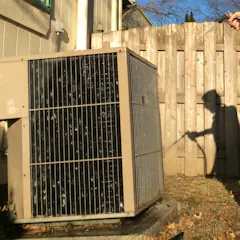
Unless it sparks joy, go ahead and scratch this task off your spring-cleaning checklist.
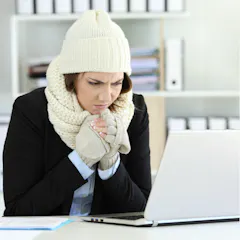
Everyone has a different ideal temperature at any given time. It could be more comfortable to monitor people’s body temperatures and adjust heating and cooling in response.
Top contributors
-

Professor, Department of Mechanical Engineering, McMaster University
-
Professor of Public Health, University of Toronto
-
Professor, Department of Civil & Mineral Engineering, University of Toronto
-
AI, Medicine and Data Justice Post-Doctoral Fellow, Queen's University, Ontario
-
Research, Department of Civil & Mineral Engineering, University of Toronto
-
Associate Professor of Environmental Health, Boston University
-
PhD Candidate, Building Engineering, Carleton University
-
Professor of Mechanical Engineering, Georgia Institute of Technology
-
Postdoctoral Associate, Massachusetts Institute of Technology (MIT)
-
Associate Professor of Architectural Engineering, University of Nebraska-Lincoln
-
Master's student, Public Administration, University of Victoria
-
Associate Professor, School of Public Administration, University of Victoria
-
Professor of Sustainability, University of Dayton
-
Assistant Professor of Engineering, UMass Lowell
-
Teaching Professor in Civil, Construction and Environmental Engineering, Iowa State University