
Practicing existential humility means learning to live with the natural tension between our desires for certainty and curiosity.
Articles on Humility
Displaying 1 - 20 of 29 articles

Do you actually know how a bicycle or a zipper work, or what a penny or a common brand logo look like? Intellectual humility can help reduce overconfidence in what you don’t understand.
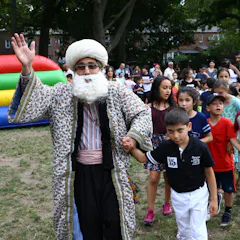
The folk tales of Nasreddin Hoja, which likely originated in 13th-century Turkey, carry many lessons for us today.

Curiosity and an openness to new ideas help Ryland Grace, the movie’s protagonist, navigate new discoveries about life in the universe.
Humility is a virtue that many people admire but far fewer practice. A scholar describes how a professional crisis made him look inward and rethink his concept of success.

The kind of power that motivates a leader shapes their behavior, two management scholars write.

While rarely explicitly taught to scientists in training, a set of common values guides science in the quest to advance knowledge while being ethical and trustworthy.
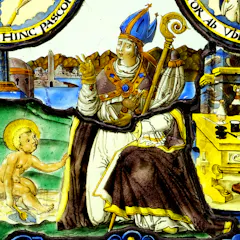
In choosing his motto and coat of arms, Leo references the Order of St. Augustine, to which he belongs. He uses the identifying symbol of Augustine, a heart pierced by an arrow.

Many in Africa, including governments and non-state parties to conflicts, don’t trust international law. They consider it intrusive.

Intellectual humility means being open to new ideas and other points of view – and for leaders, it can be a delicate balancing act.

Though the Global South tends to experience higher disease burdens, most public health decisions and knowledge generation are centered in the Global North.

Self-doubt and being indifferent to praise is central to being truly humble.

Intellectual humility includes owning your own biases and the possibility that you’re wrong about your beliefs or worldview. It means being open to changing your mind in response to new information.

Do you dread delivering or receiving feedback at work? Two organizational behavior experts describe a better way to have these difficult conversations.

Research shows that when health care professionals work in a collaborative manner, patient satisfaction and outcomes improve.

Humility doesn’t get the fanfare of virtues like courage, compassion or generosity. But without humility, those other virtues won’t get much traction in the quest to live a good life.

The idea that the least skilled are the most unaware of their incompetency is pervasive in science and pop culture. But a new analysis of the data shows that the Dunning-Kruger effect may not be true.
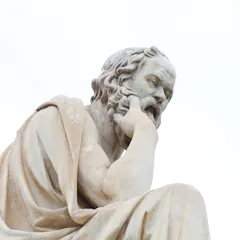
Athens was deeply polarized over big-picture questions, and Socrates was never hesitant to question both sides’ assumptions – or his own.

Compassionate listening is an overlooked practice, but urgently needed in both interpersonal and political communications.

Simchat Torah is about more than beginning to read the Torah all over again. It’s about the need to reexamine what we think we know, over and over again.
Top contributors
-

Professor of Psychology, Hope College
-
Lecturer and Teacher, Department of Politics and International Relations, Cardiff University
-
Research Associate Professor of Nursing and Health Innovation, Arizona State University
-
Managing Director of the McCourtney Institute of Democracy, Associate Research Professor, Political Science, Co-host of Democracy Works Podcast, Penn State
-
Associate Professor, School of Political Science and Economics, Waseda University
-
Assistant researcher, University of Sydney
-
Professor Entrepreneurship and Strategy, Monash University
-
Postdoctoral Fellow in Organizational Behavior and Theory, Carnegie Mellon University
-
Emeritus Professor of Christian Studies, University of Cape Town
-
Professor of Philosophy, UMass Lowell
-
Professor Emeritus of Medicine, University of Alabama at Birmingham
-
Professor of Metaphysics and Epistemology, University of Leeds
-
Assistant Professor of Public Health, University of Iowa
-
Cornelia H. Dudley Professor of Psychology, Knox College
-
Chief Medical Officer at the Los Angeles County + University of Southern California Medical Center, Adjunct Professor of Medicine, University of Southern California