
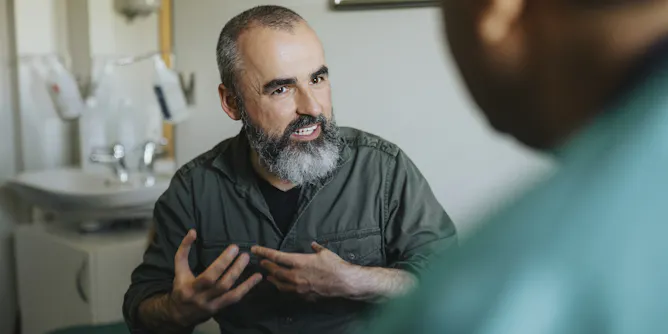
There’s little transparency about who has access to deeply personal medical data or how companies handle it.
Articles on Health care workers
Displaying all articles

Long before the pandemic, health care workers were experiencing high levels of stress, burnout and compassion fatigue, all of which contribute to reduced quality of care for patients.

Many workers who see their work as a spiritual calling wind up tolerating unfair treatment and poor work conditions.

Internal reviews are insufficient to investigate discrimination by hospital administrators and external frameworks are needed to protect employees who face bullying and harassment.
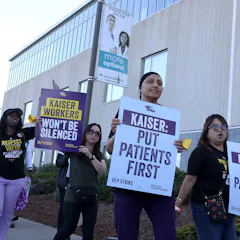
Beyond higher wages and improved benefits, the terms of the Kaiser settlement would ensure better staffing, which the unions have argued is critical for providing quality patient care.

The shortage of family doctors affects not only patients, but the entire health-care system. A strong primary care foundation increases average lifespan, improves overall health and reduces costs.

Workers are objecting to staffing levels they say endanger patient care and are refusing their employer’s offer that includes raises that they say are too low due to inflation.

Disturbed sleep can worsen depressive symptoms of health care workers whose jobs come with high levels of emotional labor and work-family conflict.

Nurses who identify as Democrats have a significantly higher likelihood of having their children vaccinated against COVID-19 than those who identify as Republicans.

There are solutions to long surgery wait lists and workforce shortages, if the major parties had the bravery to commit to reform.

Death care workers are at high risk for burnout as well as depression and other mental health concerns.

Exhausted and demoralized nurses are leaving the profession at alarming rates as the COVID-19 pandemic drags on.

If you feel like you’re having a medical emergency then you should still go to hospital. Expect longer waits and extra precautions.
Top contributors
-

Director of the Center for Work and Democracy, Arizona State University
-
Chair of Entrepreneurship, Wheaton College (Illinois)
-
Associate Professor of Political Science, South Dakota State University
-
Professor of Health Systems Research and Founding Director, Australian Institute of Health Innovation, Macquarie University
-
Professor and Chair, Family Medicine, McMaster, McMaster University
-
Professor of Sociology, Rice University
-
Professor and Director, Macquarie University Centre for the Health Economy, Macquarie University
-
Assistant Professor of Political Science, Iowa State University
-
Senior lecturer, Australian National University
-
Assistant Professor of Nursing, University of Arizona
-
Associate Professor of Nursing, UMass Lowell
-
Program Director & Associate Professor Master of Psychology Health and Wellness & Master of Industrial-Organizational Psychology, Adler University
-
Assistant Professor of Nursing, University of Portland
-
Adjunct Instructor of Nursing, University of Arizona
-
PhD Candidate, Rice University