
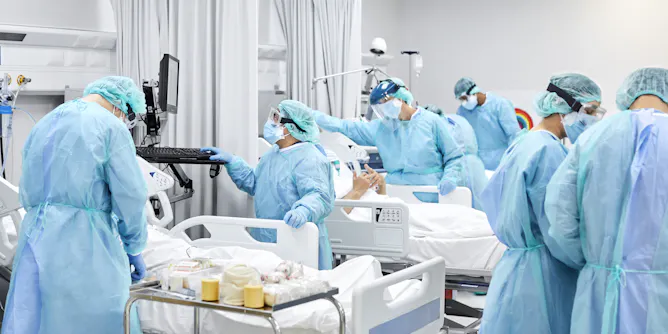
A physician-bioethicist reflects on how health professionals are yet again facing painful reminders of the early months of the pandemic.
Articles on COVID-19 front lines
Displaying 1 - 20 of 21 articles

Death care workers are at high risk for burnout as well as depression and other mental health concerns.
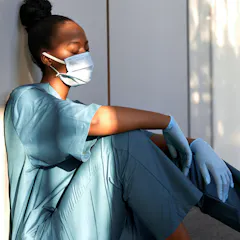
About a quarter of health workers surveyed reported symptoms of psychological distress, including depression, anxiety and stress.

Exhausted and demoralized nurses are leaving the profession at alarming rates as the COVID-19 pandemic drags on.

Long-term solutions to the nursing shortage call for changes that value nurses and offer them a safe place to work.
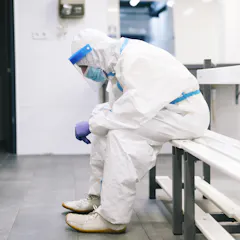
Although stretched thin and imperfect, health care workers do our best for everyone who needs us, regardless of the personal choices people have made.

We tried our hardest to provide the best care in dire circumstances. There wasn’t an alternative.

🎧 PODCAST: An audio version of an in depth article by two doctors on what it’s like fighting COVID-19 the second time around.
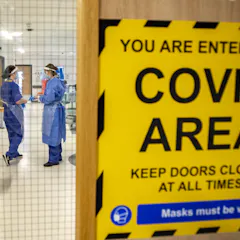
This is what it’s like fighting COVID-19 the second time around.

CC BY-NC-ND8.8 MB (download)
There is an app that helps frontline healthcare workers deal with the mental health challenges they face in the COVID-19 pandemic.

Personal support workers are crucial but under-appreciated in the health-care system. They are often subjected to racism, and they struggle to make ends meet while caring for our most vulnerable.
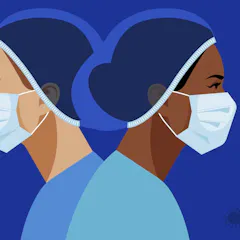
Nurses on both sides of the border report that they aren’t getting the support they need to feel safe on the job and maintain their own health and well-being during the COVID-19 pandemic.

With most therapy sessions now online, a psychologist explores whether more self-disclosure by therapists – sharing more about their own lives – might help their patients.
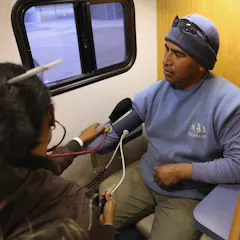
In the wake of COVID-19, researchers can become trusted figures of authority who can re-appropriate their networks, skills and knowledge to better the lives of vulnerable populations.
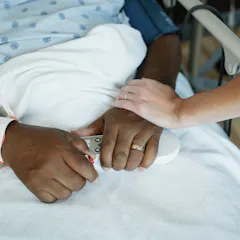
A give-and-take between patient and provider is essential to patient care. As the COVID-19 pandemic ushers in a new era of medicine, one doctor wonders if this connection will be lost.
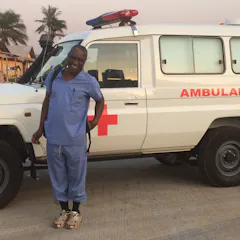
Nurses on the front lines of a pandemic need education, training and institutional support.
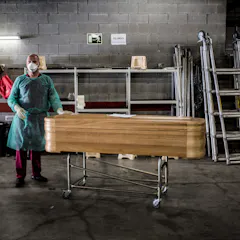
An expert on forensic science explains the critical role of coroners and pathologists in the COVID-19 crisis, as many cities struggle to manage the soaring number of dead bodies.
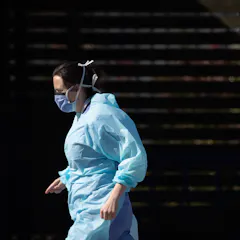
This fifth weekly column by our team of international health editors highlights more of the recently published articles from The Conversation’s global network.

A pulmonologist at Eskenazi Hospital in Indianapolis provides a firsthand look at how the hospital is preparing to allocate resources and supplies in response to coronavirus.
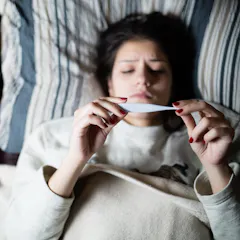
Physicians and patients are grappling with rapid-fire changes and a shift to virtual medicine.
Top contributors
-

Deputy Director of the Centre for Tuberculosis Research, Reader in Tuberculosis and Social Medicine, Liverpool School of Tropical Medicine, Liverpool, UK; and Honorary Research Associate at Karolinska Institutet, Stockholm, Sweden, and, University of Liverpool
-
Professor of Global Health, Liverpool School of Tropical Medicine
-
Associate Professor of Emergency Medicine, School of Medicine, University of Washington
-
Associate lecturer & Pediatric nephrology, University of the Witwatersrand
-
Assistant Professor of Nursing, University of Portland
-
Associate Professor, King's University College at Western University, Western University
-
Senior Research Fellow, Monash University
-
Associate Professor of Family Medicine, University of Michigan
-
Associate Professor of Nursing, University of South Florida
-
Associate Professor, Nursing, University of Windsor
-
Visiting Scholar, University of Wollongong in Dubai (UOWD), University of Wollongong
-
Senior researcher, Institute for Health Transformation, Deakin University
-
Assistant professor of clinical psychology, University of Windsor
-
Director of the Center for Bioethics and Humanities, University of Colorado Anschutz
-
Professor of Public Administration, University of Central Florida