

The fight against Islamism is the rationale behind Marine Le Pen’s RN party, but research data suggests that head-covering in keeping with Islamic tradition is not politically motivated.
Articles on Headscarf
Displaying all articles

Laïcité, which historically upheld individual freedom, denies minority rights today, as seen in the ban on French athletes wearing hijabs at the 2024 Paris Olympics.

Catholicism, ‘Frenchness’ and secularism are often conflated in French culture, a scholar writes, while non-Christian traditions are viewed with suspicion.
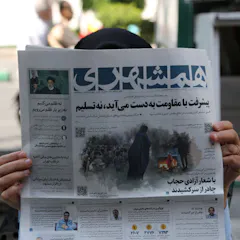
Controversy of veils goes back more than a century, a scholar of Iran explains.
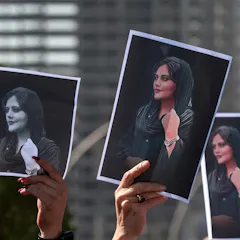
A scholar of Iranian politics explains how Iranians have organized resistance movements for the past several decades while risking arrest and public flogging.

A scholar of Islam writes about how widespread authoritarianism in the Muslim world shapes governments’ foreign policy toward Muslim minorities abroad.

Ignorant assumptions about what the headscarf means fail to recognise how integral it can be to a woman’s identity.

Day 5 our Understanding Islam series. For some Muslim women, wearing a hijab can be a religious act but Muslim women’s clothing isn’t entirely about faith. It has been used – and is still used – as an assertion of identity.

For Muslim women, the hijab is not simply about religion. They may wear it for a variety of reasons. On World Hijab Day. women – Muslim and non-Muslim, are invited to experience this head covering.
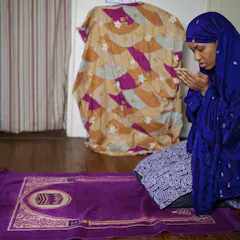
Trump recently tweeted about prayer rugs being left along the border. Many may not know the role and history of Muslim prayer rugs and why they are not likely to be left behind.
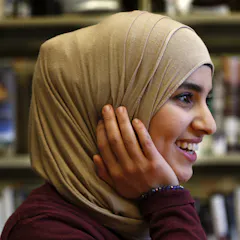
Hijab is not simply about religion – women wear it for a variety of reasons.

Islamic fashion is a rapidly growing industry: Muslim spending on fashion is expected to reach US$488 billion by 2019. What has led to this growth?
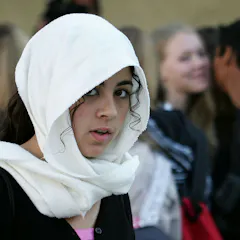
For many Muslim women, wearing the headscarf is an act of piety and a way of being. Forcing them to remove it can have devastating consequences.
Top contributors
-

Professor of Sociology, Drew University
-
Assistant Professor of Sociology, UMass Amherst
-
Professor, Department of Middle Eastern Studies, The University of Texas at Austin
-
Senior Lecturer in Criminology, Nottingham Trent University
-
Assistant Professor of Religion, California Lutheran University
-
Anthropologist & Assistant Professor, Department of Marketing Communication, Emerson College
-
Professor of Political Science and Gender and Sexuality Studies, USC Dornsife College of Letters, Arts and Sciences
-
Lecturer in Politics, De Montfort University
-
Assistant Professor of European Studies, University of Florida
-
Professor of Political Science, Director of Center for Islamic & Arabic Studies, San Diego State University
-
Director, Executive Leadership Academy, University of California, Berkeley
-
chercheure en droit public, Université de Strasbourg