

While universities can suspend and expel students for committing sexual violence and other kinds of illegal misconduct, they face logistical and financial limits to preventing such behavior.
Articles on Hazing
Displaying all articles

This harrowing account of institutional military abuse draws on interviews with nearly 70 survivors and analyses every review and inquiry into military culture (35 in total) since the Vietnam War.

People often privately feel uncomfortable about bad behavior they see around them but mistakenly believe their peers don’t share their concerns.

A sports culture that does not tolerate abuse of any kind needs to be cultivated to ensure that the benefits of participating in sports are achieved.

Australia lacks standalone hazing legislation that clearly makes it the responsibility of universities, but courts here and overseas are increasingly likely to find them liable for the harm done.

Biologists capture and collar coyotes in urban Los Angeles in order to study the effectiveness of ‘hazing’ as a wildlife management tool.
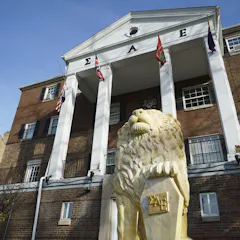
Colleges and universities have banned fraternities from campus to stave off problem drinking and hazing incidents. But a researcher says those problems are deeper than any campus ban can solve.

Scholars propose a new education system centred on human development to end hazing rituals in Indonesian universities.

When scandals take place at a college, the natural reaction for some people is to avoid the school. But two economists suggest potential applicants think hard about their decision.

Addressing male cultures of tribalism and violence needs to be central to the response to reports of hazing and violence in Austrslia’s university colleges.

Hazing is unacceptable, but criminalising it may cause more problems than it solves.
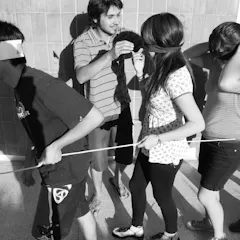
Another student has died due to hazing. Research shows that there has been at least one such death in the US since 1954 (with 1958 the only exception). So why does hazing happen in the first place?

With the fall term underway and an ongoing case over the death of a Penn State pledge in February, colleges are trying once again to figure out why hazing happens and what should be done to stop it.
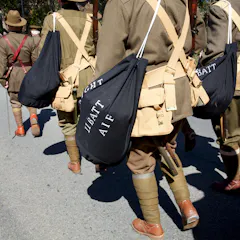
Military institutions and militarised cultures seek to generate a unity of people and purpose. Initiation rituals have been a historically stable strategy to achieve this.
Top contributors
-

Professor, Director, Open Door: Improving the Wellbeing of Veterans, Public Safety Personnel and their Families, Flinders University
-
Author, Emeritus Professor of Journalism, Franklin College
-
Poler Family Professor of Psychology, Amherst College
-
Honorary Senior Research Fellow, SMERU Research Institute
-
Visiting Assistant Professor, Higher Education & Student Affairs, University of Connecticut
-
Lecturer in Psychology, Universitas Gadjah Mada
-
Chancellor's Professor, Psychology, Carleton University
-
Assistant Professor of Economics, Georgia State University
-
Human-Wildlife Interactions Advisor, University of California, Division of Agriculture and Natural Resources
-
Senior Lecturer, Department of Business Law and Taxation, Monash University
-
Lecturer in Law, Deakin University
-
Associate Professor, Psychological Science and Counseling, Austin Peay State University
-
Research Fellow and Historian of War and Conflict, Deakin University
-
CEO, Sentencing Advisory Council
-
Associate Professor of Education, Old Dominion University