
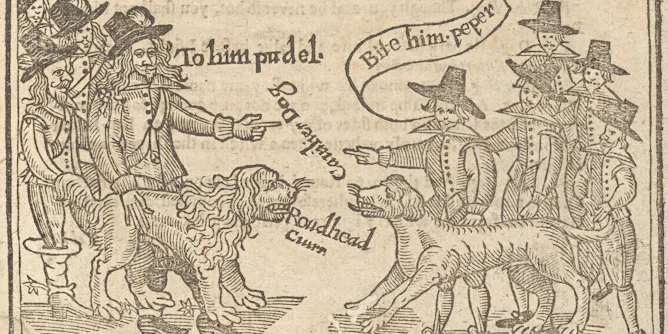
For any respectable man in Tudor, Stuart and Hanoverian England, to go hatless was almost unthinkable.
Articles on Hats
Displaying all articles

While the red Phryge is endearing, the symbol’s fraught global history challenges the narrative of freedom and unity that the Olympics, and its French hosts in particular, want to tell.

The pandemic has inspired new forms of pilgrimages – some do-it-yourself, in which people are walking in their backyards or nearby spaces and finding meaning.

Bobi Wine in Uganda does it; so do the Economic Freedom Fighters in South Africa. The red beret is worn to signify the revolutionary. Its power lies in a symbolism that combines art and politics.

Apartheid was to officially end in 1994. So was the fashion of wearing hats as the formalities of business, church and leisure gave way to the informality of urban equality.

The hat is an example par excellence of aristocratic excess, the equivalent of a peacock’s tail in seducing the Queen’s subjects.
Top contributors
-

Mellon Chair of Indian Studies and the Director of the Centre for Indian Studies in Africa, University of the Witwatersrand
-
Honorary associate, Sydney College of Arts, University of Sydney
-
Research Fellow at the Nelson Mandela School of Public Governance, University of Cape Town
-
Chair and Associate Professor of Art History and Religion, Graduate Theological Union
-
Assistant Professor of History, Department of Humanities, MacEwan University
-
Emeritus Professor of History, University of Warwick