

Almost half of hospital visitors skip washing their hands after using the toilet. If that’s happening in hospitals, imagine the hygiene at festivals and beaches.
Articles on Hand hygiene
Displaying 1 - 20 of 29 articles

No matter how messy the festival, keep your hands clean.
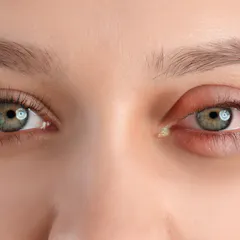
Rubbing your eyes might feel satisfying but it could introduce pathogens to the body. Here’s a summary of the most common eye infections.
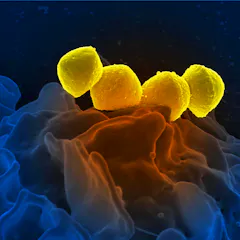
An increase in serious illnesses caused by group A Streptococcus has recently made Strep A a growing concern in Canada and elsewhere. Here’s why and how it’s spreading, and what symptoms to look for.

Using a mathematical model, researchers found that good hygiene can reduce the harmful effects of antibiotic use.
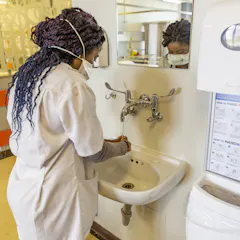
In hospitals, infection prevention and control cannot be met without a hygienically clean, and safe environment that has an adequate supply of clean running water.

Saponins from plants can destroy viruses and other microorganisms in the same way commercial soaps and detergents do.

There’s no need to pull out the candy catapult this year, but a few reasonable precautions can keep COVID-19 transmissions in check.
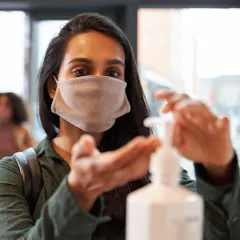
Hand washing isn’t just ‘hygiene theatre’.
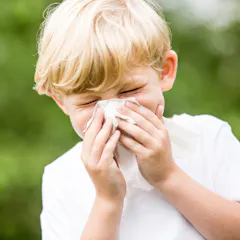
People sneeze for many reasons and in many ways. One of them is to protect your airways from irritants and infectious disease.
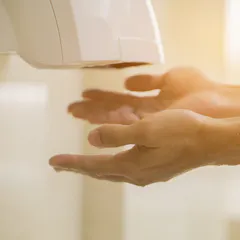
What side are you on, paper or dryer? In either case, here’s the bottom line on what to do after using the toilet.
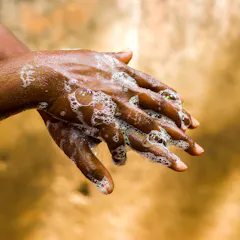
African leaders can make strategies to fight COVID-19 more accessible to the people.

Hand hygiene is a critical part of the response to COVID-19. Washing hands at regular intervals during the day is essential. If water and soap are unavailable, hand sanitisers are an alternative.
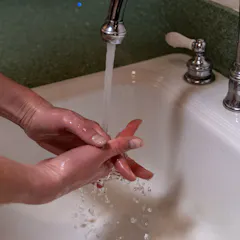
Even in hospitals, where hand hygiene is vital, staff don’t always remember to wash their hands. What hope is there for the rest of us? Thankfully, research on handwashing behaviours has some answers.

With shelves cleared of hand sanitiser, many people are starting to to make their own.
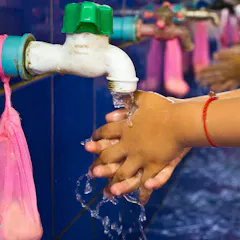
There are several things Australian schools can do, that involve encouraging better hygiene and social distancing. They could close too, but that’s not always necessary.

Our findings also highlight that hot air hand dryers and cloth roller towels can be a problematic way of drying your hands.

Hand washing is a tried and true, scientifically proven preventive strategy that reduces the likelihood of transmitting both viral and bacterial borne diseases.

We used to think the rise in allergies was because we weren’t exposed to as many early infections as previous generations. But that’s not the case.

If hospitals are not thoroughly cleaned, patients may be at higher risk of infection. We tested a new approach to hospital cleaning, and found it could reduce infections and save money.
Top contributors
-

Clinical Assistant Professor of Nursing, Purdue University
-
Professor of Epidemiology Healthcare Infection and Infectious Diseases Control, UNSW
-
Doctoral Candidate in Microbiology, University of Oregon
-
Specialist General Practitioner, and Conjoint Senior Lecturer, UNSW
-
Professor of Psychology, Rutgers University - Newark
-
Professor of Infectious Diseases, Monash University
-
Infectious Diseases Physician, Senior Lecturer, James Cook University and, The University of Queensland
-
Lecturer, Flinders University
-
Senior Research Fellow, RMIT University
-
Chief Albert Luthuli Research Chair, University of South Africa
-
Postdoctoral Associate, department of Microbiology and Immunology, Western University
-
Associate Professor and Director of the SAMRC/Wits Centre for Health Economics and Decision Science - PRICELESS SA (Priority Cost Effective Lessons in Systems Strengthening South Africa), University of the Witwatersrand
-
Principal Pathologist, National Institute for Communicable Diseases
-
Postdoctoral Fellow in Infection Medicine, Georgia Institute of Technology
-
Associate Professor and Clinical Academic Gastroenterologist, Western Sydney University