

Literary journals are breeding grounds of talent – including the new Splinter, rebooted Southerly, and First Nations journal Sovereign Texts, launching next year.
Articles on Griffith Review
Displaying 1 - 20 of 57 articles

After 50 years as a university teacher, researcher and student, Raewyn Connell wrote a book, The Good University. Today, universities face a more toxic set of challenges than she has ever seen before.

If we all collect and understand scientific data as citizens, we’ll be a step closer to a society able to make better collaborative decisions.
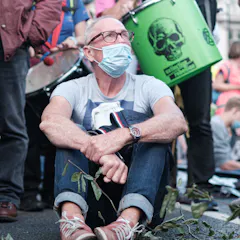
The line between what is normal and what is pathological has blurred. We risk our collective sanity and our planet if we stick to business as usual.
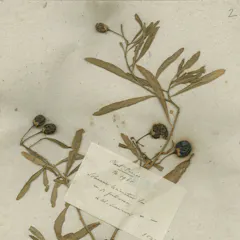
Johann August Ludwig Preiss was the first professional botanist to systematically collect flora in the Colony of Western Australia. Yet he is little remembered today.

The objects we gather around us - from op shops, from roadsides, from the intimate spaces of lost loved ones - are far from inanimate. They carry wisdom, comfort and guidance.

Public schools in some states outsourced their cleaning services to private companies as part of a neoliberal experiment starting in the 1990s. This has had a host of impacts, including on students.

The ancient question ‘Are we alone?’ has graduated from being a philosophical musing to a testable hypothesis. We should be prepared for an answer.
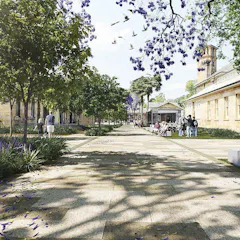
Sydney’s Parramatta is developing fast, building over a rich archaeological history. Finding ways to retain it can help visitors and residents feel a sense of physical connection with those who came before.

New techniques for genetic analysis are helping us build more detailed and accurate stories about the ancient histories of the first Australians.
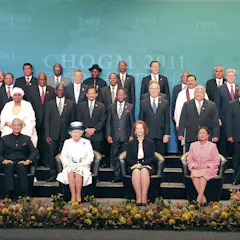
Without a clear full stop there can be no certainty that the unravelling of the British Empire has ended even now.
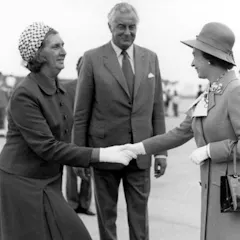
The continued embargo on documents relating to the dismissal of the Whitlam government point to the lingering imperial power that comes from an incomplete severance of colonial ties.

We are so accustomed to hearing about American exceptionalism that British exceptionalism is rarely discussed.

In politics, alternative facts exist. And they always have.

Making self-interest seem normal and a commitment to fairness an elite aberration has been a long-term project.

In late 2015, 200,000 refugees a month were arriving on the Greek island of Lesvos. Tasos Markou went there to photograph their plight - and ended up joining the locals to help the new arrivals.

Populist leaders not only attack the institutions of global capital, they also disregard the checks and balances of institutional democracy.
There has been much attention paid to the widespread resurgence of populism. Restorationism in Western democracies is a subset of this.
Science is supremely beautiful, but can also be brutal and unforgiving if you stray from the well-worn pathways.

Owning a home has deep cultural and economic connotations. A home owner is a member of a street, a community. They are a successful adult human. They own a piece of the pie, the dream.
Top contributors
-

Professor Emeritus of Media and Culture, Griffith University, Griffith University
-
VC Postdoctoral Fellow, RMIT University
-
Research Professor in the Australian Centre for the Study of Armed Conflict and Society, UNSW
-
Senior Research Professor, Curtin University
-
Emeritus Professor, Monash University
-
Associate Professor in Archaeology and Space Studies, Flinders University
-
Flinders University
-
Director, Stout Research Centre, Te Herenga Waka — Victoria University of Wellington
-
Senior Lecturer in Politics, Adelaide University
-
Research Fellow, Institute for Health & Sport, member of the Community, Identity and Displacement Research Network, and Co-convenor of the Olympic Research Network, Victoria University
-
Professor, Canberra School of Government, University of Canberra
-
Professor Emeritus, School of Government and International Relations; Adjunct Professor, Centre for Governance and Public Policy, Griffith University
-
cultural policy consultant
-
Honorary Associate, Department of History, University of Sydney
-
Associate Professor of Organisation Studies, University of Tasmania