

Paul R. Ehrlich will be remembered as a scientist whose books about population and threats to the environment shaped the idea of limited growth in the modern era.
Articles on Green revolution
Displaying all articles
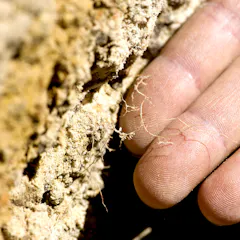
The health of our soils is poor – and getting worse. Here’s why that matters and what we can do about it

Did the Green Revolution, which brought high-tech agriculture to developing nations in the 1960s, prevent famine? Recent research takes a much more skeptical view.
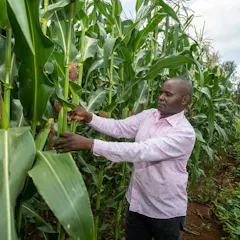
The future food security of nearly 1.5 billion Africans depends on the actions and decisions that are made today.

As the global South transitions to a predominantly urban future, food offers a way to understand the role of cities in future development.

What do ammonium nitrate and iodine have in common? Both substances are of immense service to humankind, and the history of their discovery is closely linked to that of the production of explosives.

We don’t notice the plant species we’re losing, but we won’t be able to ignore the effect of their loss on our supply of food and medicine.
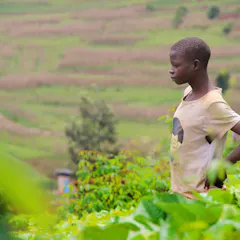
Findings from several scientific studies show the real impact of Rwanda’s agricultural policies and the challenges it faces.
African countries, like Nigeria and Ethiopia, increased their food production using a system-wide approach, and not the traditional reliance on isolated projects.

Faced with a massive food production shortfall, Africa can look towards India’s Green Revolution to jump start its agricultural output.

Diversity, resilience, resistance to disease: seeds must be preserved to ensure we can feed our world in the future.

Leonardo DiCaprio’s new climate documentary is an urgent call for the promised green tech revolution. But it shows too much faith in politicians and corporations to change their ways.
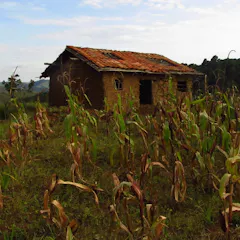
The modernisation of agriculture has been touted by economists and the IMF as a way of reducing poverty in sub-Saharan Africa. But caution about the benefits of the Green Revolution is advisable.
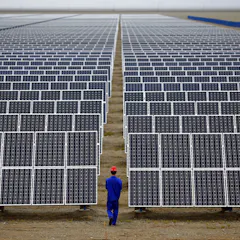
China is pouring money into clean energy - not just to tackle climate change but because these are economically fruitful industries. And as China develops them, the technologies will get cheaper for everyone.
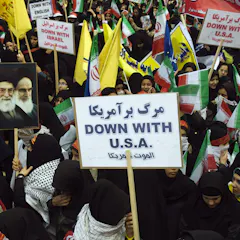
The nuclear deal may be signed, but the history of the Islamic regime shows they will continue to rely on external conflicts to consolidate power.
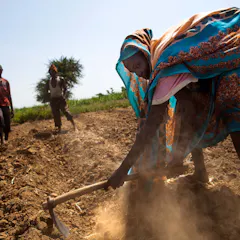
The challenges of feeding a hungry planet are many. Gene editing crops to be more productive, nutritious or hardy could help, but concerns about GMOs abound.
Top contributors
-

Research Fellow in International Development, University of East Anglia
-
Programme and Policy Officer, Université catholique de Louvain (UCLouvain)
-
Post Doctoral Researcher, Université catholique de Louvain (UCLouvain)
-
Assistant professor, Université de Mons
-
Professor in Development Studies, Université catholique de Louvain (UCLouvain)
-
Professor of Sociology, Dartmouth College
-
Emeritus Fellow in Plant Biochemistry, University of Westminster
-
Associate Professor, Florida Institute for Built Environment Resilience, University of Florida
-
Senior research fellow, KU Leuven
-
Professor Emeritus, Macquarie Business School, Macquarie University
-
University of Antwerp
-
Assistant Professor, L’Université d’Ottawa/University of Ottawa
-
Professor and Associate Dean (Education), University of Nottingham
-
Board Certified Internal Medicine Physician and Public Health Scientist, MidMichigan Health, University of Michigan
-
Professor and Director, Centre for African Studies, University of Mumbai, University of Mumbai