

This innovative production combines Sophocles’ revenge play with Ingmar Bergman’s film to explore ideas of identity and performativity.
Articles on Greek tragedy
Displaying all articles

The experimental Belgian theatre director believes Miller’s works lend themselves well to the emotional savagery of Greek tragedy.

The play makes a clear statement about Indhu Rubasingham’s thoughts on the power of the theatre and what audiences might expect under her leadership.

Two concurrent London productions of Oedipus might seem like overkill, but they actually worked to demonstrate the versatility of the tragic form.

Calling something a ‘tragedy’ serves to minimize human responsibility for its causes, which can be convenient for the people who are causing the ‘tragedy.’

The season opener expertly seeds the plot points that will unravel throughout the final series, culminating in the resolution of the core storyline: who will succeed Logan Roy as CEO?

An expert in Greek tragedy can’t get past a seemingly callous approach to suicide in the National Theatre’s new take on Phaedra.

A classics scholar looks at Cassidy Hutchinson’s testimony and says only a rare few are able to summon courage. For others, the drive to maintain power produces cowardice and willful blindness.

The rituals of ancient Greece – especially public performances of tragic plays – have remarkable resonance with the current moment.

A classics scholar and poet turns to Greek mythology, especially the story of Oedipus the King, to explain the drama – or perhaps tragedy – that is taking place in the highest office in the land.

Perceptions about coronavirus “only killing old people” highlight the ageist way we sometimes refer to death and dying. Greek myth shows this isn’t new and ancient plays laid out the distinction.
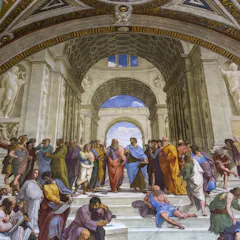
Ancient Greek philosophers including Plato likened civic leaders to doctors, creating a healthy society through balance and moderation. Those ideas feed into what we expect from leaders today.
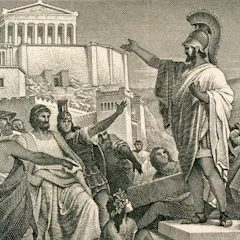
Thucydides’ description of the plague that struck Athens in 430 BC is one of the great passages of Greek literature. It focusses on the social response, both of those who died and those who survived.
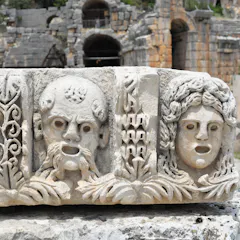
Heroes and heroines of Classical Greek tragedy used to get all the glory. Today scholars, and theatre and film directors are looking to what the minor players can tell us about the zeitgeist.

Where should we place Mugabe among the pantheon of African nationalists who led their countries to independence?

A play written in the fifth century B.C. mirrors America’s current disunion: Political and moral views are framed in terms of a fight between patriot and traitor, law and conscience, and chaos and order.
Top contributors
-

Vice-Dean of Education and Senior Lecturer, School of Performing and Digital Arts, Royal Holloway, University of London
-
Emeritus Professor of Classics, La Trobe University
-
Rachel Hadas is a Friend of The Conversation.
Professor of English, Rutgers University - Newark
-
PhD candidate, Classical Languages and Literature, University of Oxford
-
Professor of Classical Studies, Brandeis University
-
Research Associate, Project on Managing the Atom, Harvard Kennedy School
-
Senior Lecturer in Film, Television & Cultural Studies, University of the West of Scotland
-
Visiting Scholar in Classical Studies, Wesleyan University
-
Honorary Associate, Department of Classics and Ancient History, University of Sydney
-
Associate Professor in Ancient History, Australian Research Council Future Fellow, Macquarie University
-
Professor of Sociology, University of the Witwatersrand