

For decades, forensic linguists have helped crack cases involving false author attribution, masked voices, false confessions in criminal cases and copyright disputes.
Articles on Grammar
Displaying 21 - 40 of 75 articles

Grammatical metaphor is different to what we understand to be “metaphor”. It’s a way of converting words and shortening clauses, so more information can be packed into fewer characters.

Hashtags are infiltrating language well beyond their original use on Twitter — and linguists are struggling to define their role.

In languages from Central Asia to the Amazon and New Guinea, stringing multiple ideas together is something children learn at an early age.

Grammar is a set of tools to make meaning rather than a set of rules to follow. The difference is in how we teach it.

A new book, which weaves fiction into the origin story of the Oxford English Dictionary, was declared a hit even before its release. Readers will judge whether it lives up to the hype.

Have you been pulled up by a “grammar Nazi”? Now you can correct them back.
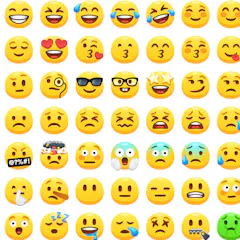
The conventions used in texting and tweeting are fundamentally altering how people communicate, but many language apps still rely on old-school English-language grammar.

Philip Pullman’s call for a boycott against the new 50p coin is just the latest Oxford comma controvery.

‘Greengrocer’s’ may be in mourning, but the rest of us can sigh with relief.

Pedants should reach for their red pens now.

The word ‘like’ has a grammar, and by looking at it, we can learn a lot about what ‘like’ means and what it contributes to someone’s speech.

When reporting violence, grammar matters: the use of voice is key to apportioning blame and, importantly, an accurate depiction of what has taken place.

Organisational twaddle is everywhere. It’s time to climb the ‘strategic staircase’ and incentivise our corporate leaders to abandon it.
Spoken language evolves differently and faster than written language, and there are good reasons why this is the case.

Software tools for South Africa’s Nguni languages may assist with redress and effective communication.

Research suggests that speakers of “present-tensed” languages such as German and Finnish - in which the future can be describe in the present tense - are more likely to support stronger climate policies.

Do you wince at a mispronounced ‘Moet’? Do you cringe at unintentional portmanteau words, like ‘misunderestimated’ or ‘insinuendo’? You are not alone.
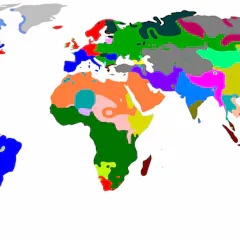
Evolutionary biologists ask very similar questions about species to those asked by linguists about languages.

New research gives weight to Noam Chomsky’s idea of a universal language ability.
Top contributors
-

Honorary Associate Professor in Writing, The University of Queensland
-
Associate Professor in Linguistics, Macquarie University
-
Associate Professor in Language, Literacy and TESL, University of Canberra
-
Professor of Sociolinguistics, Manchester Metropolitan University
-
Associate Professor in Linguistics, University of Waikato
-
Senior Lecturer in Linguistics, Monash University
-
Adjunct Lecturer, School of Languages, Literatures, Cultures and Linguistics, Monash University
-
Professor of English Language and Literature, University of Oxford
-
Course Leader of Insessional English (EAP), University of Bath
-
Senior Lecturer, School of English, Media Studies and Art History, The University of Queensland
-
PhD Student, School of Education, Curtin University
-
Assistant Professor of English, School of Commerce, Waseda University
-
Professor of Linguistics, Queen Mary University of London
-
Senior Lecturer in Applied Linguistics, The Open University
-
Professor of Applied Linguistics, Department of Education, Concordia University