

Corruption imposes mental health costs on individuals.
Articles on Governance
Displaying 81 - 100 of 325 articles
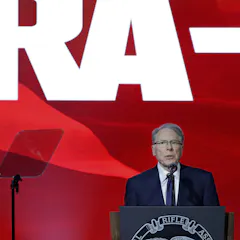
The jury’s verdict followed years of allegations that the gun group’s top official and other leaders were spending money meant to benefit its members on their own luxuries.

The key to a successful energy transition away from coal is good institutional quality supported by anti-corruption procedures and clear rules.
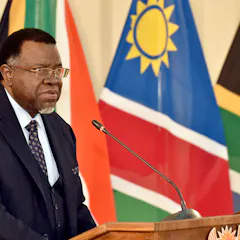
Hage Geingob’s legacy as a moderniser will live on despite contradictions and unfulfilled promises.

The ANC leans heavily on its liberation movement brand. But this will not necessarily be a determining factor in who will sway voters later this year.

A legal scholar argues that assigning a designated contrarian and rotating this role over time will help nonprofit boards resist the dangerous pull toward passivity and deference.
Cabinet Office papers expose Thatcher’s anxiety over the famous book, and the difference between governing in the 1980s and the modern information age.

The very low public trust in the Ghanaian police suggests a crisis of legitimacy.

If public administration education is designed and delivered poorly, it sets a course for the systematic destruction of state capability.

In the days of online bulletin board systems, community members decided what was acceptable. Reviving that approach to content moderation offers Big Tech a path to legitimacy as public spaces.

The failed Voice to Parliament referendum dashed the hopes of many mapping out a path to reconciliation. If we look to the example set by North American Indians, there might be another way forward.
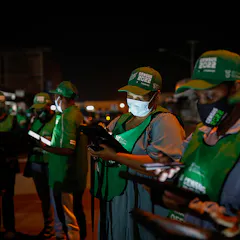
Big data is not the answer to all the challenges that faced Census 2022, but it may be a key enabler for gathering reliable national data in the future.

Victims of witchcraft accusations face alienation or exclusion from their communities.
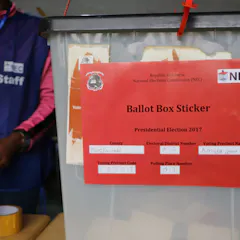
Liberia’s next president must restore national cohesion, tackle corruption, and strengthen state institutions.

‘Water-shifting’ should not be a permanent measure. It does not address the cause of the current crisis.

Armed police interventions are unconstitutional and incapable of addressing housing and safety in the inner city.

The French president has struggled to maintain the influence his country gained in Africa through colonialism.
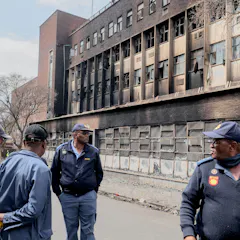
Inner city occupations and shack settlements alike are the inevitable consequence of the fact that huge populations of people have to get by without a living wage.
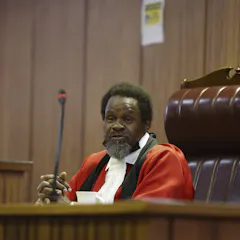
The challenges facing South African judges have been well documented for decades. They include the high number of unfilled vacancies and poor working conditions.
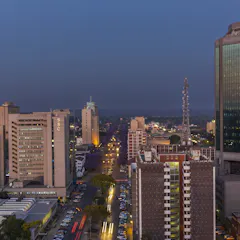
Without governance reforms, Zimbabwe will continue to face an economic crisis.
Top contributors
-

Political Scientist, University of the Western Cape
-
Senior Research Associate, University of Johannesburg
-
Professor of Public Affairs, Tshwane University of Technology
-
Professor of Political Studies, University of Johannesburg
-
Professor, Weber State University
-
Professor of Physics, University of Johannesburg
-
Professor of Sociology, University of the Witwatersrand
-
Director: Center for Public Policy and African Studies, University of Johannesburg
-
Professor and Research Theme Leader of the Flourishing Life Research Theme, University of the Free State
-
Visiting Adjunct Professor, School of Governance, University of the Witwatersrand
-
Postdoctoral research fellow at the SARChI Chair: African Diplomacy and Foreign Policy, University of Johannesburg
-
Professor of Accounting, The Ohio State University
-
Economist, UNSW
-
Professor/Senior Research Fellow, Centre for Advancement of Scholarship, University of Pretoria
-
Professor of Urban Policy and Director, Urban Futures Enabling Impact Platform, RMIT University