
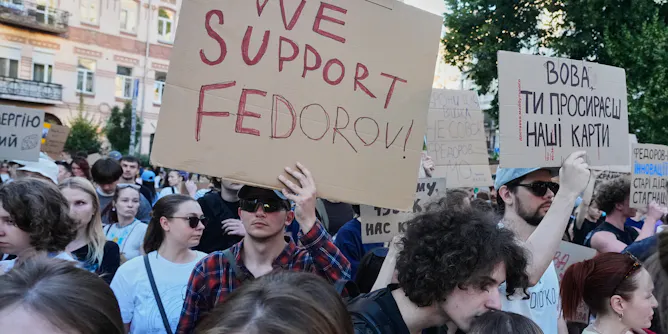
The defense minister’s firing was the catalyst, but polling suggests Ukrainians are rallying around a broader fight for freedoms and against corruption.
Articles on Good governance
Displaying 1 - 20 of 42 articles
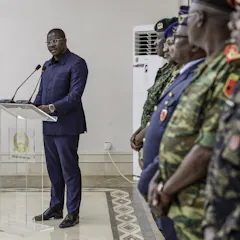
The coup sends a signal that electoral rules and constitutional procedures can be overridden by force.
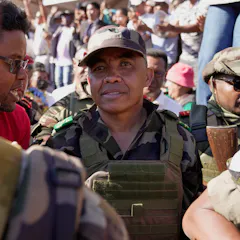
While illegal takeovers of state have declined globally, Africa has now seen at least 10 successful coups since 2020.

A general decline in trust in public institutions across Africa reflects the disconnect between state officials and the people.
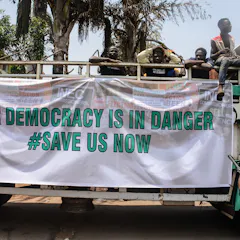
For democracy to survive in Nigeria, it must advance development for the people.

Senegal elections are offering citizens a peaceful, legal way to influence their leadership and government.
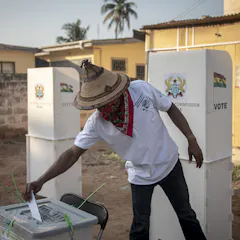
A growing number of Ghanaians are voting beyond partisan lines.
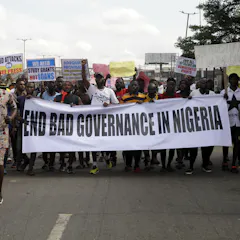
Good governance is a catalyst for national peace, stability and development.

How can we explain governance failures in boards of directors? Part of the answer lies in the way directors use their expertise and understand their role on the board.
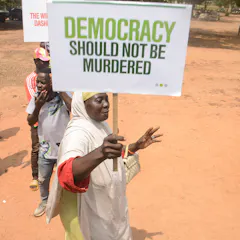
Good governance is the missing link in Nigeria’s democratic experience since 1999.

President Hichilema’s self-styled ‘chief marketing officer’ approach has unlocked new investments from a diverse mix of partners.
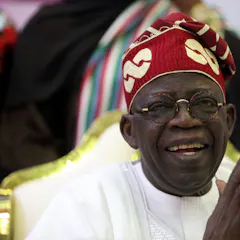
With the controversies surrounding his electoral victory, Bola Ahmed Tinubu would need to build legitimacy, goodwill and demonstrate capacity to govern effectively.

Water is a critical resource, enabling socio-economic development.

The court ruling that it’s a constitutional right to have clean air highlights the fact that South Africa needs to improve air quality urgently.
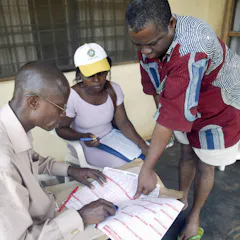
Census is a huge scientific responsibility that requires a high level of preparedness, transparency and quality assurance.
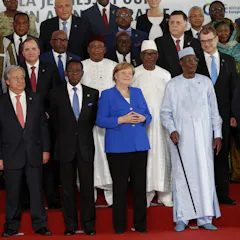
The persistent power inequalities between Africa and Europe do not bode well for supposed change. This is why the latest summit is important.
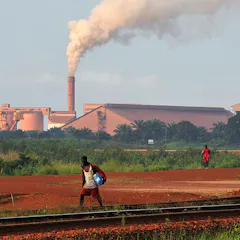
Successive regimes in Guinea have used mining to maintain the status quo.

Realistic and analytical evaluation could save the Indonesian government from adopting legal reform projects that are costly and likely to fail.

Developments in the energy sector shouldn’t be reduced to technological sophistication. They should be guided by how they improve the livelihoods of the intended beneficiaries.

There are calls for measures to reduce the burden of red tape and promote and facilitate biodiversity research in South Africa.
Top contributors
-

Professor of the Practice of Governance, University of Southern California
-
Associate Professor of African History, Temple University
-
Senior Lecturer/Associate Professor, Department of Government, University of Essex
-
Professor of Social Development Studies, University of Johannesburg
-
Assistant Professor in Organisation Studies, Universitas Indonesia
-
Emeritus Professor of International Relations, La Trobe University
-
Professor of Public Affairs, Tshwane University of Technology
-
Nonresident Research Fellow, Rice University
-
Qualitative Research Manager, Aluminium Stewardship Initiative (ASI), Honorary Lecturer, Camborne School of Mines, University of Exeter, and Visiting Research Associate, African Leadership Centre (ALC), School of Global Affairs, King's College London, King's College London
-
PhD Student of Department of Geography, National University of Singapore
-
Senior Lecturer in International and Strategic Studies, University of Malaya
-
Senior Research Fellow, Legon Centre for International Affairs and Diplomacy, University of Ghana
-
Senior Lecturer, Biodiversity and Conservation Biology, University of the Western Cape
-
Associate Professor of Law, University of Ghana
-
Associate Professor of Strategy & IB, University of Bath