

A former head of the US Food and Drug Administration cut his body fat in half using GLP-1 drugs. In his book, he compares the harm of the food and tobacco industries.
Articles on GLP-1
Displaying 21 - 40 of 42 articles

While natural approaches to raising GLP-1 are not as potent as medications, they provide a drug-free approach to weight loss and healthy eating.

Obesity is a complex condition and not simply a result of eating too much or exercising too little.

Research shows that people who take these weight-loss medications may have a lower risk of dementia and numerous other health conditions.
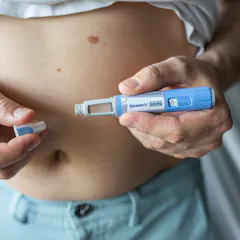
A new study found people with type 2 diabetes who used drugs like Ozempic had a reduced risk of 42 health conditions or issues, but a greater risk of 19 others.

Early clinical trials suggest that people who lose weight with drugs like Ozempic lose lean mass as well as fat, which could have consequences for older adults at risk of muscle loss.

A weight-loss drug more effective than Ozempic and Wegovy has recently been approved. Here’s how it works and how it compares with Ozempic.
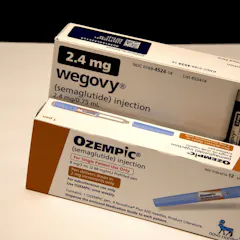
The sellers of these online products acknowledge that many of their drugs are for ‘research purposes only’ or ‘not for human consumption.’

Patents for a drug related to Ozempic have expired, so pharmaceutical companies are working to develop ‘generic’ versions. These are likely to be much cheaper. But how do they compare with Ozempic?
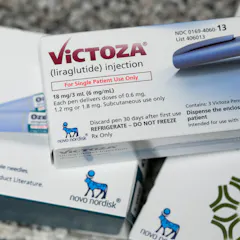
Diabetes drugs similar to Ozempic are associated with a reduction in risk of ten types of cancer compared with treatment with insulin.
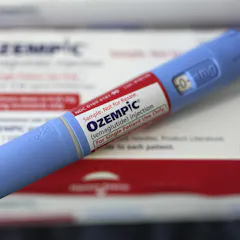
The future of the blockbuster drugs could hinge on a trial in Pennsylvania.

Johann Hari’s book opens a deeper conversation about the pros and cons of injectable weight-loss drugs – including whether we really want to trade the pleasure we get from food for losing weight.

Alcohol is responsible for more deaths than overdoses from opioids and all other substances combined, yet less than 10% of people with alcohol use disorder receive treatment.

The animal studies are promising but early research in humans show mixed results. Here’s what we know so far.

Does weight come back when you stop taking drugs like Ozempic? Are these medications simply another (expensive) form of yo-yo dieting? Here’s what we know so far.

We don’t tell people taking statins to treat high cholesterol or drugs to manage high blood pressure they’re cheating or taking the easy way out. Nor should we when people take drugs like Ozempic.

Many have declared drugs like Ozempic could ‘end obesity’. This isn’t just untrue – it also perpetuates fat stigma.

In Australia, Ozempic is only approved to treat diabetes but doctors are prescribing it ‘off label’ for weight loss. Compounding pharmacies have also been making their own versions to meet demand.

Ozempic generated A$21 billion of sales in 2023 alone. So how was it developed? And how are its new competitors, Mounjaro and Zepbound, different?

Early on we heard a lot about the potential benefits of drugs like Ozempic. Now we’re hearing more about the risks. But what does the latest evidence say?
Top contributors
-

Professor of Pharmaceutical Chemistry, Macquarie University
-
Clinical Epidemiologist, Washington University in St. Louis
-
General Practitioner, PhD Candidate, Bond University
-
Accredited Practising Dietitian and Lecturer, Southern Cross University
-
Associate Professor of Medical Education, University of Nottingham; University of Lincoln
-
Head of the Translational Nanomedicine & Biotherapeutics Group and Senior Research Fellow, Adelaide University
-
Professor of Community Health and Wellbeing, The University of Queensland
-
ARC Future Fellow, School of Biomedical Sciences, The University of Queensland
-
Professor, Kinesiology, Tier 1 Canada Research Chair in Skeletal Muscle Health, McMaster University
-
Postdoctoral Research Fellow, Edge Hill University
-
Associate Lecturer, Sydney Pharmacy School, University of Sydney
-
Professor of Law, Villanova University
-
Senior Research Fellow, Florey Institute of Neuroscience and Mental Health
-
Lecturer Pharmacy Practice, University of Sydney
-
Addiction Psychiatrist, Associate Professor, Monash University