
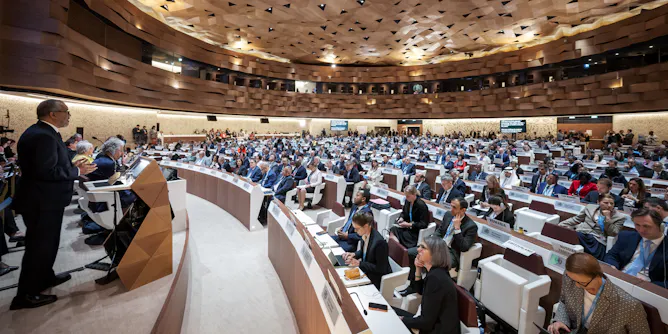
The US withdrew from treaty negotiations on President Trump’s first day in office.
Articles on Global pandemic
Displaying all articles

The COVID-19 pandemic has been unlike any crisis, both in terms of depth and duration, and has damaged the aviation industry more than most sectors.

The aviation industry requires very expensive assets but is sensitive to economic cycles

The decline of the news industry has been well documented. How did news organizations in the US heartland, facing potential extinction, survive – and even thrive – through the pandemic?

Most states in Australia have a hospital in the home service allowing patients to receive nursing care, allied health care and medical care in their own home.
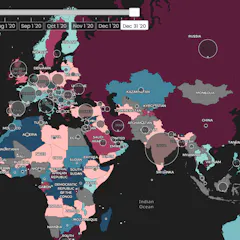
Last year, 189 countries – home to roughly 65% of the global population – cut themselves off from the world at some point. Borders are now reopening and travel resuming, but normal is a ways off.

The US mustn’t make the mistake of tackling these threats separately – or of trying to take a unilateral approach.
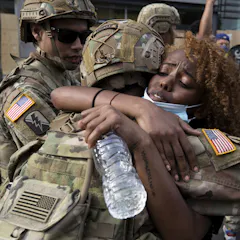
Feelings of empathy for others may be plentiful in a year of suffering. But is feeling more empathy to loved ones than strangers morally right? A research team sought to find out.
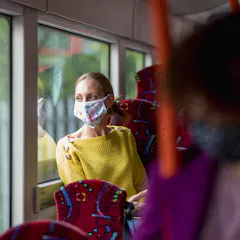
As ready as you are to be done with COVID-19, it’s not going anywhere soon. A historian of disease describes how once a pathogen emerges, it’s usually here to stay.
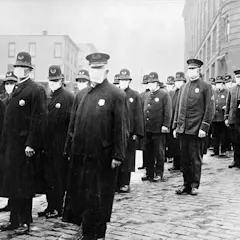
As the US battled the 1918 influenza pandemic, some communities staged contentious battles against wearing masks. Sound familiar?

A survey conducted in early April reveals that, even in lockdown, fewer than 3% of people were feeling only negative emotions.

This weekly column by our team of international health editors highlights more of the recently published articles from The Conversation’s global network.

Wild animals and animal parts are bought and sold worldwide, often illegally. This multibillion-dollar industry is pushing species to extinction, fueling crime and spreading disease.

Success during the pandemic hinges on people taking social distancing seriously. What do you do when someone doesn’t? The people who negotiate humanitarian aid in crises have some lessons for you.

Presenteeism — when employees show up for work when they’re sick — at a time of a global pandemic is especially dangerous for co-workers, managers and employers.
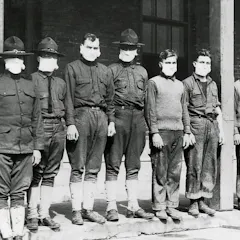
Policymakers would be wise to pay attention to historical parallels.
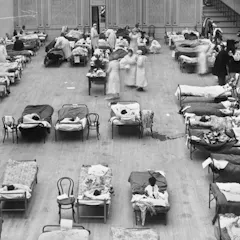
From the neighborhood to the newsroom to the White House, nobody stays silent during a health emergency. These terms are often mixed up, and it matters who is using them and when.
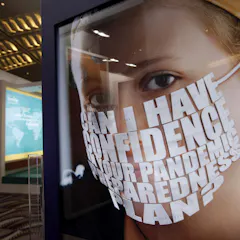
It’s not a matter of if, but when, the next deadly pandemic will strike. Will the world be ready?
Top contributors
-

Assistant Professor, Texas A&M University
-
Associate Dean For Global One Health, College of Veterinary Medicine & Biomedical Sciences; and Director, Pandemic and Biosecurity Policy Program, Scowcroft Institute for International Affairs, Bush School of Government and Public Service, Texas A&M University
-
Director of the Scowcroft Institute of International Affairs and Executive Professor, Texas A&M University
-
Research Associate in Existential Risk, University of Cambridge
-
Graduate Assistant in Psychology, University at Albany, State University of New York
-
Assistant Professor of Employment Relations, University College Dublin
-
Research Associate, Centre for the Study of Existential Risk, University of Cambridge
-
Associate Professor, Human Resource Management and Business Consulting, University of Guelph
-
Professor, Business and Management, Queensland University of Technology
-
DANCAP Private Equity Chair in Human Organization, Western University
-
Assistant Director of the Center for the History of Medicine, University of Michigan
-
Professor of Management, University of Bristol
-
Professor of Management , Embry-Riddle Aeronautical University
-
Professor of Fish, Wildlife and Conservation Biology, Colorado State University
-
Postdoctoral Research Associate in Existential Risk, University of Cambridge