

Johannesburg is not the most anxious or dangerous city in the world, but its global reputation, history and architecture make it a valuable site for thinking about how anxiety structures our lives.
Articles on Global North
Displaying 21 - 37 of 37 articles

As a zoonotic virus, COVID-19 is itself a symptom of human-influenced climate change. It is also indicative of the humanitarian impact of future environmental crises.

Changes caused by COVID-19 in the higher education sector could alter the power dynamics between African researchers and those from developed countries.

Academics face the choice of becoming a colony of the Northern mainstream or retreating into a Southern “indigenous” enclave. Both should be resisted.

While celebrating the millions on streets in London and Vancouver, we must not forget the sacrifices of people in the Global South.

In the past few decades, there’s been more critique of global knowledge inequalities and the global North’s dominance.

It’s all too common for local scholars to be sidelined in what are supposed to be genuine research partnerships.
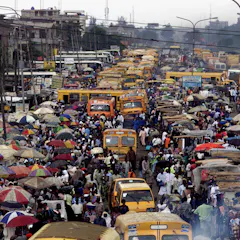
The global poverty plot is thicker than what the World Bank would have us believe.

The exclusion of scholars based in the global South undermines their work.
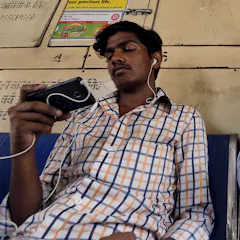
Three trends suggest people in less developed nations – who are coming online in greater numbers – use and trust the internet very differently those in more developed economies.
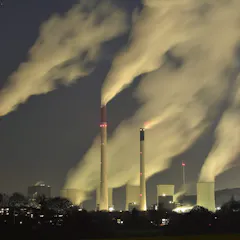
Some experts argue globalization has been bad for the environment. But moving away from globalization could have other consequences that could be even more devastating for the environment.
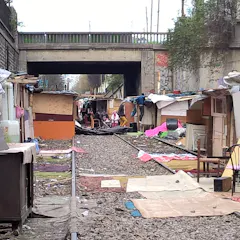
Slums are an increasing common phenomenon across the global North and global South. To what extent could they be seen as an inherent part of the urbanisation process?
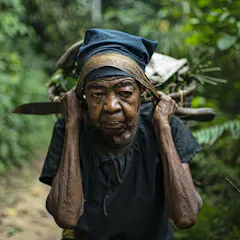
Leaving no-one behind is a catchphrase that seeks to ensure that all people benefit from the global development agenda set in the sustainable development goals.

Knowledge is power. If you own it, you can control those without it. Since so much knowledge about Africa doesn’t sit on the continent, it’s apparent that Africa lacks power in this regard.
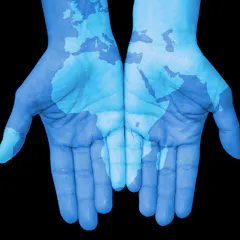
Africa’s universities must avoid collaborative programmes with the North that become mere tick-box exercises that only benefit Northern researchers and organisations.

Art events should encourage us to spark new thinking outside of our cloistered world, but Berlin risks being lost in technological navel gazing.
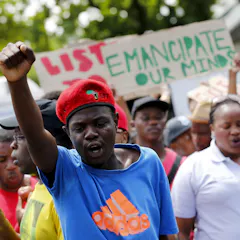
Many works published on decolonisation originate from Ngugi wa Thiongo’s idea of decolonising the African mind. Imperialism, he writes, has left its mark on the minds of the previously colonised.
Top contributors
-

Adjunct Professor, Njala University
-
Professor, Political Science and Ethnic Studies, University of Nebraska-Lincoln
-
Prof of Archaeological Science, University of Oxford
-
Global Studies Associate Fellow, University of Sussex
-
Associate Professor of Development Studies, University of Agder
-
Dean of Global Business, The Fletcher School, Tufts University
-
Professor of Demography, University of Cape Town
-
Senior Lecturer, Gender and International Politics, University of Bristol
-
Post doctoral research fellow, University of Johannesburg
-
Associate Professor, School of Education, Aarhus University
-
Science Officer in the Durban office of the Intergovernmental Panel on Climate Change Working Group II Technical Support Unit, University of KwaZulu-Natal
-
Reader in Law, King's College London
-
Post-Doctoral Researcher, University of KwaZulu-Natal
-
Head: Sustainable and Resilient City Initiatives Unit, EThekwini Municipality; Honorary Professor, University of KwaZulu Natal and Co-Chair of Working Group II of the Intergovernmental Panel on Climate Change, University of KwaZulu-Natal
-
Senior Lecturer in Geography and Urban Design, UCL, Fellow 2017, Institut d'études avancées de Paris (IEA) – RFIEA