
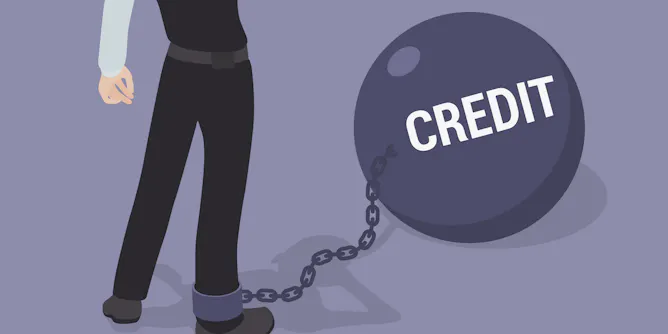
The UK and US may avoid another crash, but many other major economies look like they are on the brink.
Articles on Global financial crisis
Displaying 81 - 100 of 209 articles

Banking used to be an engine of social mobility and a generator of secure, satisfying employment for the many gainfully employed in it.
The 2007-08 financial crisis affected the world’s advanced economies in profound ways and the ripple effects continue to today.

Research with call centre workers shows mis-selling is an entrenched and accepted feature of financial sales.

Recalling August 9 2007 – the start of the credit crunch and global financial crisis.

The finance industry has developed a powerful set of tools over the years, which could be used to improve well-being and solve our environmental problems.
Randal Quarles, the president’s first nominee to the Federal Reserve’s board of governors, has argued the bank should use rules to make decisions. But could such a shift prove disastrous in a crisis?
Christian Porter said Australia’s welfare system ‘was costing over 100% of all income tax raised’ under Labor after the GFC, and that it’s ‘around 80%’ under the Coalition. Is that true?

The next financial crisis might be caused not by greed, but a human bias towards safety.
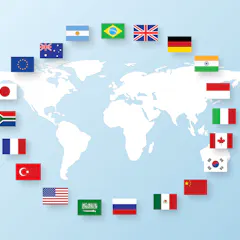
In its agenda to reform global economic governance the developing world should look for ways to extract some value from the G20.
A new study brings fresh insights into understanding the nature and extent of South Africa’s systemic risks within the country’s financial sector.

Uproar from businesses in the South East disguises a complex picture with the financial crisis at its heart.

Ridiculed and ignored in 2016, what can the ‘dismal science’ offer us now?
In both the global North and South, economics tends to be taught with micro- and macroeconomic models that are disconnected from sociopolitical realities. We suggest new ways of teaching economics.

Donald Trump may be a populist, but his policies are set to be particularly popular with the banking industry.
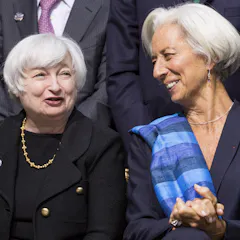
Fresh thinking is needed and women’s voices must no longer be excluded

Although the Fed delayed raising rates this month, it has signaled it intends to wean the U.S. economy off its unprecedented monetary stimulus. Now the question is whether Congress will take the handoff.

The financial products offered by the shadow banking sector allow investors to be further removed from their investments and banks to escape regulation, increasing the risk in the sector overall.

Australia’s big four banks are managing risk well, this could be contributing to their strong performance.
The people wanted reform but they got excuses, and now populism is winning.
Top contributors
-

Scientia Professor of Economics, UNSW
-
Senior Lecturer in Economics, The Open University
-
Director and Professor, Australia-China Relations Institute (UTS:ACRI), University of Technology Sydney
-
Honorary Research Fellow, City Political Economy Research Centre, City St George's, University of London
-
Professor of Banking & Applied Economics, University of Stirling
-
Head of Department of Economics, Finance & Accounting, Brunel University of London
-
Visiting Fellow, Macquarie University Applied Finance Centre, Macquarie University
-
Visiting Fellow, Crawford School of Public Policy, Australian National University
-
Professor, Accounting and Finance, City St George's, University of London
-
Professor of Economics, University of Sydney
-
Senior Lecturer in Economics, Lancaster University
-
Professor of International Relations, Australian National University
-
Honorary Professor of Economics, UCL
-
Senior Lecturer in Banking and Finance, The University of Queensland
-
Professorial Research Fellow, Melbourne Institute, The University of Melbourne