
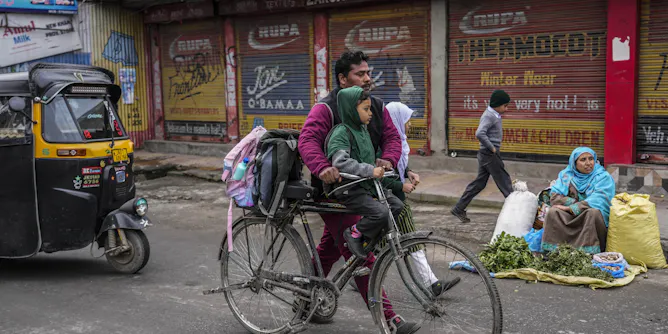
The stark difference in women’s education statistics shows how Kashmiri girls and women are bearing a disproportionate brunt of militarized governance.
Articles on Girls education
Displaying 1 - 20 of 31 articles
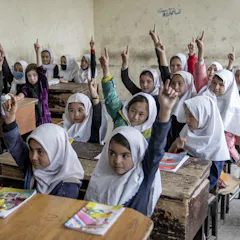
New research shows that Afghan women earned 13% more for every additional year of schooling they received after the Taliban fell in 2001. That progress is now in peril.
The Taliban are increasing religious education and removing lessons about the arts, culture and human rights – moves that will shape the future for millions of Afghan students
Improving school sanitation, reducing household chores, and addressing harassment and bullying could enhance girls’ reading performance relative to boys’.
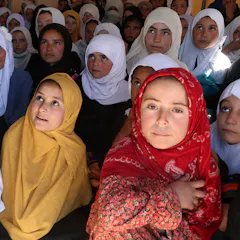
If the ban on girls’ education in Afghanistan persists, consequences could include higher rates of abuse, the spread of extremism and billions of dollars in economic loss.
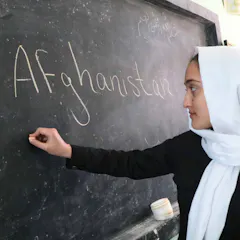
Education for girls was also limited during the Taliban’s previous period of control in Afghanistan, from 1996 to 2001.
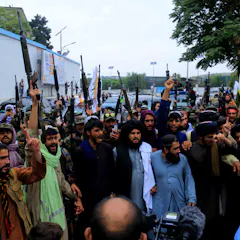
One year after the Taliban reclaimed power in Afghanistan, life for many Afghan people is mired in poverty and oppression.
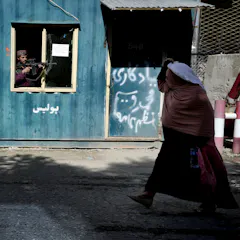
Research into 70 new Taliban policies to control women and girls shows the extremist, misogynistic group might be using different tactics, but it still poses grave dangers to Afghan society.
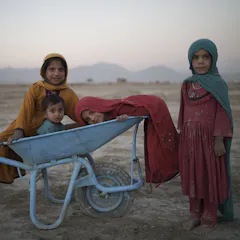
With 95% of households in Afghanistan not consuming enough food and the economy on the brink of collapse, this is a perilous time for the children of the country.
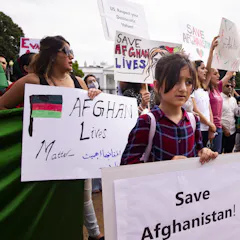
The Taliban have given every indication women and girls will face violence and repression as they back control of Afghanistan.

After 20 years in Afghanistan and many promises made, the U.S. does hold responsibility for Afghans’ fate, including their human right to access education.

Less than 30% of researchers worldwide are women. The biases and perceptions that keep women and girls out of STEM must be tackled.

Close to 4 million teenage girls are subjected to breast ironing worldwide. This harmful cultural practice, which is most prevalent in West and Central Africa, needs to stop.

Physical education is for every body - as long as it’s male.
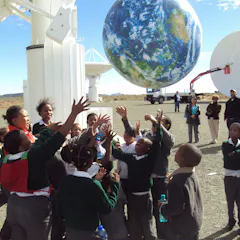
Astronomy is accessible to anyone with a view of the sky.
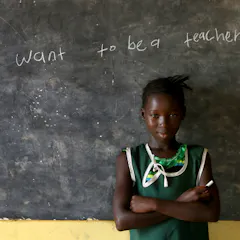
Female teachers can act as role models who enhance girls’ motivation and learning outcomes.
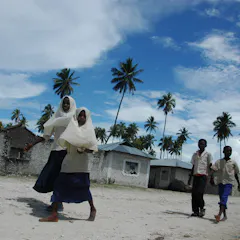
Creating more opportunities for young women and girls to work and earn money is a possible solution to early marriages. Subsidising secondary education to keep poorer girls in school is another.
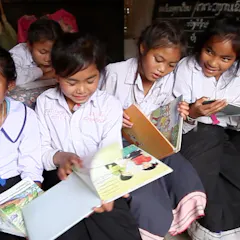
Here’s how cultural practices are playing a role in many countries in incentivizing parents to educate their girls.

Girls’ lives are still entangled in a culture whose custodians happen to be men.
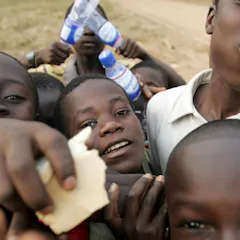
Ghana’s school feeding programme has reached millions of children in the past 11 years. It does important work, but needs more support to grow and become sustainable.
Top contributors
-

Doctoral Research Assistant in Educational Policy, University at Albany, State University of New York
-
Lecturer in Environmental Sustainability, University of Energy and Natural Resources
-
Academic and Professional Tutor, Doctorate in Educational Psychology, University of Manchester
-
Professor of Global Health, University of Toronto
-
Associate Professor of Geography, University of Nottingham
-
Assistant Professor of Economics, University of Toronto
-
Lecturer in International Development, King's College London
-
Associate Professor, La Trobe University
-
Doctoral student in Global Health, Harvard University
-
Senior Research and Evaluation Officer / Independent Research Consultant / PhD @ Swansea University, Swansea University
-
Professor, International Education and Director, Research for Equitable Access and Learning (REAL) Centre, University of Cambridge
-
Vice-Dean for Scientific Affairs And Assistant lecturer, Biochemistry And Genetics Department, Universidade Agostinho Neto
-
Senior Research Scientist, African Population and Health Research Center
-
PhD Candidate, University of Dar es Salaam
-
Assistant Professor of Global Health, Boston University