

Self-advocacy and taking initiative have proven critical for autistic students who are also gifted, new research shows.
Articles on Gifted programs
Displaying all articles
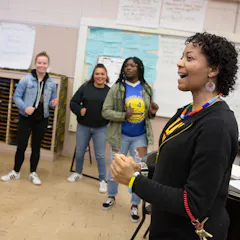
A study finds that graduates who attended publicly funded schools were more likely to have open intercultural orientations than those who attended private schools.
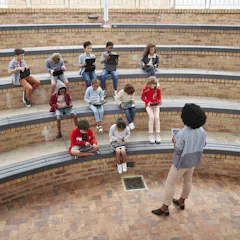
Common methods for identifying gifted students often miss students from lower-income families who should qualify for gifted programs.
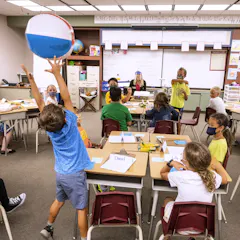
In middle school classes, students from lower-income families tended to be concentrated in just a few classrooms, new research from North Carolina has found.
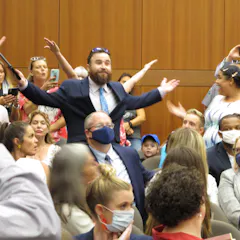
Short-term disputes are really symptoms of deeper divisions in the US over who deserves academic opportunity, and how to present the nation’s history.
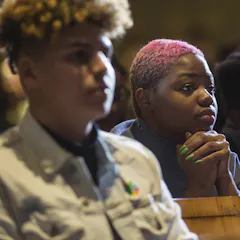
Teacher referrals will replace standardized testing. That could disadvantage already-underrepresented students.
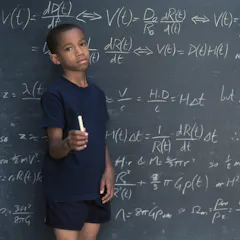
Anti-Black bias and lack of teacher referrals are keeping Black students out of gifted school programs, a scholar suggests.

Racial, ethnic and class inequities regarding gifted and talented services are found in most school districts.

New York City could be on the verge of dismantling gifted programs at its elementary and middle schools. Taking that step could make things even worse for some of the children it aims to help.

The words “gifted”, “precocious” and “high potential” represent different ways of seeing and valuing exceptional abilities.

America’s low-income but high-achieving kids fail to find the necessary resources, and consequently fall behind. This has huge implications for innovation as well as the GDP.
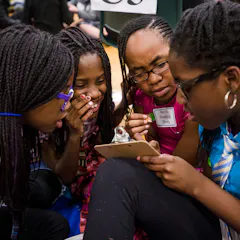
Two students – one black and one white – with the same math and reading achievement could have very different likelihoods of being identified as gifted.
Top contributors
-

Associate Professor of Education Policy and Psychology and 21st Century Chair, University of Arkansas
-
Professor of Education, University of California, Berkeley
-
Associate Professor of Public Policy and Education, Vanderbilt University
-
Doctorante en psychologie, Université de Tours
-
Assistant Professor of Education Policy and Data Visualization, University of Washington, Bothell
-
Professor of Special Education, The Ohio State University
-
Associate Professor of Educational Studies, University of Alabama
-
Research Associate, The Dartmouth Institute, Dartmouth College
-
Executive Director of the Office for Education Policy, University of Arkansas
-
EdD graduate, OISE, University of Toronto
-
Professor of Education, University of Connecticut
-
Ph.D. Candidate in Public Administration and Policy, American University School of Public Affairs
-
Professor of Educational Studies; Director, Gifted Education Research and Resource Institute, Purdue University
-
Associate Research Professor, Department of Educational Psychology, University of Connecticut
-
University Teaching Fellow, Educational Psychology, University of Connecticut