
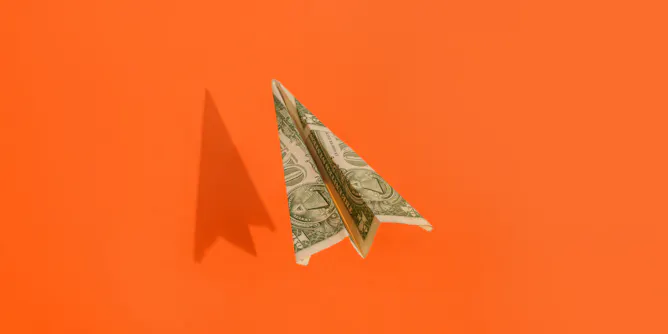
The richest Americans can largely avoid paying income and other taxes. A new book explains the history.
Articles on Free markets
Displaying 1 - 20 of 35 articles

A state-owned, ‘no frills’ competitor would have one goal: to move commodities efficiently from producers to consumers as cheaply as possible.

The US economy has always been a mix of government regulation and market forces. The balance between those has shifted over time, but never has one side or the other been substantively removed.

Governments around the world are intervening in the market to boost green industries. Picking winners like this comes with a chance of failure – but it’s not a reason to stop

Across the economy, similar things tend to have similar prices. Have these been driven to their lowest natural level by competition? Or are firms abusing market power to charge whatever they want?

For the first time in 80 years, Karl Polanyi’s magnum opus has been published in the UK.
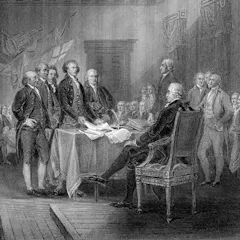
The founders saw a need for government to intervene in markets.

War is taking a toll on Israel’s economy.

Everyone wants to claim the economic thinker as their own.
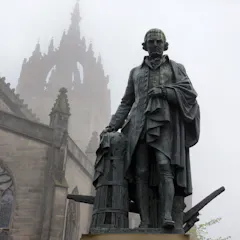
The Scottish economist dedicated his life’s work to understanding the consequences – moral, social and political – of capitalism. Both neoliberals and leftwingers claim his legacy.

The word ‘neoliberal’ gets thrown around a lot, often with differing and even contradictory meanings. Here, a political economist explains the origins and evolution of this complex concept.

It’s time for a new brand of democratic liberalism that understands and harnesses the power of markets for social and economic good.

Uber’s downsides are well publicised, but it may have a big social benefit in helping to reduce the incidence of drunk driving.

Competition in the marketplace for ideas is different to competition in the market for ordinary goods and services. Bad ideas don’t necessarily get trashed.

After the pandemic is over, grocery workers and nurses will still be essential. But will they be paid any better?
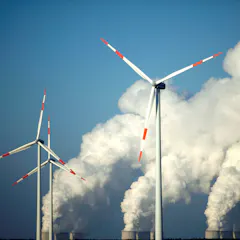
Conservatives worldwide favor carbon pricing, cap-and-trade systems and other innovative environmental plans – just not in the United States.
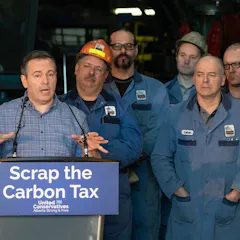
Carbon pricing is the most market-based means of addressing the climate crisis, yet it is strongly opposed by politicians that claim to support free markets.

For economics to play a more helpful, critical role, it must abandon blind faith in the free market and embrace the social, historical, and environmental context in which economics actually happens.

The history of Britain’s vote to exit from the European Union, known as Brexit, is not a tale of populist resentment toward globalization. It is a top-down story of leaders and elite ideology.
From the 20th-century process of policy trial and error, the nations that married the strengths of markets and government came out ahead.
Top contributors
-

Scientia Professor of Economics, UNSW
-
Professor of Law, Wake Forest University
-
Professor of Law, University of Cincinnati
-
Reader in Geopolitical Ecology, Queen Mary University of London
-
Associate professor in Sociology, University of the West of England
-
Professor of Institutional Economics, RMIT University
-
Professor of Economics and Director, Tax and Transfer Policy Institute, Crawford School of Public Policy, Australian National University
-
Reader of Public Policy, University of Warwick
-
Head of Brunel Law School; Professor of Corporate Law and Finance, Brunel University of London
-
Associate Professor & Program Director of Design Studies, University of Technology Sydney
-
Associate Professor of Philosophy, Georgia State University
-
Professor of International Relations, Australian National University
-
Research Associate, School of Social Sciences, Monash University
-
Professor of Political Science, University of Sydney
-
Professor of Economics; Nobel Laureate, Yale University