
A dictionary of African politics reveals the witty and insightful political terminology that people in different African countries use.
Articles on Francophone
Displaying 21 - 40 of 48 articles

The environment at universities isn’t conducive to effectively teaching and learning new languages.

Ontario’s newest university serving a diverse francophone community will focus on the community’s strengths and contribute to major contemporary issues.

The Gender Gap Tracker uses computational linguistics techniques to analyze how women are mentioned and quoted in Canadian media.

The language learning approach called “plurilingualism” empowers people to draw on many languages and cultural modes of communicating.

New Brunswick’s language politics have vaulted ahead of its teetering economic crisis to potentially become the central political issue in 2019.
Ontario’s premier is drawing faulty parallels between Franco-Ontarians and Anglo-Quebecers when it comes to the services available to them in each province.
Ordinary people are being deeply affected by the continued violence tearing apart Cameroon.

A unique model of journalism based on academic research and fact-based analysis is now being published in both of Canada’s official languages

To read English-Canadian media, you would think that Québec’s anglophones are under greater threat than the rest of the country’s minority language communities. Why the selective outrage?

In a recent Twitter post, French president Macron reminded the world that the word “entrepreneur” is in fact French.

Frantz Fanon recognised mental illness as a real experience and offered an understanding of it being influenced by society and culture.
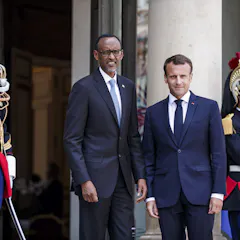
After the 1994 genocide, Rwanda pivoted towards the Anglophone world. But not entirely.
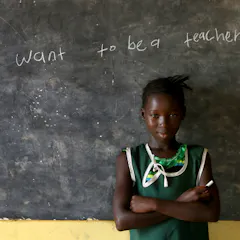
Female teachers can act as role models who enhance girls’ motivation and learning outcomes.

First and second-generation immigrants perform well in many Canadian provinces that take an “accommodation” approach.
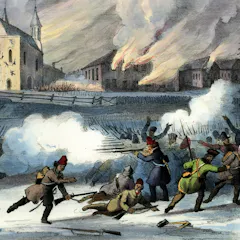
Why is a memorial to 29 Francophone men who were executed by the British government as well as to 58 men who were exiled to Australia in 1838 hidden away in a Montreal cemetery?
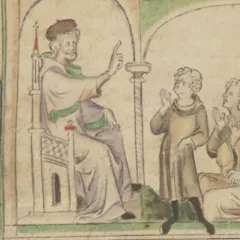
Back in the Middle Ages, as well as speaking English and Latin, many people living in Britain also spoke French.
But the British soon got the hang of profanity.
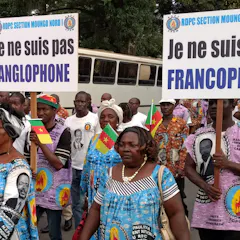
Anglophones have long complained that their language and culture are marginalised. They say if this doesn’t change, they must be granted independence.

French is no longer taught as a European language representative of “French” culture in South Africa. New modes of teaching, learning and research speak to an inclusive Africanist agenda.
Top contributors
-

Professor, Canadian and Cultural Studies, Stockholm University
-
Senior Lecturer in French and Francophone Studies, University of the Witwatersrand
-
Associate Lecturer in Development Studies, Birkbeck, University of London
-
Head of Research Programme, Council for the Development of Social Science Research in Africa
-
Graduate Student (Ph.D), Korea University
-
Associate Professor of Strategy & IB, University of Bath
-
Professor of History, Université de Yaounde 1
-
Postdoctoral Research Associate, King's College London
-
PhD Candidate, Art History, Concordia University
-
Associate Professor, History and Politics, University of New Brunswick
-
Professor of Migration Studies, Maastricht University, Head of Migration Studies at Maastricht Economic and Social Research Institute on Innovation and Technology (UNU-MERIT), United Nations University
-
PhD Student in Politics and International Studies, University of Warwick
-
Lecturer of Theoretical and Applied Linguistics, University of Cambridge
-
Professor of Psychology, University of the Witwatersrand
-
Professor of Strategy and Entrepreneurship, ESSCA School of Management