

Iceland has trialled shorter working hours, but not a four-day week.
Articles on Four-day week
Displaying 21 - 38 of 38 articles

Our approach to work has had to adjust, so let’s change even more.

How can businesses overcome institutional hurdles to transition to a four-day week?

The four-day work week is an idea that should make it through the pandemic’s open policy window.

Trials show a four-day week really works. With economies desperate for recovery, now could be the perfect time to encourage it.

Lockdown throws our relationship with work into the spotlight.

All this talk of moving to a four-day week overlooks what might be a more important agenda.

Government legislation followed numerous campaigns in the 19th century for Saturday afternoons off.

… and is the NHS really comparable to a string quartet?

The benefits of a four-day working week, without loss of pay, can outweigh the cons for both businesses and staff.

Net benefits depend on how workers use the long weekend.

Not only could less work pay for itself by boosting productivity, it’s necessary for human and planetary well-being.

UK emissions are around 23% lower on a holiday compared to a working day.

A trial of a four-day working week shows that employees felt better about their job, were more engaged and reported better work-life balance and less stress.

Work dominates many of our lives, often in ways that are detrimental to our health and well-being.

The idea of a four-day workweek sounds great, and many companies have tested or even implemented it, citing happier, healthier workers. But here’s why it may not be healthy.
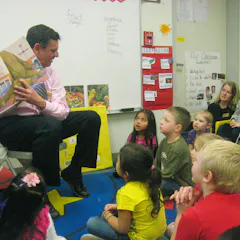
Some public schools have switched to a four-day school week. What does it change?

Why three-day weekends are not only feasible but the basis of a better standard of life.
Top contributors
-

Professor of Economics and Political Economy, University of Leeds
-
Adjunct Professor, Business School, University of Technology Sydney
-
Associate Professor of Finance and co-Director of Equity, Diversity, and Inclusion at Henley Business School, University of Reading
-
Professor of Management, Deakin University
-
Dean's Chair in Management and Māori Business, Te Kunenga ki Pūrehuroa – Massey University
-
Associate Professor of International Business and Strategy, Henley Business School, University of Reading
-
Management Professor, McGill University
-
Catedrático de Economía, Universidad de Salamanca
-
Professor of Education Research, School of Education, University of Birmingham
-
Distinguished Visiting Professor in Economics, University of Johannesburg, University of Johannesburg
-
Lecturer, Deakin University
-
Associate Professor Leeds University Business School, University of Leeds
-
Professor of the Future of Work, Newcastle University
-
Professor, Sociology and Social Anthropology; Former Canada Research Chair in Sustainable Rural Futures for Atlantic Canada (2014-2025), Dalhousie University
-
Professor, School of Economics, The University of Queensland