
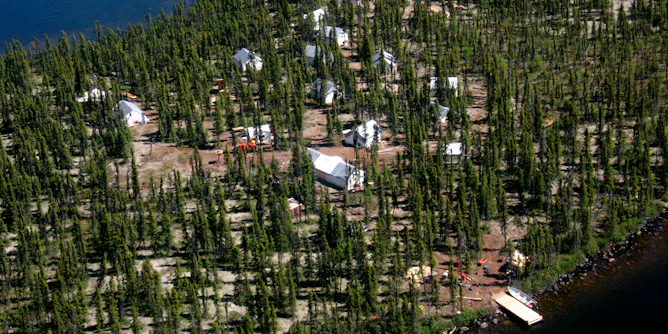
Indoor farming helps northern Manitoba communities access fresh, healthy food and address rising rates of diabetes, cardiovascular disease and hypertension.
Articles on Food sovereignty
Displaying all articles

Faced with both a trade war and annexation threats, Canada must confront whether its domestic food systems can feed its population in a crisis.

Ensuring food security for the future means supporting food producers and building the infrastructure and policies that make local food accessible, affordable and sustainable for all.
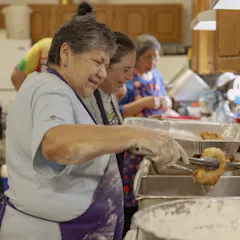
Frybread — a simple, versatile “comfort food” for many Indigenous communities — embodies the contradictions that have dictated Indigenous food and health in North America since colonization.
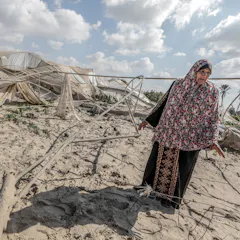
A specialist in conflict-affected food and farming visits the Gaza Strip.
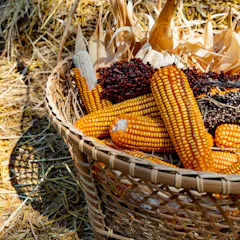
A lack of data prevents governments and agri-food organizations from knowing what kinds of supports should be provided to reinvigorate Indigenous agricultural economies.
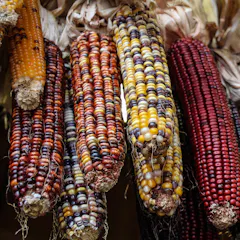
Our food systems are failing to feed all of us.
In this episode of Don’t Call Me Resilient, we pick apart what is broken and ways to fix it with two women who battle food injustice.
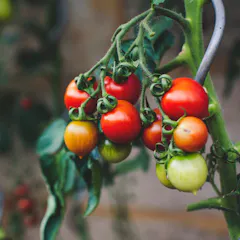
The COVID-19 pandemic has highlighted the problem of food insecurity for many people, especially racialized and Indigenous households.

A food policy researcher helps make sense of the lexicon of US food policy terms, and explains how they relate to racial justice.
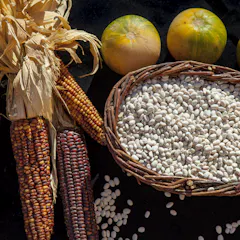
For centuries Native Americans intercropped corn, beans and squash because the plants thrived together. A new initiative is measuring health and social benefits from reuniting the “three sisters.”
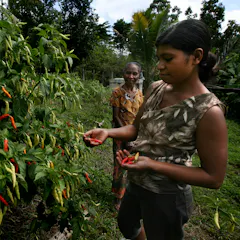
How Indigenous communities and a Timor-Leste NGO are reviving food sovereignty in one of Asia’s poorest countries.

Fast-food restaurants can be comforting places, but when they saturate communities, they crowd out healthy food sources and leave residents less nourished.
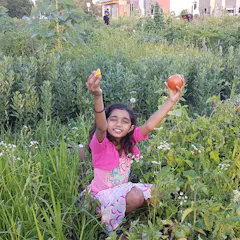
Community gardens with land-based activities can impact community food security and are a good way to forge relationships among new immigrants, Indigenous and non-Indigenous community members.
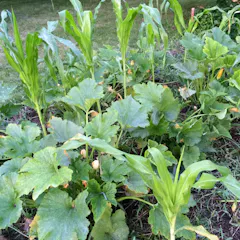
Indigenous food and medicine gardens, and traditional manikin (wild rice) harvesting offer hope – for the future health of humanity and the earth that sustains us.
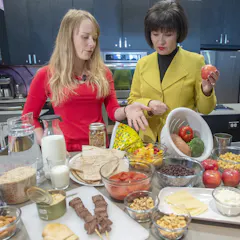
Canada’s Food Guide is a political document. It does not represent those who are poor, culturally marginalized and most at risk for food insecurity.
Top contributors
-

President, Food Secure Canada
-
Assistant Professor, Faculty of Land and Food Systems, University of British Columbia
-
Assistant Professor in Stabilisation Agriculture at the Centre for Agroecology, Water & Resilience, Coventry University
-
Associate Professor of Allied Health Sciences, University of Connecticut
-
Assistant Professor of History, University of Guelph
-
Assistant Professor of Family Relations and Applied Nutrition, University of Guelph
-
Professor, College of Agriculture and Bioresources, University of Saskatchewan
-
Associate Professor of Anthropology, Iowa State University
-
Assistant Professor, Department of Economics, University of Regina
-
Associate Professor of Family Relations and Applied Nutrition, University of Guelph
-
Associate professor, Human Rights Studies, King's University College, Western University
-
Second Century Chair Professor of Law, Author of Ruin Their Crops on the Ground and Skimmed: Breastfeeding, Race, and Injustice, Southwestern Law School
-
Research Associate, Sustainable Food Systems Lab, Lakehead University
-
Canada Research Chair in Equitable and Sustainable Food Systems, Lakehead University
-
Associate Professor, Outdoor Recreation, Parks and Tourism, Lakehead University