
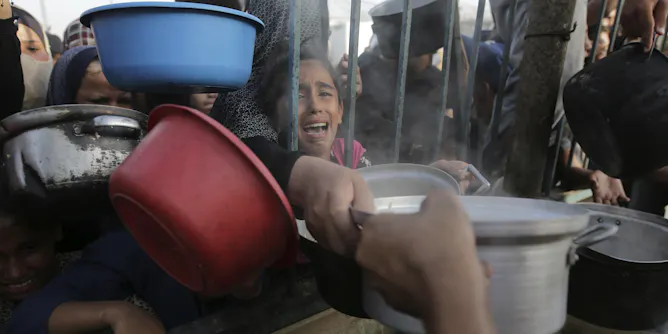
Hunger, stress, trauma, inadequate sanitation and other factors are converging to create a widespread humanitarian disaster with consequences that could last for generations.
Articles on Food insufficiency
Displaying all articles

The share of low-income US families who sometimes or often didn’t have enough food to eat fell from 24.5% to 22.5% between late April and late July of 2020, a research team found.

The 2021 child tax credit expansion helped lift millions of families with children out of hunger. After those payments ended in December 2021, those families may again face food insufficiency.
Long-term increases like this are unusual. So is the fact that this increased governmental generosity began with a measure approved by Congress when Republicans held majorities in both chambers.

Food insufficiency rates rose across the board, researchers who analyzed government data found.
Top contributors
-

Professor of Agricultural and Regional Economics, Penn State
-
Associate Professor of Applied Economics, South Dakota State University
-
Associate Chair and Professor of Genetics and Epigenetics, University of Wisconsin-Madison
-
Postdoctoral Scholar, Penn State
-
PhD Candidate in Economics, University of Kentucky
-
PhD Candidate in Economics, University of New Mexico
-
Associate Professor of Political Science, University of Richmond
-
Grace Melo is a Friend of The Conversation.
Assistant professor of Agricultural Economics, Texas A&M University
-
Associate Professor of Health Law, Policy and Management, Boston University