
Nearly 14,000 people in one Pittsburgh-area county could lose a benefit that’s long been considered one of the country’s most effective anti-poverty tools.
Articles on Food deserts
Displaying 1 - 20 of 26 articles
An analysis of 420 million supermarket transactions shows that understanding what people buy – not just where they live – is key to creating healthier communities.

Communities with unstable housing, food deserts and less access to health care contribute to the problem.

Shoplifting has been hyped as a driver of chain-store closures, but did these companies ever really understand urban environments in the first place?

An analysis by scholars at the University of California, Davis showed that just a small number of cities in California actively consider racism when developing their plans.
Maintaining a diversity of insects may be key for crop pollination in cities.

Over many decades our food environments have relentlessly been encouraging us to make choices that are harmful to our health, through pricing, marketing and availability.
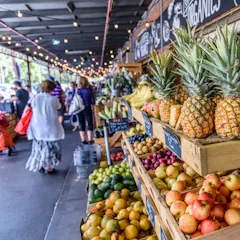
Nearly two-thirds of suburbs in one major part of Sydney have no food stores at all. And in those that do, unhealthy food outlets outnumber healthy ones by more than six to one.

Community members want their schools to address issues beyond academics, new research suggests.
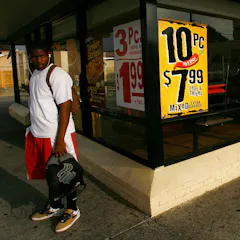
Discriminatory zoning and housing policies have concentrated poverty in America along racial lines. As a result, healthy food options are limited in many low-income and Black neighborhoods.
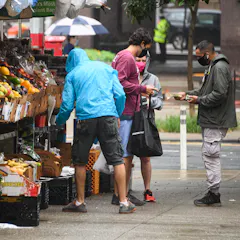
Cities have long resisted the public demand for street food vendors, but the pandemic may reverse those restrictions for good.

A food policy researcher helps make sense of the lexicon of US food policy terms, and explains how they relate to racial justice.

For centuries Native Americans intercropped corn, beans and squash because the plants thrived together. A new initiative is measuring health and social benefits from reuniting the “three sisters.”

Fast-food restaurants can be comforting places, but when they saturate communities, they crowd out healthy food sources and leave residents less nourished.
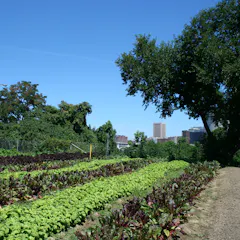
Four out of 5 Americans live in cities, so urban planning can make a big difference in our lifestyles – especially if it promotes healthy diets and physical activity.

Many argue the key to helping low-income Americans eat healthier is eliminating food deserts. A new study suggests this doesn’t help.

Prodded by Michelle Obama and other government leaders, Walmart and other major US retailers vowed to build hundreds of stores in food deserts. What happened?
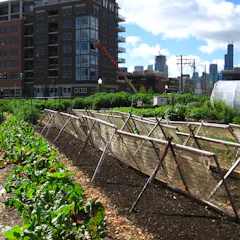
Urban farming can make it easier for city residents to obtain healthy, affordable food. But to raise big yields from small pieces of land, farmers need training and support.

It’s time to stop shifting responsibility onto individuals, and start supporting deprived communities to live healthy lifestyles.

UK mired by food ‘deserts’ and a crisis of loneliness – they should be tackled together.
Top contributors
-

Associate Professor of Human Ecology, University of California, Davis
-
Senior Lecturer in Geography, University of Sheffield
-
University of Chester
-
Assistant professor, Département de médecine sociale et préventive, Université Laval
-
Associate Professor of Agriculture and Human Sciences, North Carolina State University
-
Assistant Professor of Food Science and Human Nutrition, Colorado State University
-
Professor of Agroecology, University of California, Berkeley
-
Director, Agri-Food Analytics Lab, Professor in Food Distribution and Policy, Dalhousie University
-
Research assistant, Western Sydney University, UNSW
-
James M. Kilts Distinguished Service Professor of Marketing, University of Chicago
-
Associate Professor of Allied Health Sciences, University of Connecticut
-
John Rennie Short is a Friend of The Conversation.
Professor Emeritus of Public Policy, University of Maryland, Baltimore County
-
Assistant Professor of Economics, Northwestern University
-
Professor of Urban Policy and Planning, Hunter College
-
Researcher, SAMRC/Centre for Health Economics and Decision Science- PRICELESS SA, University of the Witwatersrand