
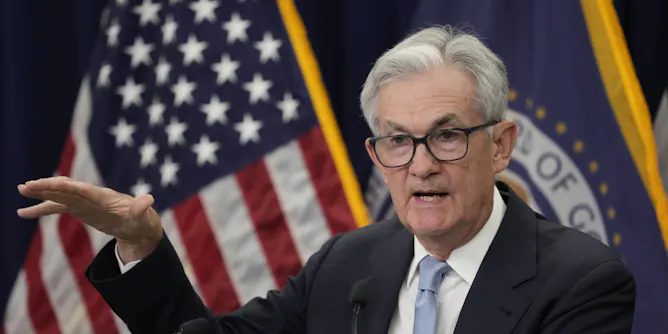
The Fed’s decision to raise rates is likely to put more pressure on regional banks, which will make it harder to avoid a recession.
Articles on FOMC
Displaying 1 - 20 of 25 articles
The cost of borrowing for a home has fallen in recent months, despite repeated increases of the benchmark interest rate. An economist explains the seeming paradox.
The Fed is also beginning to reduce its massive balance sheet, which is beginning to cause disruptions in the $24 trillion Treasury market.
The Federal Reserve hiked interest rates by an additional three-quarters of a percentage point. An economist explains what this means for the economy.

Most of us bargain hunt when shopping for a new blouse or pair of blue jeans, yet for some reason we don’t with interest rates, potentially costing us thousands of dollars.
The Reserve Bank of Australia is stuck, according to the economic evidence, it has to raise rates but it also should cut.
Randal Quarles, the president’s first nominee to the Federal Reserve’s board of governors, has argued the bank should use rules to make decisions. But could such a shift prove disastrous in a crisis?
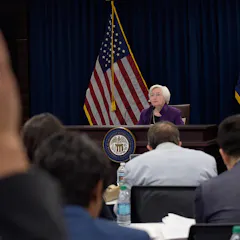
The Federal Reserve lifted rates for the second time this year and expects to do so once more, suggesting it’s fairly confident the economic recovery will continue. Is it overconfident?

While borrowers may not be thrilled by the Federal Reserve’s decision to raise rates, many of us have plenty of reason to celebrate.
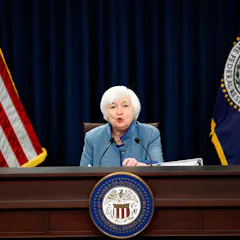
The Fed faces a tough choice on how fast to raise rates in 2017, and Donald Trump may find that it may spoil some of his plans.
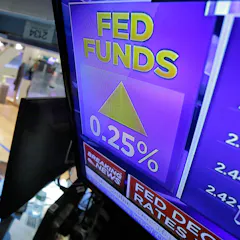
Many observers argue the Fed’s wrong to raise rates so soon. Here’s why they’re wrong.
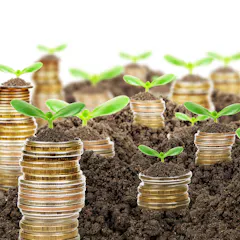
Ultra-low interest rates have made low-carbon projects like windmill farms more attractive than coal power plants. That will begin to change as the central bank lifts rates, hurting the green economy.

Although the economy added jobs for a 72nd month – the longest streak since WWII – growth remains sluggish. Two economists argue it’s up to lawmakers and the next president to pick up the slack.

Although the Fed delayed raising rates this month, it has signaled it intends to wean the U.S. economy off its unprecedented monetary stimulus. Now the question is whether Congress will take the handoff.
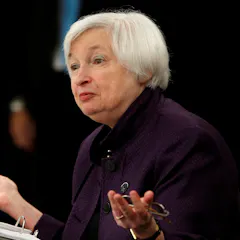
The Fed left interest rates unchanged but said improving economic data means it will likely lift them later this year. We asked two scholars – and ex-Fed officials – if it was the right call.
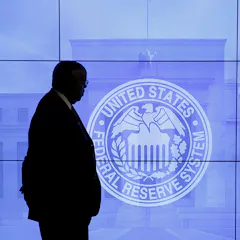
Just like apes, humans fear the unknown, and that’s why there’s so much uncertainty this week as markets brace for an interest-rate decision by the Federal Reserve.
The Federal Reserve is expected to raise rates for the first time in nine years next week. What does it mean for you?

Jobs growth slowed in September, yet the despite the disappointing figures there’s no political will to do anything about it.
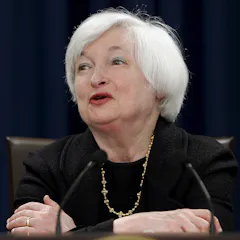
The Fed decided to hold its key interest rate at about zero, but that doesn’t mean it did nothing.
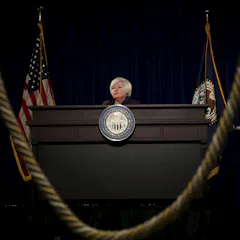
The Fed’s policy-setting committee decided to keep its benchmark interest rate unchanged. Here’s why that’s the wrong call.
Top contributors
-

Associate Professor of Business, Boston University
-
Professor of Management, Co-Director of the MIT Sloan Institute for Work and Employment Research, MIT Sloan School of Management
-
Associate Professor of Economics, Lehigh University
-
Visiting Faculty in Economics, Emory University
-
Associate Professor of Finance, Mississippi State University
-
Professor of Public Policy and Public Affairs, UMass Boston
-
Professor of International Relations, Australian National University
-
Executive in Residence at Weatherhead School of Management., Case Western Reserve University
-
Professor of Marketing and International Business, Michigan State University
-
Scientia Professor of Economics, UNSW
-
Associate Professor in the Practice of Finance, Emory University
-
Part-Time Professor of Economics, The New School
-
Associate Professor of Economics, West Virginia University
-
Assistant Professor of Finance, St. Joseph's University
-
Associate Professor of Economics, Gonzaga University