
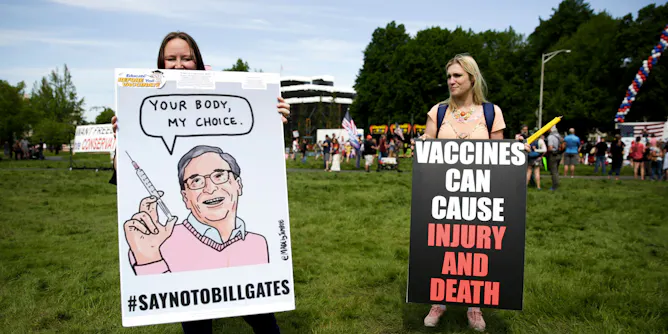
Those opposing vaccinations often mistrust government, science and the news media. There may be better ways to persuade them than by offering facts only.
Articles on Flu vaccines
Displaying 61 - 80 of 119 articles
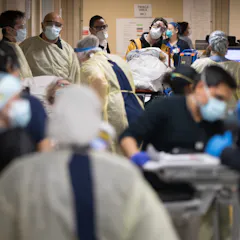
Pandemic policy experts offer 10 recommendations that could reduce the risk that a bad flu season on top of the COVID-19 pandemic will overwhelm hospitals.
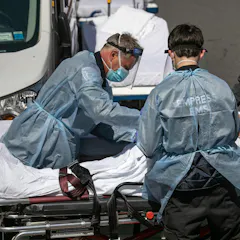
The flu vaccine is now available in most places. A public health nurse explains why it’s especially important to get vaccinated for it this year.

CC BY-NC-ND5.32 MB (download)
Thinking about getting the flu shot? This may help you decide.
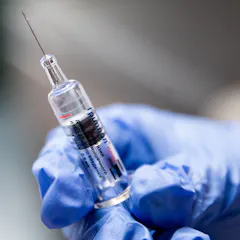
The flu vaccine will not protect you from getting COVID-19. But it will help avoid unnecessary doctors’ visits and protect vulnerable groups from potentially more severe disease.

In the 1980s, CSIRO and its university collaborators set into motion a chain of events that would lead to the production of relenza, the first drug to successfully treat the flu.

Starting to feel a little more optimistic? Look away now.
Getting vaccinated against the flu, washing your hands and social distancing are three ways you can help reduce the impact of both the flu and coronavirus.
The flu shot is a bargain – and people are more likely to get it if they know that.
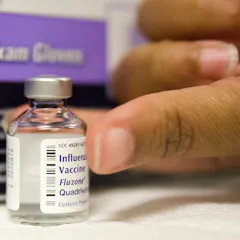
A common myth cited as a reason for not getting the flu shot is that the shot will give you the flu. That is scientifically impossible. Here’s why.

Headlines about this year’s flu season have been alarming. It’s true, we are having a serious season – but the data doesn’t indicate it’s the worst one we’ve ever had.

The flu vaccine is built on the strains expected to circulate in a given year. While the majority of strains circulating this year are matched in the vaccine, there’s one strain we didn’t predict.
How can a tiny flu virus make you feel so bad, all over? Here’s what’s behind your high temperature, muscle aches and other flu symptoms.
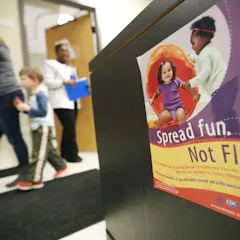
The 2018-2019 flu season was less deadly than the last. But the pattern of infection was unusual, thanks to the various strains circulating and the way flu shots work over time.
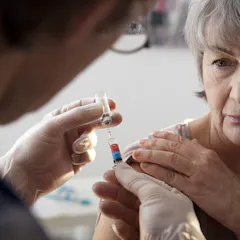
The adjuvanted flu vaccine is free for over-65s and offers better protection than the standard vaccine. Here’s what the research says.

Protection wanes after four or five months, so for most people, it makes sense to get a flu shot in mid to late May or early June so you’re protected when the flu season peaks in August or September.
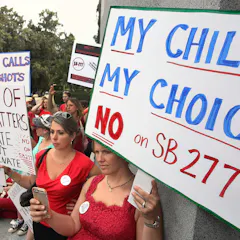
Vaccination rates for children in some parts of California are down, despite a law that narrowed exemptions. Here’s a look at why people refuse to listen to evidence when it comes to the flu vaccine.

Part of the problem was a mismatch between the influenza strains circulating and the vaccine available. Here’s how annual flu shots are formulated.

Illness often strikes when you’re stressed at work, not sleeping properly, or you’ve been out partying a little too much. Here’s why.

Stating a majority of people won’t benefit from a vaccine ignores the purpose of immunisation programs.
Top contributors
-

Professor of Infectious Diseases, Monash University
-
Professor of Global Biosecurity, NHMRC L3 Research Fellow, Head, Biosecurity Program, Kirby Institute, UNSW
-
Professor of Nursing, Purdue University
-
Paediatrician, Infectious Diseases Physician and Clinical Microbiologist, The Kids Research Institute Australia, The University of Western Australia
-
Deputy Director, WHO Collaborating Centre for Reference and Research on Influenza
-
Professor Emerita of Biology, Indiana University
-
Professor, School of Population Health, UNSW
-
Professor of Virology, Imperial College London
-
Professor, The Peter Doherty Institute for Infection and Immunity
-
Adjunct Associate Professor of Epidemiology, University of California, Los Angeles
-
Adjunct Associate Professor, Faculty of Medicine
-
Professor, Discipline of Paediatrics and Child Health, University of Sydney
-
Distinguished Professor, Professor of Immunology, RMIT University
-
Ph.D. Candidate in Chemical & Physical Biology, Vanderbilt Vaccine Center, Vanderbilt University
-
Virologist, The University of Queensland