

Involving both the public and all parties in shaping reforms on how they vote will be crucial.
Articles on First past the post
Displaying 1 - 20 of 27 articles

For once, it could serve the interests of the governing party to change the voting rules.

A new book examines the outsized influence of one man on the pivotal 1984 election which ushered in a new New Zealand.
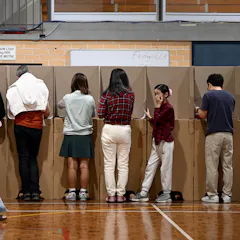
Australia has long had preferential voting, and it is the best system for safeguarding our democracy.
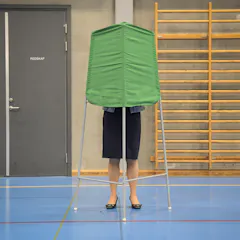
Proportional voting is, at least philosophically speaking, the best electoral system.
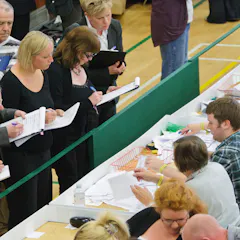
It’s not impossible, but don’t expect a change before the next election.

Winning just a few seats would mean Reform would qualify for ‘short money’ – public funding for its operations – and would no longer have to rely on its own small donations pool.

Even marginal seats are really only contests between two parties. No wonder voters don’t feel enthusiastic.
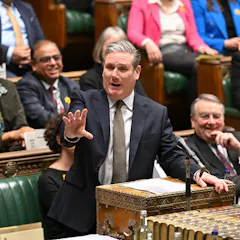
First past the post tends to deliver the winning party more seats in parliament than they’d get under a truly proportional voting system – but this year is off the charts.

The coalition is increasingly using parliamentary urgency, cutting the public service and fast-tracking legislation – all of which risks upsetting the equilibrium between government and the governed.

The first-past-the-post electoral system has helped the Conservatives stay in power for much of the past century. Now it could lock them out.

Women’s representation in Zimbabwe’s parliament has declined in spite of a quota imposed in 2013.
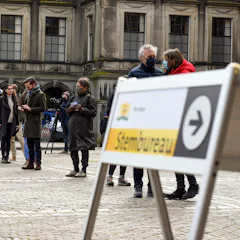
The March elections in the Netherlands, and the fact that a government still hasn’t been formed, illustrate both the benefits and problems with proportional representation.

During the MMP era, the average vote share of the highest-polling party has been steadily climbing — with big implications for New Zealand democracy.

The success of Malawi’s democratic dispensation will be measured on the extent to which it delivers public goods – opportunities, development, accountability – for the people.
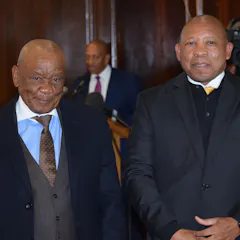
Moeketsi Majoro’s installation as Prime Minister is welcome. But it does not guarantee much needed political stability in an era of complex coalition politics.

Unlike Canada’s newly elected House of Commons, New Zealand’s parliament reflects the will of voters. So do other proportional representation systems. Canada has plenty of choice.

Serious challenges lie ahead for Botswana’s governing party as it celebrates retaining power.
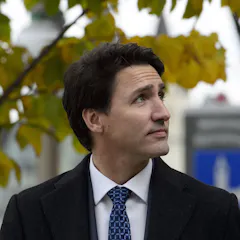
What would the Canadian election results have looked like with electoral reform?
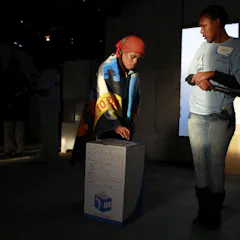
The current crisis in British politics is significant for countries like South Africa where a change in electoral systems is needed.
Top contributors
-

Professor of Sociology, University of the Witwatersrand
-
Professor of Politics, Te Kunenga ki Pūrehuroa – Massey University
-
Senior Lecturer, Department of Languages and Linguistics, La Trobe University
-
Professor of Democratic Politics, UCL
-
Senior Lecturer, Philosophy, University of Glasgow
-
Associate Tutor in Politics and Social Sciences, Edge Hill University
-
Senior Lecturer in Media, Communication and Cultural Studies, University of Malawi
-
Senior Lecturer in Politics, University of Strathclyde
-
Senior Lecturer in Politics, York St John University
-
Extraordinary Lecturer, University of Pretoria
-
PhD Researcher in Politics, York St John University
-
Adjunct Professor, Stout Research Centre, Victoria University of Wellington and Auckland University of Technology, Professor of Political Science, Charles Sturt University
-
Postdoctoral Researcher, The Nordic Africa Institute
-
Senior Lecturer in Politics, University of Manchester
-
Professor, Sociology, St. Thomas University (Canada)