
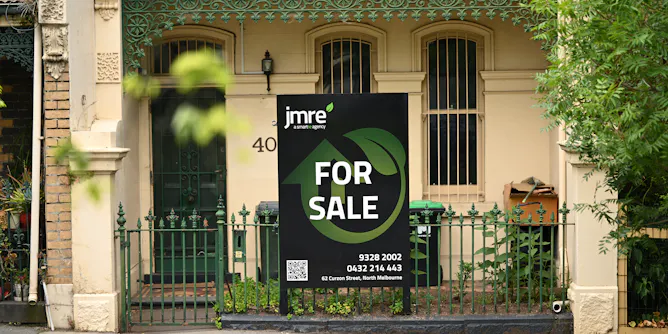
Property prices are up 78% since 2020, so the decline to date has erased only one year of gains. And it’s made the market more affordable for first-home buyers.
Articles on first home buyers
Displaying 1 - 20 of 46 articles
Owing more to the bank than your home is worth is a daunting prospect. But if you’ve bought a place to live in, not as an investment, there’s little reason to panic.

Many Muslim Australians who observe the Islamic prohibition on interest cannot get government help to buy their first home unless they compromise on their faith.

Young people saving through shares and ETFs are worried about capital gains tax changes. But first-home buyers may already have a better option: their super.
And what might it mean for renters – especially rental housing supply and prices – if the government does tackle negative gearing?
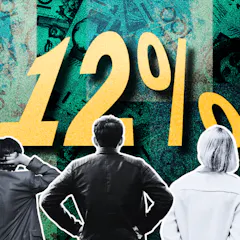
Reducing the rate of compulsory super is also unlikely to help with housing affordability.

The new restrictions on higher-risk borrowing will be a first for Australia. Here’s what’s changing.

The government’s scheme will open to applications soon, promising to help thousands get onto the property ladder. How have similar schemes worked globally?

Financing a first home can feel overwhelming. Here’s a general guide to some of the key parts of the process.

The expanded scheme will make it easier for many to save a deposit. But it may mean higher monthly loan repayments.

A housing expert unpacks three of the biggest questions facing prospective first-home buyers.

Half of parents in a recent survey said they’d helped out financially in some way – but some could afford much more than others.

Borrowing is getting cheaper. But for aspiring homeowners, research suggests this could push house prices even further out of reach.
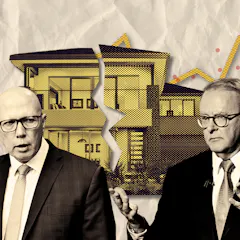
Labor and the Coalition have both made some big housing policy announcements this election, but there are real problems going unaddressed.

Serviceability buffers aren’t just bureaucratic hurdles for home buyers. They are a brake on unsustainable borrowing and a cushion against future shocks.
The major parties have announced housing policies that take a more novel approach to improving affordability than previously.

The strategy seems to offer the best of both worlds – live in a place you can’t afford to buy while getting a foot on the property ladder elsewhere. But it’s not a panacea for our housing market woes.
Australia’s rental crisis has been a long-standing problem and will not be repaired unless there is real reform of both supply and demand issues.
The share of homes owner-occupied has slipped only two percentage points since 1996, but the proportion owned outright has slid from 42% to 31%.

The latest data shows early access to super in the pandemic widened the retirement savings gap between men and women. Housing affordability is a serious problem, but depleting super isn’t the answer.
Top contributors
-

John Curtin Distinguished Professor, Curtin University
-
Program Director, Housing and Economic Security, Grattan Institute
-
Professiorial Fellow, The University of Melbourne
-
Adjunct Professor, Curtin Law School and Curtin Business School, Curtin University
-
Associate Professor and Discipline Lead Property, Curtin University
-
Associate Professor in Property and Real Estate, Deakin University
-
Senior Lecturer in Economics, University of Sydney
-
Research Fellow in Real Estate, Centre for Applied Economic Research, UNSW
-
John Curtin Distinguished Professor, Curtin Business School, Curtin University
-
Emeritus Professor of Housing, UNSW
-
Associate Professor, Monash University
-
Associate Professor, Centre for Urban Studies, University of Amsterdam
-
Associate Professor and Head of School, School of Accountancy, Economics and Finance, Te Kunenga ki Pūrehuroa – Massey University
-
Associate Professor, Research School of Economics, and Research Associate, Centre for Applied Macroeconomic Analysis, Australian National University
-
Professor of Law, Discipline of Law, Justice and Society, Adelaide University