
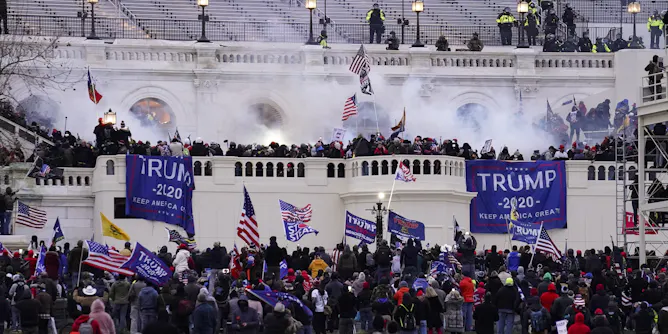
Addressing American domestic radicalism will require new ways of thinking about the nation’s problems, and new ways of solving them.
Articles on First Amendment
Displaying 161 - 180 of 238 articles

If it sounds like the law is all over the place on school mask mandates, that’s because it is. The nation’s schools are subject to a complex web of local, state and federal laws.
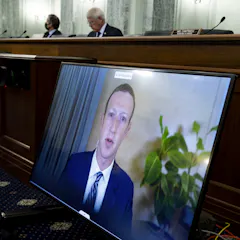
A terse piece of legislation from 1996 has been credited with creating the internet as we know it – and blamed for the flood of misinformation and other ills that have come with it.
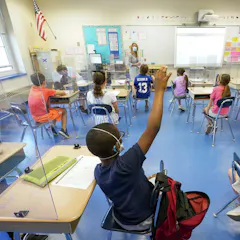
New state laws in the US banning teaching about systemic racism raise the question: Does the Constitution protect public school teachers’ right to choose how and what to teach?

Native Americans have long struggled to practice their spiritual rituals and protect their landscapes. Crackdowns on Indigenous protests could further erode the free exercise of their religions.
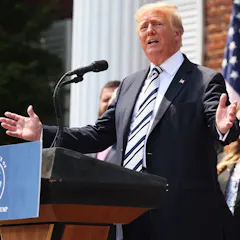
Former President Trump is asking the courts to do what tycoon Trump once would have denounced: tell some of America’s most powerful corporations that they have no choice who they do business with.
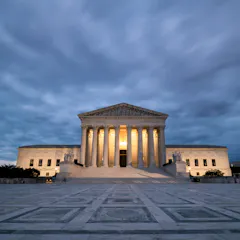
Religion was a common theme in some of the cases to come before the nine justices in the recently concluded Supreme Court term. Three experts help explain what is at stake.
A Supreme Court ruling about a student’s free-speech rights won’t stem the torrent of crude, disrespectful speech in American society.

The Mahanoy v. B.L. ruling did not give schools or free-speech advocates the clear lines they may have wanted, but it did attempt to address some of the complexity of modern-day speech.
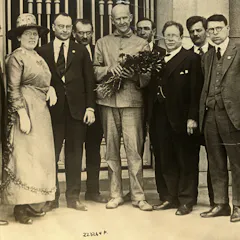
Free speech is a long American tradition – but so are attempts to restrict free speech. A First Amendment scholar writes about measures a century ago to silence those criticizing government.
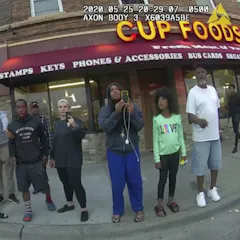
The history and weight of US press freedom played a powerful, but unacknowledged, role in the conviction of Derek Chauvin for murdering George Floyd.
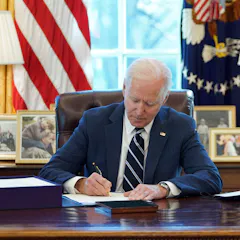
While democracy requires accountability from presidents, presidents may lose stature, not gain it, by holding a press conference.
It’s gospel for First Amendment advocates that lawsuits against news organizations chill freedom of the press. But in an era of rampant misinformation, such legal actions may be more accepted.
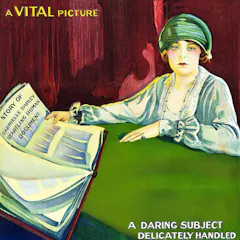
At the end of the 1925 movie ‘Red Kimono,’ the protagonist, Gabrielle Darley, throws away her garment and moves on to a better life. Real life is more complicated.
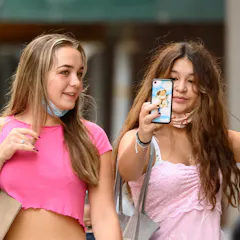
Can schools discipline students for remarks made online? The answer is not entirely clear.

The First Amendment to the US Constitution protects Americans’ freedom of speech, so much so that even the most hateful speech has the right to be quoted.
It’s up to the courts to draw a line between free speech and illegal market manipulation. And the Supreme Court has never ruled on this specific question.
It’s concerning that tech executives can exercise so much power over who can use their platforms. But the alternative – government intervention – could be much worse.
The first amendment could not have anticipated the rise of digital media which has profoundly changed the nature of public speech.
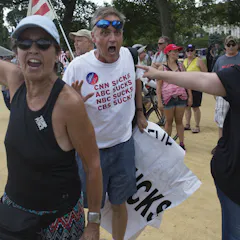
Charges of media bias are nothing new, though they’ve gotten louder since 2016, led by President Trump. But a press free to take a variety of viewpoints was the founders’ intention.
Top contributors
-

Joseph Panzer Chair in Education and Research Professor of Law, University of Dayton
-
Professor Emeritus of Communication and Rhetorical Studies, Syracuse University
-
Associate Professor of Philosophy and Law, Wayne State University; Institute for Humane Studies
-
Brechner Eminent Scholar in Mass Communication, University of Florida
-
Stephanie A. (Sam) Martin is a Friend of The Conversation.
Frank and Bethine Church Endowed Chair of Public Affairs, Boise State University
-
Professor of American Civics, University of Tennessee
-
Director of the Center for Religion, Law & Democracy, Willamette University
-
Associate Professor of Law, Quinnipiac University
-
Professor of Communication and Journalism, University of Maine
-
University Research Professor of Education, University of Kentucky
-
Professor of Law, University of Dayton
-
Programmes Manager and Research Fellow, the Bonavero Institute of Human Rights, Faculty of Law, University of Oxford
-
Associate Professor of Hip-Hop, University of Virginia
-
Thomas and Karole Green Professor of Law, Washington University in St. Louis
-
Susan S. Engeleiter Professor of Education Law, Policy and Practice, University of Wisconsin-Madison