
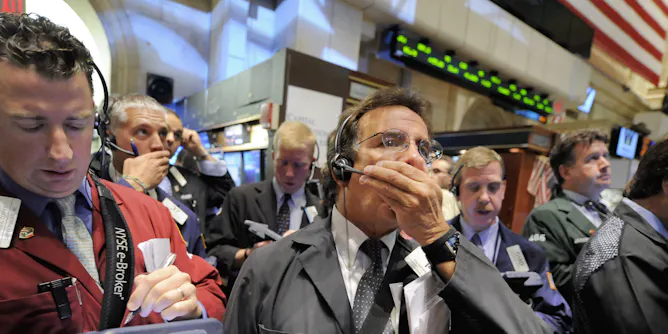
The Fed cut rates for the third time in as many months – something practically unheard of in a strong economy.
Articles on Financial crises
Displaying 21 - 40 of 67 articles

Rating agencies continue to be found wanting, primarily because of their business model where the institution being rated pays. This brings about a conflict of interest which is not easy to resolve.

Standard & Poor’s, Moody’s, and other ratings agencies have a long and storied history, but today they face significant criticism and the future of ratings themselves are under challenge.

The shifting market for air travel has forced Airbus to abandon the production of one of the most impressive aircraft of all time, the super-jumbo A380. Was it folly, bad luck or both?

It’s been a decade since the worst financial crisis since the Great Depression, and blacks still haven’t fully recovered financially, leaving them unprepared if another recession hits.

As fears of a US-China trade war grow, the eurozone is starting to look like a rock.

Nothing has changed since the 2008 financial crisis. Orthodox theory continues to structure the entire financial industry, yet there is an urgent need to study the social and political nature of markets.
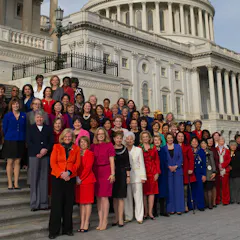
After a year of headlines and ousted CEOs, Congress has yet to pass a single piece of legislation on sexual harassment – let alone hold a hearing. That may change as lawmakers get to work in 2019.

Ensuring no industry becomes too big to fail can be achieved by changing the way companies are run. The aim is to develop a sustainable model for corporations.

Right-wing populists have exploited key weaknesses in liberal democratic society that were exacerbated by the failure of political leaders to respond effectively to the 2008 financial crisis.

The housing bubble that burst and triggered the 2007-08 global financial crisis was fuelled by securitisation.
There were 6,566 more suicides in the 2008-09 period that were a direct consequence of the rapid decline of equity values.

It’s when times are good that the seeds of the next financial crisis are sown.
What looks from the outside like a domestic currency crash is in fact something far more dangerous.
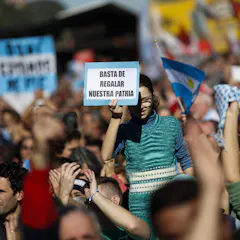
Some US$4.6 trillion has been made available to stave off financial crises across the world. The problem is that much of this funding is now spoken for, and the list of stricken nations is growing.

In current context of financial uncertainty and political upheaval, it easy to question the purpose and activities of business schools. But before jumping to conclusions, there is a more nuanced story.

Under some circumstances, people may feel wealthier than they actually are and this makes them psychologically more prone to increase their spending, as well as their borrowing.
Single women borrowed heavily in the run-up to the financial crisis, ensuring they suffered the most in its fallout. Will history repeat itself?
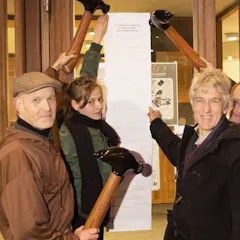
Nailed to the door of the London School of Economics, the ‘33 Theses’ offer a long overdue challenge to economics dogma. But there are omissions as well.

The Dow Jones is on a rollercoaster. But don’t panic.
Top contributors
-

Professor of Finance and Fred T. Tattersall Excellence in Finance Research Chair, West Virginia University
-
Professor of Finance at l’ESILV et à l'EMLV, member of De Vinci Research Center, Pôle Léonard de Vinci
-
Associate Professor of Finance, Mississippi State University
-
Post Doctoral Researcher, Graduate School of Business (GSB), University of Cape Town
-
Lecturer of English, University of the Witwatersrand
-
Director of Institutional Planning, University of Pretoria
-
Assistant Professor in Economics, Georgia State University
-
Senior Lecturer in Economics, MIT Sloan School of Management
-
Canada Research Chair in Economy and Environment, Queen's University, Ontario
-
Lecturer in International Business, University College Cork
-
Lecturer in Social Anthropology, University of St Andrews
-
Senior Lecturer in Law, Liverpool John Moores University
-
Professor of Public Policy and Public Affairs, UMass Boston
-
Open Evidence Research, UOC - Universitat Oberta de Catalunya
-
Honorary Research Fellow, City Political Economy Research Centre, City St George's, University of London