
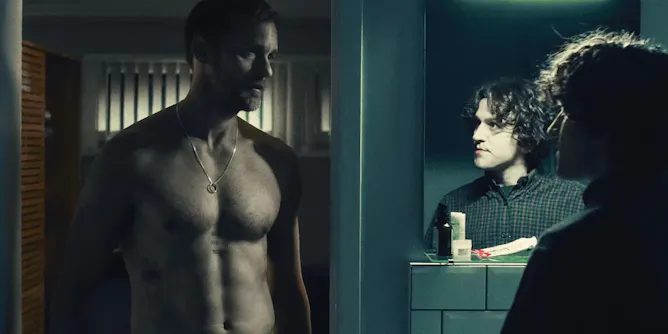
The rom-com Pillion traces a tender shift in how kinky gay men are represented on screen.
Articles on Fifty Shades of Grey
Displaying 1 - 20 of 29 articles

Strangulation has traditionally been viewed as a violent act and has long been recognised as an assault in criminal law.

The book will change the story and what was once given to a community of readers for free will cease to exist online.

The controversial fantasy novel and its sequels enticed more authors to experiment with self-publishing, but the latter has a history that long predates the steamy bestseller.

The emergence of female-oriented erotica has been portrayed as a sign of women’s liberation, but research indicates that it reinforces cultural scripts of pornography targeting men.

The terms ‘freedom’ and ‘choice’ – on which the legal definition of consent depends – mean very different things to different people.
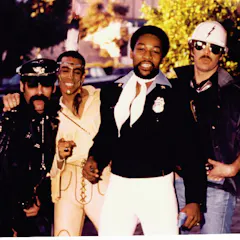
Leathermen expose the myth of hypermasculinity by refusing the violence and aggression which is normally attached to it.

The law needs updating – but great care is required when it comes to consent and sadomasochistic sex.
E L James’ BDSM fantasies and Chaucer’s 14th-century story raise the same age-old questions.
Few of them are getting rich off their books but the genre is making them more money than it used to.
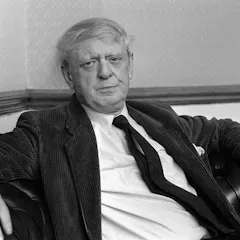
In his lifetime Anthony Burgess was a strong advocate of free expression. A forthcoming book promises to bring his political writing back into focus.

Though sharing with Fifty Shades the overall themes of sexual domination and submission, Story of O remains a work of substantial literary merit.
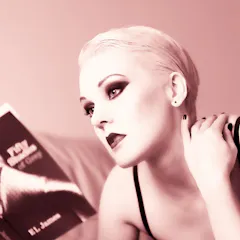
From censorship, to mainstream, to Donald Trump: erotica has a long and varied history.
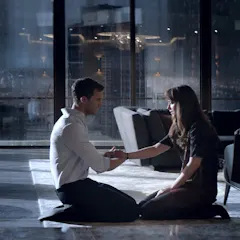
After Fifty Shades of Grey there was debate about its romanticisation of an abusive relationship. The sequel confirms that this wasn’t a misconception.

There is a growing mainstream appetite for things that would previously be considered “deviant” pursuits – and businesses are catching on.

The Fall writer Alan Cubitt is ‘hurt and upset’ at being accused of misogyny. But maybe misogyny isn’t the point.
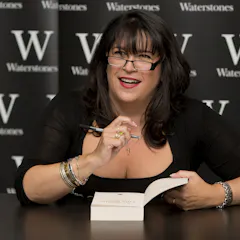
A poor review doesn’t make for a bad book. But a good one doesn’t make for a good one either.

While legal precedent makes banning books difficult, it still happens.
Magazines like Zoo not only reproduce and legitimise sexist and predatory views of sexual violence and gender roles. They also make such attitudes seem normal and acceptable.
Sex isn’t the issue – we should object when TV programmes try to sell us anything.
Top contributors
-

Visiting Researcher in Journalism, Media and Cultural Studies, Cardiff University
-
Associate Professor, Design Anthropology, Swinburne University of Technology
-
Senior lecturer, La Trobe University
-
Chair in Feminist Media Studies, University of Strathclyde
-
Honorary Research fellow, The University of Western Australia
-
Senior Lecturer in English Literature, University of Manchester
-
Former Professor of Management and Business History
-
Reader in Media Studies, University of East London
-
Assistant Professor of Journalism, University of Colorado Boulder
-
Teaching Fellow in Medieval Studies, University of Leeds
-
Professor and Co-Lead of the Sexual and Family Violence Program at the Department of General Practice & Primary Care, The University of Melbourne
-
Professor of Law, University of Technology Sydney
-
Senior Lecturer in Creative Writing, Manchester Metropolitan University
-
Lecturer in Marketing., Heriot-Watt University
-
Senior Lecturer in Cultural Studies, The University of Melbourne