

Plants changed the atmosphere, built soil and created ecosystems that allowed animals like us to thrive. But first they had to make their way from the water to the land.
Articles on Ferns
Displaying all articles

Is an organism a sum of its parts, or should they be considered as a whole? New research on ferns shows how the way scientists understand evolution affects how they study life.

Africa’s flowers have been meticulously documented across 1.9 million sites on the continent and in Madagascar.
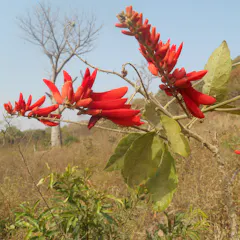
A new publication sheds light on the plants of Burkina Faso and Mali.
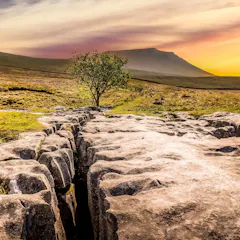
The first survey since the 1970s into the plants that grow in the cracks in limestone pavements has thrown up some fascinating results.

Evolution is often depicted as a steady forward march from simple to complex forms. But new research shows that certain ferns can evolve ‘backward.’

Ferns have evolved a mutually beneficial relationship with ants, but this happened late in their evolution. A recent study shows that old dogs can learn new tricks.

Only fragments of Britain’s “temperate rainforest” remain – here’s some tips to help you identify one when you come across it.
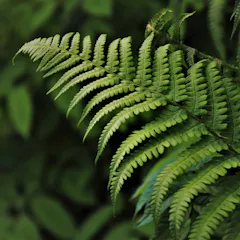
Fussy about moisture and temperature, ferns are excellent indicators of environmental change.
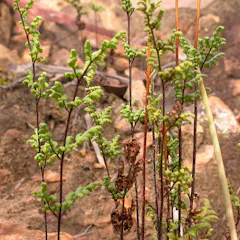
This Easter, read about this remarkable species of resurrection fern — plants that appear dead and dry, but under the right conditions rapidly spring to life.
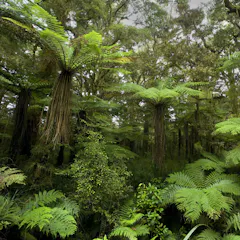
They’re a familiar sight on forest walks and long drives, but tree ferns are more fascinating than you may have realised.

Ferns came along more than 200 million years before the dinosaurs walked the Earth. They were food for plant-eating dinosaurs and they’re really great survivors. Heather, age 8, wants to know more.
Top contributors
-

Senior Research Associate, School of Agriculture, Food and Ecosystem Sciences, The University of Melbourne
-
Assistant Professor of Plant Evolutionary Biology, University of Tennessee
-
Scientist, Conservatoire et Jardin botaniques de Genève (CJBG)
-
Lecturer, Lancaster Environment Centre, Lancaster University
-
Full Professor of Plant Biology and Ecology, Université Joseph Zi-Kerbo
-
Botanist, Université des sciences, des techniques et des technologies de Bamako
-
Lecturer and Researcher in Botany and Phyto-Ecology, Université Joseph Ki-Zerbo
-
Communications Officer, Conservatoire et Jardin botaniques de Genève (CJBG)
-
Lecturer in Geography and Ph.D. student in Earth Sciences, Binghamton University, State University of New York
-
Professor of Forest Sciences, Bangor University
-
Associate Head of Research and Knowledge Exchange - Reader in Plant Science, Edge Hill University