
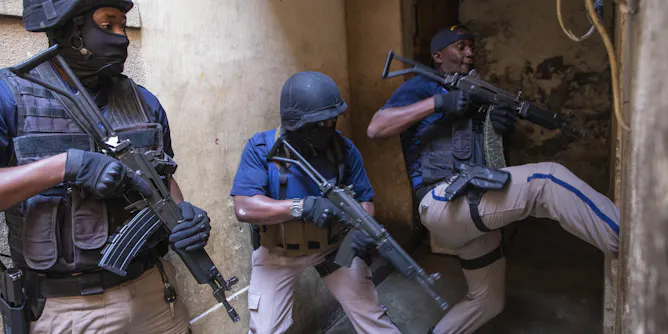
President Ramaphosa’s emphasis on fighting crime is well placed. Most categories of violent crimes have risen dramatically over the past eight years.
Articles on Femicide
Displaying 41 - 58 of 58 articles

Research shows that abuse, violence and poor relationships in families may have dire consequences for society, and specifically children.
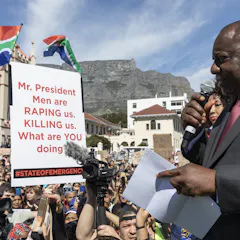
Research has a distinctive role to play because it gives pointers on what is needed to create long-term change.

New national data, on campuses and elsewhere, can help shift our shared narratives about the root causes of gender-based violence.
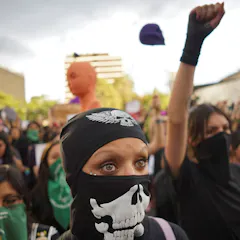
Women in Mexico are lashing out against rampant sexual violence, police abuse and policies that hurt working mothers.
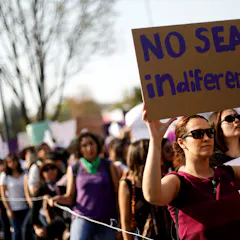
Mexico is the second most dangerous country for women in Latin America. Yet the new government is slashing funding for programs meant to protect and empower women.
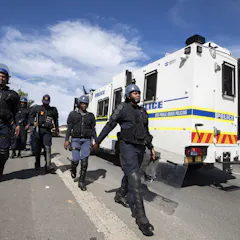
Increasing police patrols won’t solve South Africa’s high rates of violent crime. Underlying problems need to be addressed.
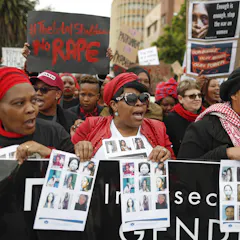
Gender based violence should not be addressed only once it has happened, by jailing offenders. Prevention is just as important.
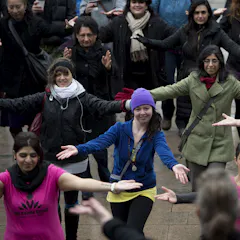
We tend to pay attention to mass killings and terrorism. But one girl or woman is killed every other day in Canada. If we identify that as terrorism, we might pay more attention and do something.

More than 90% of violent crimes in South Africa fall outside the categories named in the police’s new anti-crime strategy.
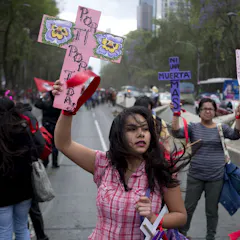
Women everywhere have low status relative to men. This is a global phenomenon and there are no exceptions, and there is much work to be done in Canada and everywhere. The time is now.
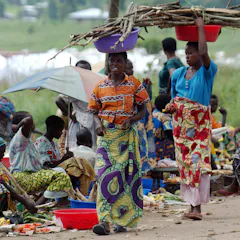
Shocking new findings show that even in conflict-affected countries where soldiers and rebel fighters are a daily danger to women, their husbands and boyfriends are the bigger threat.

High profile stories of femicide come with a flare up of societal outrage, protest and collective introspection. But nothing ever really changes.
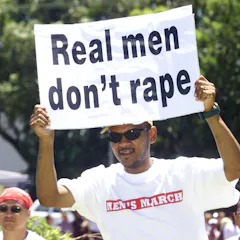
While men regard the social norm of ‘proving’ their manhood as normal, research shows otherwise. Combating these misconceptions can help reduce male violence.
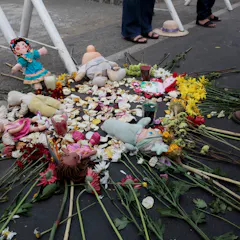
Who is responsible when 43 girls burn to death in a state-run children’s home?
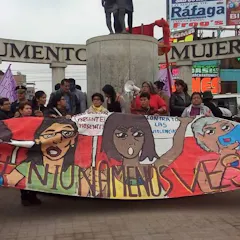
Peru is the latest country in Latin America where women are mobilising against violence.

More and more countries are passing femicide legislation. But work remains to make sure that the intent and purpose of these laws is communicated and enforced.
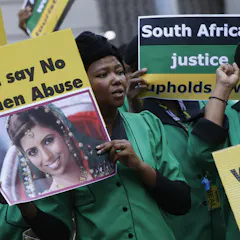
South Africa’s violence against women ranks as one of the worst in the world. As much as 40-50% of women in the country have suffered intimate partner violence.
Top contributors
-

Professor, Department of Sociology & Anthropology, University of Guelph
-
Professor of Political Science and Chair of the South African Research Initiative in Gender Politics, Stellenbosch University
-
Senior lecturer, School of Law, University of Wollongong
-
Senior Lecturer in Human Rights, Constitutional Law and Legal Theory, University of Wollongong
-
Professor of Feminist and Security Studies, SOAS, University of London
-
Assistant Professor of Political Science, University of Texas at Arlington
-
Associate Professor of Political Science and Director of the Center for Mexican American Studies, University of Texas at Arlington
-
Research Associate at UCT's Centre of Criminology, Consultant at the Institute for Security Studies (ISS), University of Cape Town
-
Researcher, Unit for Religion and Development Research, Faculty of Theology, Stellenbosch University
-
Lecturer in Sociology, Stellenbosch University
-
Professor and Head of Department of Political and Conflict Studies, Nelson Mandela University
-
Professor, Center for Research on North America, Universidad Nacional Autónoma de México (UNAM)
-
Professor Gender and Development, King's College London
-
Senior Lecturer in Social Work, North-West University
-
Assistant Professor of Global Health, Emory University