
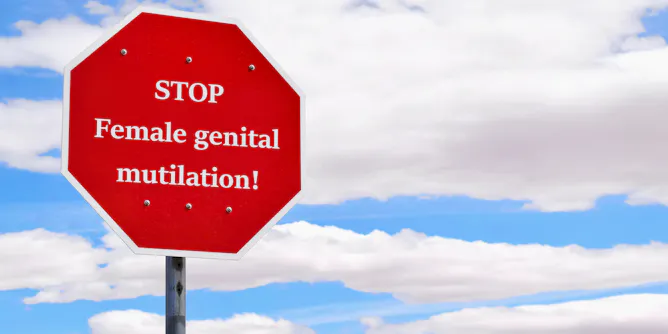
FGM/C remains prevalent across Southeast Asia. The region should look to the African Union’s playbook on regional cooperation.
Articles on Female genital mutilation
Displaying 1 - 20 of 26 articles
A study finds female genital mutilation or cutting is a leading cause of death: a young woman or girl dies every 12 minutes.
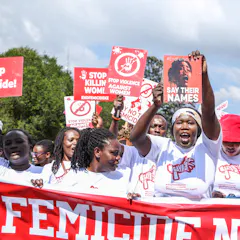
At face value, any public action the Kenyan government takes to show that it’s listening to its citizens is important – but it’s only a first step.
To eliminate female genital mutilation by 2030, progress would need to be 27 times faster. Understanding shifting trends behind this practice is a start.
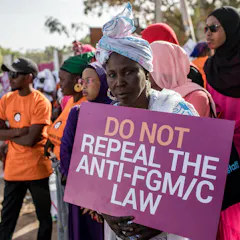
The potential repeal of the ban on female genital mutilation poses a threat to the well-being of girls in The Gambia.

Pakistan has no official indicators to measure female genital cutting and no laws against it. There are also rarely protests against it.

Deep-seated cultural practices – such as female genital mutilation and child marriage – prevent girls from making progress in school.

Social norms, practices and attitudes in African societies hinder the lives, survival and development of girls.
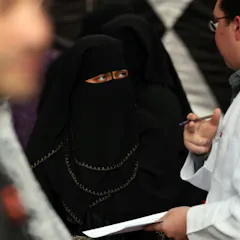
Political change could open up civil spaces and support the voices of young women and girls who do not want to be cut.

Why ‘stigmatising’ and ‘traumatising’ approaches to FGM safeguarding are in urgent need of a review.

An estimated 2000 million women have undergone female genital mutilation and millions more are at risk. The practice is carried out mainly for cultural and economic reasons.

Close to 4 million teenage girls are subjected to breast ironing worldwide. This harmful cultural practice, which is most prevalent in West and Central Africa, needs to stop.
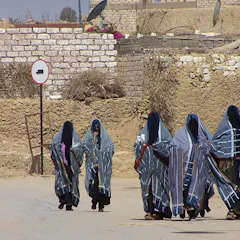
Efforts to end female genital mutilation are mostly designed by global and national agencies and risk ignoring change agents like the youth who are against the practice.
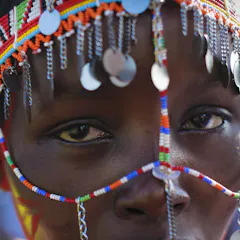
Efforts to discourage girls from being cut in Tanzania have changed the cultural meaning and practices around the ceremonial rite of passage.

Thousands of Liberian women have banded together to bring about peace and to fight for women’s rights. They’ve changed the face of the African nation.

The UK’s FGM Act is discriminatory and inconsistent.

Hollywood’s sexual predation scandals are just the tip of the iceberg. One in three women worldwide has been physically or sexually assaulted, and many girls’ first sexual experience is forced.

The international media and her supporters continue to hoist Liberian President Ellen Johnson Sirleaf up as the matron of African women’s rights. But she does not deserve this title.

Until we safeguard every child from all forms of violence, opposition to genital cutting will not be an Australian value.

Female genital mutilation is largely hidden in Australia and other high-income countries. But the United Nations says it is a global concern – and our research found it does affect girls here.
Top contributors
-

Professor of International Development Studies, University of Portsmouth
-
Emergency Physician at Brigham and Women's Hospital, Director of External Programs STRATUS Center for Medical Simulation, Core Faculty Harvard Humanitarian Initiative, Harvard University
-
Senior Researcher, University of Zurich
-
Lecturer in Law, City St George's, University of London
-
Associate Professor (Archaeology), University of South Africa
-
Director of Research, Australian Paediatric Surveillance Unit and Associate Professor Discipline of Child and Adolescent Health, University of Sydney
-
Lecturer, Faculty of Public Health, Universitas Indonesia
-
Associate Professor of Women's Studies and Feminist Research, Western University
-
Senior Lecturer in Law, Adelaide University
-
Assistant Professor in International Social and Public Policy, London School of Economics and Political Science
-
Professor in Development Geography, Coventry University
-
Professor of Law, Conflict and Global Development, University of Reading
-
PhD Candidate, International Human Rights Law, Adelaide University
-
Alison Macfarlane is a Friend of The Conversation.
Professor of Perinatal Health, City St George's, University of London
-
Furman Public Policy Scholar, New York University