
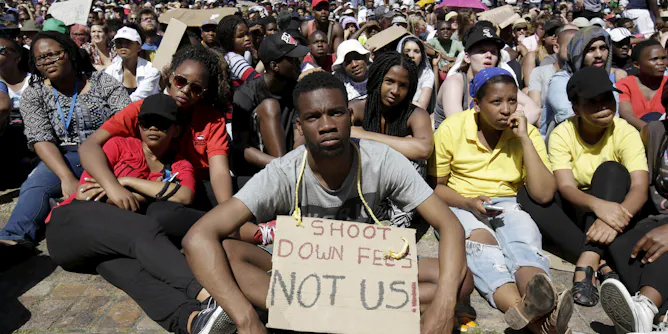
The huge problem of youth unemployment in South Africa appears to be getting worse. New research will hopefully amplify their voices and inform more realistic interventions to combat the monster.
Articles on #feesmustfall
Displaying 81 - 100 of 117 articles
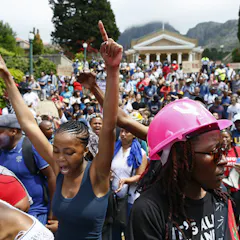
Women students have not been afraid to embrace the label of feminist, leading a wave of university protests in South Africa during 2015 and 2016.
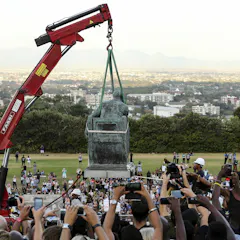
There is a risk that because of fatigue, frustration and silencing the important moment created by South Africa’s student movements will pass by with no proper, long-term structural change.
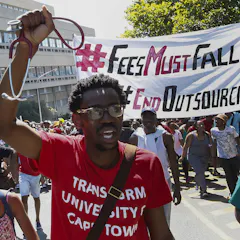
Free public higher education is possible and necessary. It’s also realistic, if it’s based on thorough research, consultation and students giving back through community service after graduation.
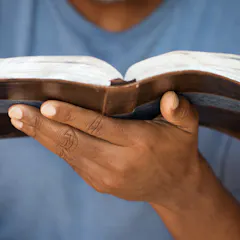
Curriculum transformation has to happen. But it has to go further than simply borrowing ideas and concepts.
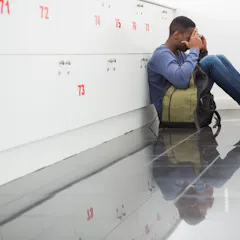
Students from poorer backgrounds feel anxious, ashamed and stressed in the middle-class environment of a university.
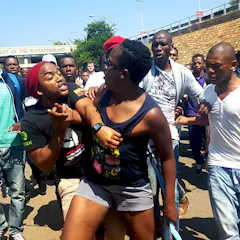
A violent attack on a female student at one of South Africa’s prominent universities was not an isolated incident. It told a universal tale of how patriarchy still rules.

Universities have an important role to play in developing students’ ability to engage successfully across different cultures and experiences.

If South Africans are to make the radical changes they must to become truly great, the new generation will have to find a way of understanding the country’s past in its profound complexity.
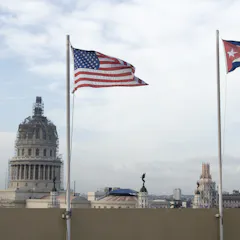
Cuba’s National Capitol Building has been reclaimed as the seat of the National Assembly 54 years after it was abandoned by the new revolutionary government. There are lessons in this for others.
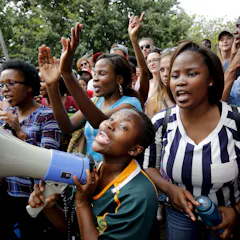
Coming to understand students’ individual stories allows lecturers to guide, mentor and support them.

Pravin Gordhan’s Budget was indicative of gaping cracks between a finance minister and a president with widely differing world views and politics.
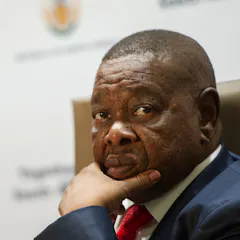
Higher education has done as well as could have been expected from the 2016 Budget, given South Africa’s current economic circumstances.

In future, universities will only survive if they can produce knowledge fast and innovate. This will require transformational leadership that gets everyone involved.
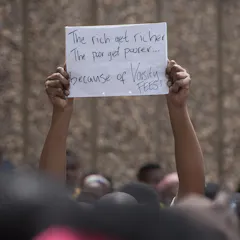
If higher education is made “free” for all, the whole society ends up paying more. That’s deeply unjust in already unequal societies, such as those in Africa.
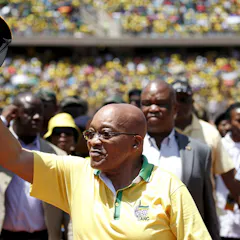
It is unlikely President Zuma will announce a structural changes in his State of the Nation Address. This, despite education being in dire need of fundamental restructuring and an economy in decline.
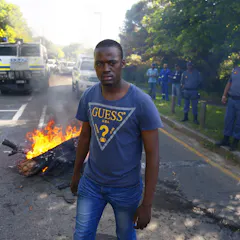
Social change has its own dynamic. This makes it an unpredictable, uncontrollable and unknowable force – one with often unintended consequences.
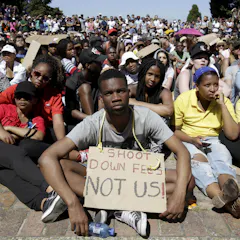
Many people dismiss the idea of free, quality public university education out of hand. But there are many ways to make it happen - and it all ties back to the idea of education as a public good.
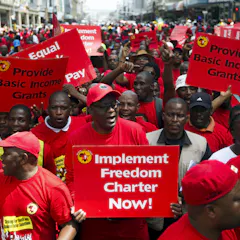
With the local government elections set to take place within the next seven months, it is worth considering what impact the recent upsurge in protests will have on the country’s political future.
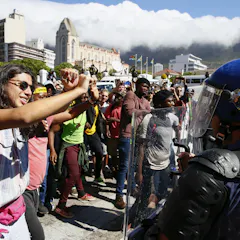
The way in which one group of South African student protesters has acted and engaged with university managers shows how valuable a feminist approach to protest can be.
Top contributors
-

Professor, University of Cape Town
-
Senior Researcher in Labour Studies and Education, University of Johannesburg
-
Researcher, Social Sciences, University of Fort Hare
-
Director of the Centre for Education Rights and Transformation and Associate Professor of Education, University of Johannesburg
-
Distinguished Reserach Professor, Southern Centre for Inequality Studies, University of the Witwatersrand
-
Associate Professor, Department of International Relations, University of the Witwatersrand
-
Chief Director: Tshwane University of Technology – Institute for Economic Research on Innovation; Node Head: DST/NRF SciSTIP CoE; and Professor Extraordinary: Stellenbosch University – Centre for Research on Evaluation, Science and Technology., Tshwane University of Technology
-
PhD Scholar, Wits School of Education, University of the Witwatersrand
-
Professor of Urban Governance, University of the Witwatersrand
-
Professor of International Affairs and the Vice-Provost and Associate Vice-President (Academic), Carleton University
-
Professor and Head of Department of Political and Conflict Studies, Nelson Mandela University
-
Professor of Digital Society, University of Glasgow
-
Senior Research Associate, University of Johannesburg
-
Distinguished Professor, Stellenbosch University
-
Research Associate in Higher Education Policy and Planning, Ali Mazrui Centre for Higher Education Studies, University of Johannesburg