
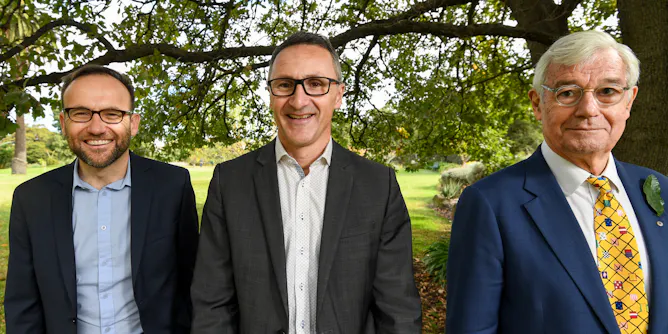
The Greens’ fortunes have fed off Labor’s performance: a weakened Labor means more support for the Greens. But this election the party is more likely to maintain its parliamentary presence.
Articles on Federal election 2019
Displaying 121 - 140 of 282 articles
While Ipsos on Newspoll are telling different stories about leaders’ approval ratings, both are still showing a likely victory for Labor at the federal election.
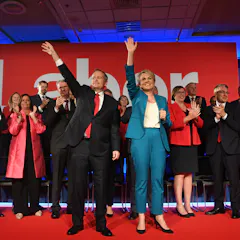
The reason we know more about a post-election Labor ministry is that most of its occupants are already “shadowing” the jobs they’d hold.
Labor’s childcare policy would do more for the economy than either side’s proposed tax cuts.
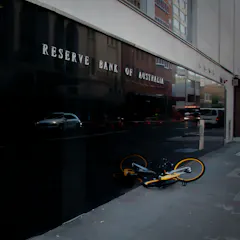
The Reserve Bank has adjusted rates in previous election campaigns, but it needs to have a very, very, good reason.
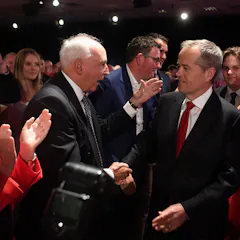
On primary votes, the ALP dropped a point to 36%, while the Coalition was static on 38%, from the last Newspoll a week ago.
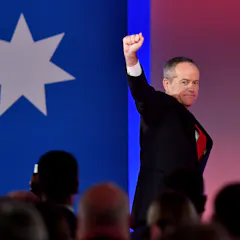
Razzmatazz aside, the opposition leader - standing in front of Labor’s slogan “A Fair Go For Australia” - brought together the “case for change” in a carefully-honed, strongly delivered address.
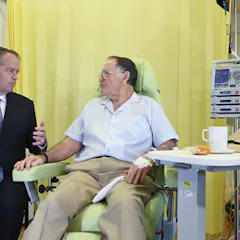
At the Brisbane launch Shorten will emphasise the link between the tough economic decisions Labor has made and the ability provided to spend on health and other services.
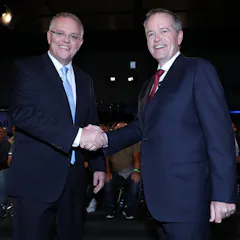
Inevitably much of the discussion and many of the clashes focused on money and tax – the conflicting arguments have been well rehearsed throughout the campaign.
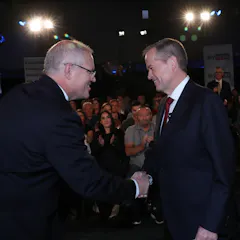
In the second debate of the campaign, Scott Morrison and Bill Shorten answered questions from voters in a people’s forum on everything from franking credits to, yes, post offices.

Leigh Sullivan joins Michelle Grattan to talk about the week in politics.
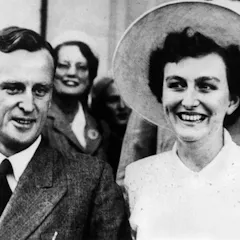
Sir Joh Bjelke-Petersen was Queensland’s longest-serving premier, but an inquiry into corruption brought his hopes of becoming the next prime minister of Australia to a sudden end.
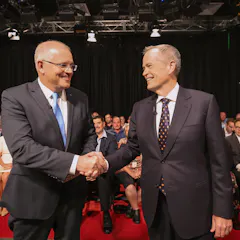
Research shows that Australians are increasingly tuning out of leaders’ debates – just 21% reported watching a debate in 2016, down from 71% in 1993.

Pre-poll votes within the first 24 hours were almost double the number at the same stage in 2016. That could hurt some minor parties who traditionally spend big in the last few weeks of a campaign.

In an election about wages, it is bizarre that both sides are planning to raid them to lift compulsory super.

The media loves a victim, but sympathy for someone who won’t spend what they’ve got because they’re saving for their children is taking it too far.
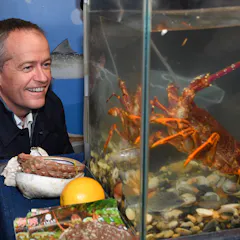
Refusing to own any particular set of figures, which is what Labor has done – apart from passing nods to assessments that suit its case - is risky.
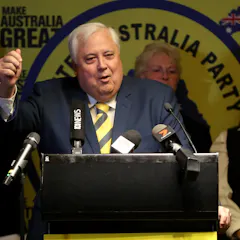
He’s spending big and may well win a spot in the Senate. But the big question is what the billionaire businessman intends to do if he returns to the Australian parliament.
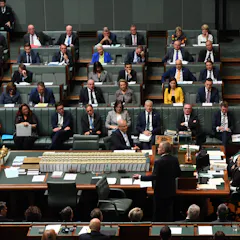
Thanks to preferential voting, Australian House of Representatives members are each elected by an absolute majority of the voters in the electorate they represent.
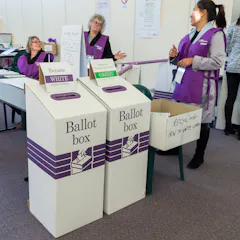
Senate voting is pretty complicated. Here’s how preferential voting and proportional representation work – and how to make sure your vote is counted on election day.
Top contributors
-

Professorial Fellow, University of Canberra
-
Election Analyst (Psephologist) at The Conversation; and Honorary Associate, School of Mathematics and Statistics, The University of Melbourne
-
Associate Professor, Politics and Public Policy, Flinders University
-
Visiting Fellow, Crawford School of Public Policy, Australian National University
-
Senior Lecturer of Australian Politics, Murdoch University
-
Adjunct Professor at the University of Canberra, University of Canberra
-
Adjunct Senior Research Fellow, Centre for Policy Futures, University of Queensland, Adjunct Principal Research Fellow, Cairns Institute, James Cook University
-
Senior Lecturer, School of Political and Social Inquiry, Monash University
-
Scientia Professor of Economics, UNSW
-
Visiting Fellow, Tax and Transfer Policy Institute, Crawford School of Public Policy, Australian National University
-
Senior Research Fellow, Centre for Advancing Journalism, The University of Melbourne
-
Program Director, Housing and Economic Security, Grattan Institute
-
Professor, Australian Studies Institute, Australian National University
-
Professor of Political Science; Director, Tasmanian Policy Exchange, University of Tasmania
-
Lecturer, The University of Queensland