

Two more crossbenchers, Cathy McGowan and Andrew Wilkie, have given Malcolm Turnbull assurances they will back his government on supply and confidence.
Articles on Federal election 2016
Displaying 61 - 80 of 391 articles
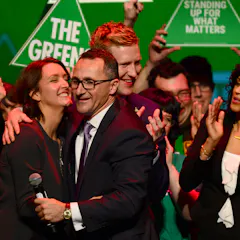
With voters turning away from the two major parties and towards the Greens and micro-parties, it may be time to rethink our entire electoral system.
After an election in which voters snubbed both major parties, the campaign postmortems have been coming thick and fast.
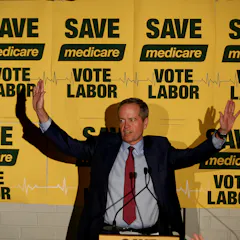
The idea of hitting voters with a powerful message on election day is just the culmination of three trends in Australian campaign communication that have been brewing for decades.

Innovation is not just about taking risks, but minimising and managing them.
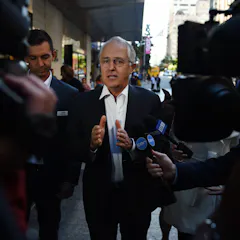
The political and fiscal vice in which Malcolm Turnbull is now caught was neatly illustrated by a coincidence of timing in these early post-election days.

There’s something about seeing the ballot process take place – the vote, the count – that inspires confidence. That wouldn’t be the same with any electronic voting system.
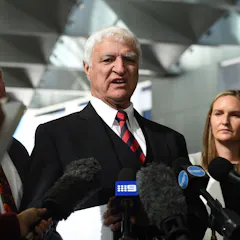
Crossbencher Bob Katter has given his support on supply and confidence to a Coalition government after a meeting with Prime Minister Malcolm Turnbull in Brisbane.
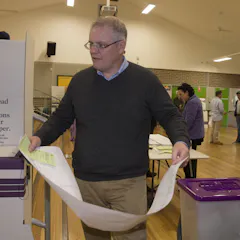
Budget repair seems even less plausible after this election and this is the main risk to Australia’s AAA credit rating.
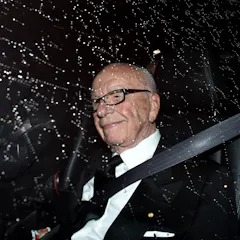
Given newspapers’ continued role as the main provider of new news every day, and the amplifying effect of social media, their potential to influence the body politic remains substantial.
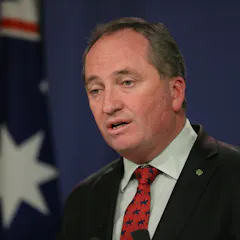
Within the Coalition the only cheer is among the Nationals who could actually gain one in their numbers at an election where the government has lost a swag of seats.

Workers in the gig economy have to deal with labour insecurity but they also take on more risk by using their own money to buy the tools they need to work.
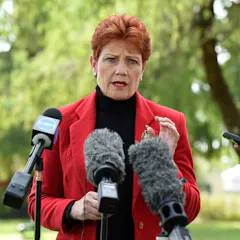
Pauline Hanson and her party will potentially be a divisive presence in the next parliament. The challenge, for a potential Coalition government in particular, will be just how to handle her.
Business Briefing: Hanson, NXT and The Nationals, bad for business?
The Conversation14.8 MB (download)
The newly elected Senate crossbenchers and a stronger Nationals representation could mean bad news for trade deals but good news for local industry.
Malcolm Turnbull is struggling to produce the right response in the aftermath of his election debacle. On Saturday he did not take on any blame and lashed out at Labor’s “Mediscare” tactic. On Tuesday…
Malcolm Turnbull has taken ‘absolutely full responsibility’ for his criticised election campaign, and declared the Coalition must rebuild public trust in itself on the issue of Medicare.

Scare campaigns only work if there is some anxiety to build on. Labor’s Medicare campaign plugged into a long history of Coalition ambivalence – or open hostility – towards Medicare.
While the major political parties agree on the need for superannuation reform, they differ on how to get there.
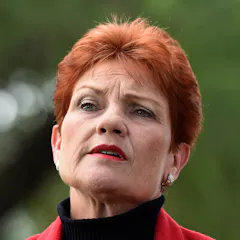
The irony of stridently warning people against voting for minor players and then, all charm, ringing those players when you personally might need their votes may be lost on Malcolm Turnbull.
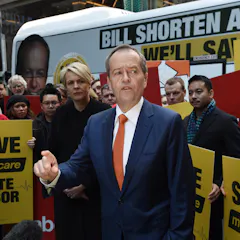
The 2016 election has shown that when there is a close result, negative advertising can be a very powerful campaign tool.
Top contributors
-

Professorial Fellow, University of Canberra
-
Professor and Chair, Tax and Transfer Policy Institute, Crawford School of Public Policy, Australian National University
-
Senior Lecturer, School of Political and Social Inquiry, Monash University
-
Professorial Fellow, Jumbunna IHL, University of Technology Sydney
-
Professor of History and Politics, School of Humanities and Social Inquiry, University of Wollongong
-
Associate Professor in Politics and International Relations, School of Social Sciences, Monash University
-
Honorary Professorial Fellow, Melbourne CSHE, The University of Melbourne
-
Professiorial Fellow, The University of Melbourne
-
Vice-Chancellor’s Fellow, University of Tasmania
-
Senior Project Manager, Murdoch University
-
Associate Professor in Politics, Murdoch University
-
Emerita Professor of Politics, Adelaide University
-
Jim Gillespie is a Friend of The Conversation.
Associate Professor in Health Policy, Leeder Centre for Health Policy, Economics and Data & Sydney School of Public Health, University of Sydney
-
Director of Research and Development, Pivot Professional Learning; and Honorary Fellow, The University of Melbourne
-
Laurie Carmichael Distinguished Research Fellow at the Centre for Future Work, Melbourne; and Professor Emeritus, Griffith Business School, Griffith University