

Asking a series of simple questions can help create space for dialogue and pull someone out of a misinformation bubble.
Articles on Far right
Displaying 61 - 80 of 237 articles

Calling these acts of fascist violence terrorism may feel cathartic, but it’s not that simple.

There is a corner of the internet that preaches male violence as a response to male violence.

Doctors have found high levels of gastrointestinal problems and suicidal thoughts among asylum seekers living in hotels and former army barracks.

Instead of focusing on the people sending out the propaganda, we should turn our attention to those who receive it.
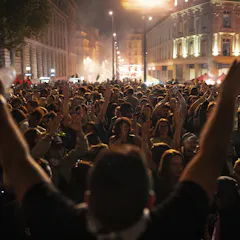
If political parties respect voters and focus on policy rather than polls and partisan hackery, Canadians might have something substantive to choose from when the next federal election is called.

After President Emmanuel Macron dissolved the National Assembly, the first round of the snap legislative elections took place on June 30. Historian Mathias Bernard analyses what’s at stake.

The abuse heaped on players in high-profile matches is just the tip of the iceberg – a culture of online abuse permeates football at all levels.
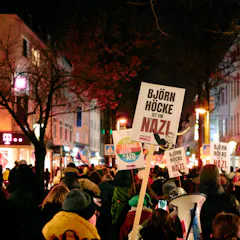
Our fast-track society has made voters impatient – the far right promises fast-track, simplistic solutions to complex problems.

The top five most frequent non-politician panellists all write for The Spectator.

Julien Robin, a specialist in French parliamentary life, looks at what the surprise dissolution means for French politics.

Enviroment policies and executive roles now in the spotlight – while France faces a potentially divisive national election.

The intersectionality of hate, which combines racism, antisemitism and misogyny, leads the white heterosexual male to believe that he is a victim of the “minorities” he must resist.

Indigenous and critical race approaches to narratives of the Middle Ages help reveal more accurate histories, and combat the misuses of ‘the medieval’ for hate.

The far-right Alternative for Germany is courting the youth vote on TikTok with great success, ahead of the elections in June.

Though it seemed like music for the inner cities, 2-Tone sought to take its message of inclusion to young people in less racially mixed small towns and rural areas too.
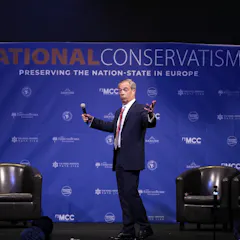
Trying to silence the radical right isn’t the way forward. Not only is it likely to backfire, it will probably galvanize the movement’s leaders.
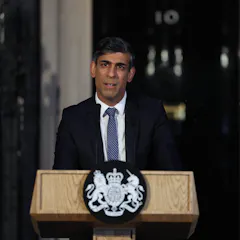
New definitions don’t protect communities or deter extremists.

Extremists benefit when we use euphemisms that confer on them an air of legitimacy.

Being rightwing involves specific beliefs about the world but is also linked to our genes and environment.
Top contributors
-

Senior Lecturer in Politics, University of Bath
-
Assistant Professor, School of Politics and International Relations, University College Dublin, University College Dublin
-
Associate Professor, School of Criminology, University of Leicester
-
Associate Professor in French and Francophone Studies, University of Nottingham
-
Reader in Politics, Co-Director, Aston Centre for Europe, Aston University
-
Professor of Politics, Griffith University
-
Distinguished Professor of Anthropology; Director, Center for the Study of Genocide and Human Rights, Rutgers University - Newark
-
Historien, Université Clermont Auvergne (UCA)
-
Lecturer and Teacher, Department of Politics and International Relations, Cardiff University
-
Spécialiste de la politique américaine, Sciences Po
-
Associate Professor in Politics and International Relations, School of Social Sciences, Monash University
-
Associate Professor and Head, Department of Political Science, Maulana Azad National Urdu University
-
Professor of Comparative Politics, University of Reading
-
Sessional Instructor, Political Science, University of Guelph
-
Senior Lecturer in Czech Studies, University of Glasgow