
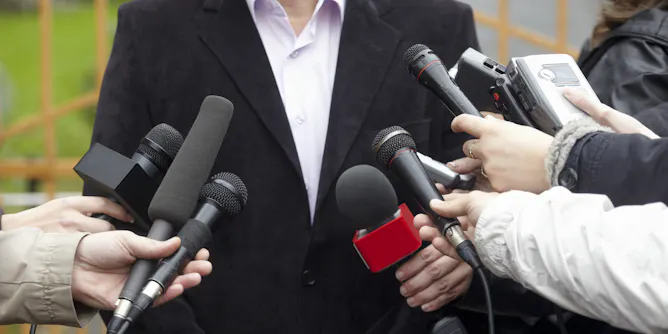
Our study found high levels of trust in media reports – but that trust can be eroded by fact-checking. Journalists need to rethink the way they report political stories.
Articles on Fact-checking
Displaying 21 - 33 of 33 articles
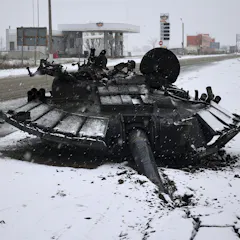
Footage claiming to document the situation in Ukraine may not necessarily be genuine. Here’s how to treat viral footage with the right level of scepticism before sharing it on social media.
At a time when it’s increasingly difficult to separate truth from falsehood, Wikipedia is an accessible tool for fact-checking and fighting misinformation.
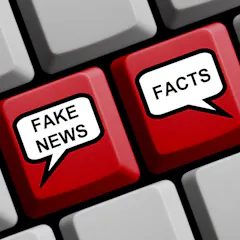
Delivering media literacy in a comics format can help readers develop the skills to identify fake news and counter its effects.
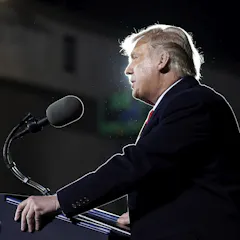
Because dramatic tension fuels attention, Trump’s words work to generate tension, anxiety and conflict. We need to react with civility, care and calm to undo the cycle of attention and persuasion.
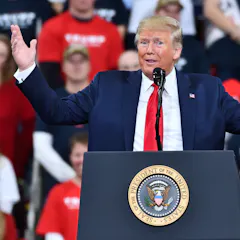
‘They might be a liar but at least they’re honest.’
The effective teaching of news literacy needs to go beyond simple fact-checking, a journalism professor argues.
This is the age we live in, and it is crucial that fact-checkers be in place to help media consumers guard against falsehoods.
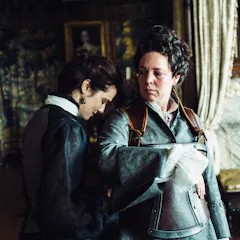
Olivia Colman has a funny story to tell on Wikipedia about the age displayed in her biography in the online encyclopedia. The opportunity for a Wikipedia fact-checking.
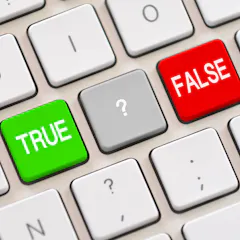
Cognitive psychologists know the way our minds work means we not only don’t notice errors and misinformation we know are wrong, we also then remember them as true.
We build in extra checks and balances, including blind peer review by a second academic expert, additional scrutiny and editorial oversight.
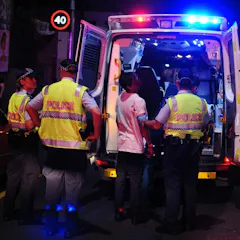
There is a lot of evidence showing that changing people’s drinking hours and consumption patterns reduces violence and hospital admissions.
A posse of fact-checkers has been riding the boundary of the federal election. Not happy with the standard of honesty in political discourse, the ABC, this website and PolitiFact.com.au, a localised version…
Top contributors
-

Associate Professor of Visual Communication & Digital Media, RMIT University
-
Professor and Chair, Department of Journalism, Stellenbosch University
-
Professor of Communication, Boise State University
-
PhD Candidate at the News and Media Research Centre, University of Canberra. Researcher in journalism, Universitas Multimedia Nusantara
-
Professor of Political Communication; Director CAJ, The University of Melbourne
-
Lecturer in Journalism and Global Communication, University of Sheffield; Independent Social Research Foundation
-
Professor of Communication, News and Media Research Centre, University of Canberra
-
Associate Professor, School of Social and Political Sciences, The University of Melbourne
-
Emeritus Consultant, St Vincent's Hospital, Darlinghurst
-
Senior Lecturer in English and Literacy Education., University of Canberra
-
Senior Fellow in Education and Human Development, George Washington University
-
Professor of Digital Communication, Director of QUT Digital Media Research Centre, Queensland University of Technology
-
Professor of Sociology, Mount Allison University
-
Professeur des Universités en Histoire des Sciences, Université de Lorraine
-
Postdoctoral Fellow, Edward A. Clark Center for Australian and New Zealand Studies, The University of Texas at Austin