

AI-generated faces don’t look weird anymore – they’re ‘hyperaverage’, which is a giveaway to the trained eye.
Articles on Faces
Displaying 1 - 20 of 26 articles

Super-recognisers literally look at people differently.

The study has created a catalogue of horse facial expressions to help people understand how to read these incredible animals.
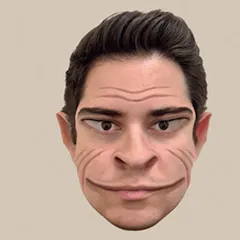
A highly unusual new case is giving scientists insights about what causes illusions of facial distortion

Face recognition technology follows earlier biometric surveillance techniques, including fingerprints, passport photos and iris scans. It’s the first that can be done without the subject’s knowledge.
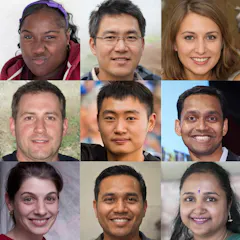
Scientists measured the brain activity of people trying to discern real from synthetic faces.

How do police forces make artificially aged images of people who have been missing for years?

People often struggle to distinguish between real faces and artificial ones made by a computer.

We rely on the spatial arrangement of facial features to process faces, and wearing masks interferes with that — especially for children.

Your mouth might be obscured, but science shows you say a huge amount with your eyes.

With caregivers’ faces covered, infants and young children will miss out on all the visual cues they’d normally get during stages of rapid developmental growth.

Thinking of SARS-CoV-2 as an invisible enemy with an evil personality and humanlike motivations is a natural offshoot of the way people evolved to anthropomorphize so as not to overlook threats.

Humans spend a lot of time during social occasions masking their real emotions. Why?

Problems in facial development can occur with the skull, face, blood vessels, muscles, jaws and teeth. But it’s the hard palate forming the roof of your mouth that’s most commonly affected.

Is a smile really the best accessory? Science says yes.
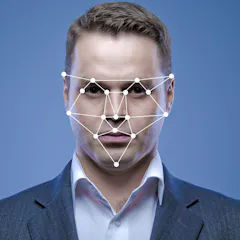
Computers are getting better at identifying people’s faces, and while that can be helpful as well as worrisome. To properly understand the legal and privacy ramifications, we need to know how facial recognition technology works.

Big brother is not watching you … yet.

Our faces give away far more just our mood.

As many as one in 50 people are face blind, meaning they can’t tell one face from another.
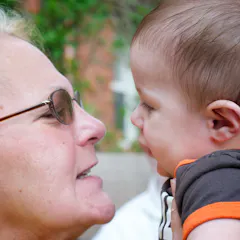
Just a few hours after birth, infants show a preference for human faces. Over the next few months, they learn from facial expressions.
Top contributors
-

Senior Lecturer in the School of Psychology, University of Lincoln
-
Lecturer in Psychology, Swansea University
-
Lecturer in Optometry, University of Bradford
-
Associate Professor, School of Psychology, UNSW
-
Professor of Psychology, Rutgers University - Newark
-
Senior Lecturer, Vision Sciences, Glasgow Caledonian University
-
Associate Professor in Human Visual Perception, Macquarie University
-
Postdoctoral Fellow in Psychology, Flinders University
-
Professor of Psychology and Science Communication, Head of Department of Sociological and Psychological Sciences, Abertay University
-
Associate Dean for Academic Affairs and Professor of Law, Georgia State University
-
Lecturer in Psychology, Brunel University of London
-
Professor and York Research Chair, Psychology, York University, Canada
-
Assistant Professor of Cognitive Psychology, Farmingdale State College
-
Professor Emeritus of Anthropology, Fordham University
-
Professor of Psychology, Aberystwyth University