
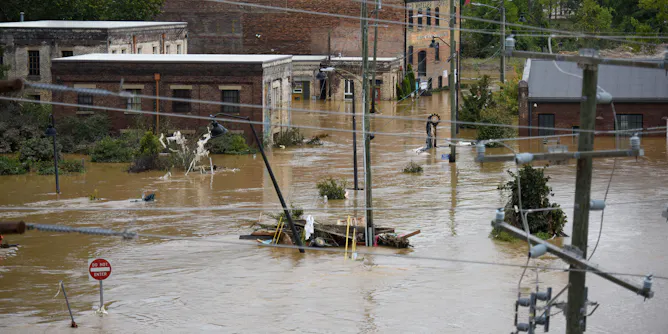
Meta’s decision could open the floodgates to more climate misinformation on its apps, including misleading or out-of-context claims during disasters.
Articles on Facebook
Displaying 61 - 80 of 1094 articles

As local news outlets continue to close across the country, people’s news sources keep evolving.

The company says the change aims to promote free expression and reduce censorship.

Although these activities have been around for decades, there are signs that some are making a comeback.
The government has been playing ‘four-dimensional chess’ to work out how to drag big tech back to the bargaining table with news publishers. So, will this new scheme work?

Meta’s massive outage may soon be resolved - but the causes remain a mystery.
There is still public hunger for reliable and trustworthy information. This should give news media outlets hope – and inspire them to invest in new ways to reach audiences.
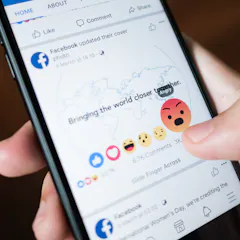
Internal data from the ABC show the harmful content moderators are exposed to weekly, sometimes even daily. But the organisation’s response is one many others can learn from.

A study found that in US counties where friendships with prosperous individuals are more common, investment and savings tend to be higher.

How worried should you be?

New Zealand’s news avoidance rates are higher than in any other surveyed country. Mood, political orientation and perceptions of sensationalism or bias all play a role.

Like the whole idea of banning young people from social media, allowing limited access to platforms that have a “low risk of harm” is deeply flawed.

Big tech doesn’t just fund research into itself – it also controls researchers’ access to data. Even big tobacco didn’t have this kind of power.

Meta leader Mark Zuckerberg has given the world a sneak preview of the Orion glasses – but will they change the world?

An impending election doesn’t mean that people have to avoid social media altogether. When used wisely, it can still be an important source for political information and an outlet to express opinions.

The rest of the internet can learn a lot from online ‘informal networks’.

In places like India, Vietnam and China, churning out weird AI videos is the latest side hustle for students and stay-at-home mothers.
Almost all online ads are now automated. And they’re becoming more and more annoying.

There are three key steps people can take to protect their data from big tech.

Brazil’s attempt to strike a balance between free speech and regulation of online platforms has become politicized – complicating future legislation.
Top contributors
-

Professor of Internet Studies, Curtin University
-
Director of UWA Centre for Software Practice, The University of Western Australia
-
Senior Research Associate in Media and Communications, University of Sydney
-
Dean of Global Business, The Fletcher School, Tufts University
-
Researcher at Microsoft Research, Cambridge UK. Previously, The University of Queensland
-
Associate Professor, Faculty of Law & Justice; Lead, UNSW Public Interest Law & Tech Initiative, UNSW
-
Professor of Information Systems, Michigan State University
-
Professor of Political Communication; Director CAJ, The University of Melbourne
-
Professor, Digital Media Research Centre, Queensland University of Technology
-
Professor of Digital Communication, Director of QUT Digital Media Research Centre, Queensland University of Technology
-
Doctoral researcher investigating governance of social media platforms, Queensland University of Technology
-
Professor of Media Studies, Queensland University of Technology
-
Associate Professor in Convergent and Online Media, University of Sydney
-
Associate Professor of Digital Communication, RMIT University
-
Professorial Fellow, University of Canberra