

The standard aims to prevent the spread of child exploitation and pro-terror content. But there are problems with it.
Articles on Facebook
Displaying 41 - 60 of 1094 articles

TikTok reveals both the liberating and the repressive effects of social media use in Egypt.

We’re just as likely to share intimate info with a chatbot as we are with a fellow human. It’s a privacy risk.

New research reveals a growing number of Australians are encountering political misinformation and disinformation in the election campaign and are worried about it.
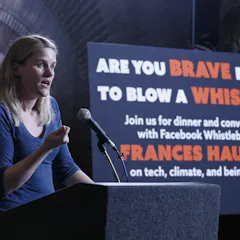
A decade of studying whistleblowers reveals the indispensable role played by supporters.

New data shows how groups with benign-sounding names like ‘Mums for Nuclear’ are running political ad campaigns online. But they don’t even have to be truthful.
The cases against Google, Meta, Apple and Amazon could profoundly shape the future of global technology.

Previously plummeting levels of trust in the news seem to be stabilising. But this year’s Trust in News report also shows more people are avoiding the media in general.

Corporate decisions made in boardrooms and through initiatives with nonprofits have created an important kind of private climate governance.
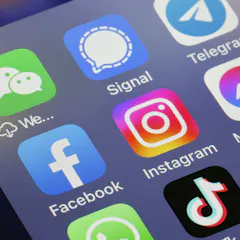
Nearly every major American social media platform is ruled by a single founder with near-total control, thanks to a relatively new corporate share structure.

Fact-checking is seen as an effective strategy to combat misinformation and disinformation.
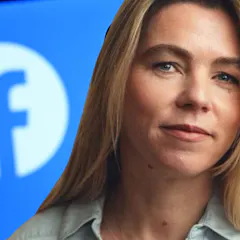
Meta has obtained a court order to stop former senior employee Sarah Wynn-Williams from discussing her memoir – despite its new commitment to ‘free expression’.
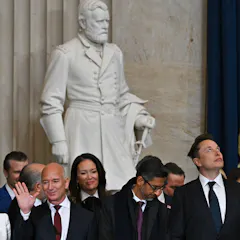
Trump Media and Rumble joining X in legal fight against the Brazilian Supreme Court marks a new era of deregulation pushes.
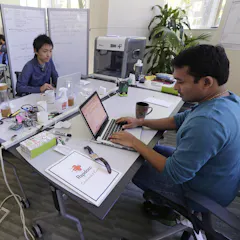
A reliance on foreign students for academic research has allowed the US to ignore flaws in its domestic tech worker pipeline, a scholar argues.

Even if the new safety codes are approved, kids could still access online porn and deepfake apps because of flawed age assurance technology.

New analysis of more than 100,000 tweets has found that queer Australian politicians suffer more personal abuse online than straight politicians.

A key difference between YouTube and other social media platforms is the way that it’s designed to be used.

Trying many approaches with fundraising posts might also reduce the chance that donors will feel overwhelmed by the same repeated requests for money.

Fertility clinics are not for everyone. So many people are going online to look for a sperm donor. But that comes with risks. Here’s what to think about first.

Digital nostalgic features like iPhone’s ‘Memories’ risk retraumatizing survivors of abuse. Tech companies should consider options for safer, more inclusive design of these features.
Top contributors
-

Professor of Internet Studies, Curtin University
-
Director of UWA Centre for Software Practice, The University of Western Australia
-
Senior Research Associate in Media and Communications, University of Sydney
-
Dean of Global Business, The Fletcher School, Tufts University
-
Researcher at Microsoft Research, Cambridge UK. Previously, The University of Queensland
-
Associate Professor, Faculty of Law & Justice; Lead, UNSW Public Interest Law & Tech Initiative, UNSW
-
Professor of Information Systems, Michigan State University
-
Professor of Political Communication; Director CAJ, The University of Melbourne
-
Professor, Digital Media Research Centre, Queensland University of Technology
-
Professor of Digital Communication, Director of QUT Digital Media Research Centre, Queensland University of Technology
-
Doctoral researcher investigating governance of social media platforms, Queensland University of Technology
-
Professor of Media Studies, Queensland University of Technology
-
Associate Professor in Convergent and Online Media, University of Sydney
-
Associate Professor of Digital Communication, RMIT University
-
Professorial Fellow, University of Canberra